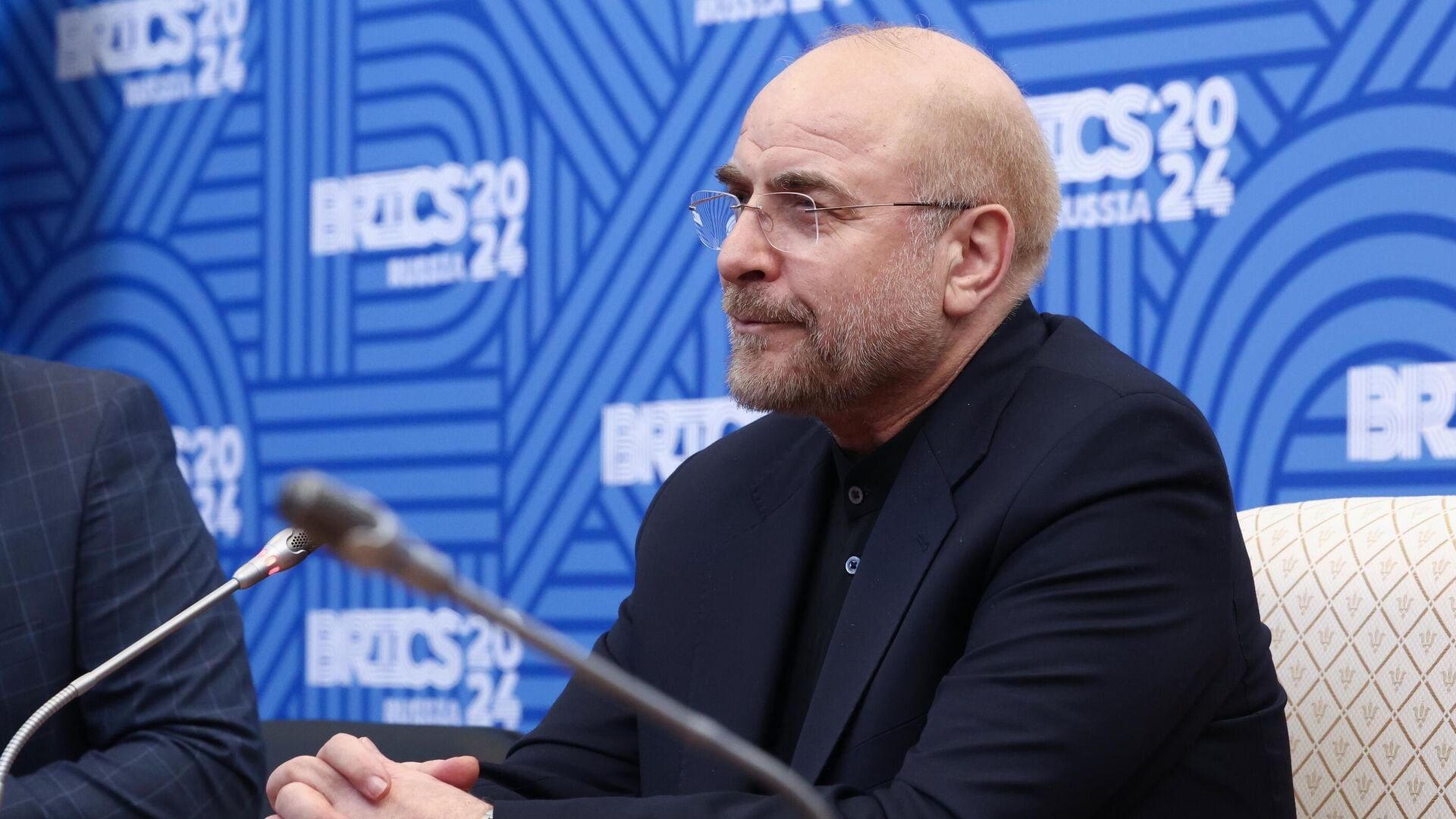

TEHRAN — Mohammad Bagher Ghalibaf holds one of the three most powerful positions in the Islamic Republic. He is speaker of parliament, a former Islamic Revolutionary Guard Corps commander, and a two-time presidential candidate who lost both races to more moderate figures. On July 2, he told state media that Tehran would grant the IAEA “no access beyond what has been authorized by the Supreme National Security Council” — as hawkish a position on inspections as the Iranian political spectrum can produce. It did not help him. On the same day, ultra-conservative factions in the parliament and press accused him, along with President Masoud Pezeshkian, of orchestrating a “coup” through the June 17 memorandum of understanding signed with the United States.
The accusation is not from reformers. It is not from the street. It comes from the ideological faction that considers itself the guardian of the revolution’s founding principles — a faction that under ordinary circumstances would claim Ghalibaf as one of its own. They are calling the man who told the IAEA to stay out a traitor for something else entirely: agreeing to sit inside a framework that produced a document with American signatures on it.
The June 17 MoU created a 60-day framework that includes a ceasefire, partial resumption of Strait of Hormuz commercial traffic, partial release of frozen Iranian assets, and a pathway toward a longer-term arrangement. The Doha round that concluded July 2 deferred the nuclear file and left Hormuz tolls unresolved, with 44 days remaining. Neither development has satisfied Iran’s hardline base. What provoked the “coup” accusation is the structure of the agreement itself: the parliament, under Ghalibaf’s speakership, was not formally consulted before the MoU was signed. Iran’s constitution requires parliamentary oversight of international agreements above certain thresholds. Whether the MoU crosses those thresholds is contested. The hardliners’ position is that it does, that Ghalibaf facilitated the bypass, and that he and Pezeshkian together exceeded their constitutional authority by agreeing to the framework at all.
The word “coup” is not casual in Iranian political discourse. It describes an illegitimate seizure of authority — normally applied to outside forces attempting to dismantle the state. Applying it to the sitting parliament speaker and president, from inside the hardline faction, argues instead that the Islamic Republic’s own institutions have been captured from within. It is the most extreme domestic accusation available short of treason, and in the Iranian political context it functions as a prelude to exactly that.
Ghalibaf’s IAEA statement on July 2 reads, in part, as an attempt to re-establish his credentials against this pressure. He told state media that the United States should understand Iran confronts “the enemy with strength.” His position on inspections — no IAEA access beyond what the Supreme National Security Council has already authorized — is designed to signal that whatever the MoU contains, he has not agreed to nuclear transparency. The hardliners are not persuaded. Their challenge is not specifically about IAEA access. It is about who holds the constitutional authority to negotiate with Washington at all, and whether those who engaged in the Doha process exceeded it.
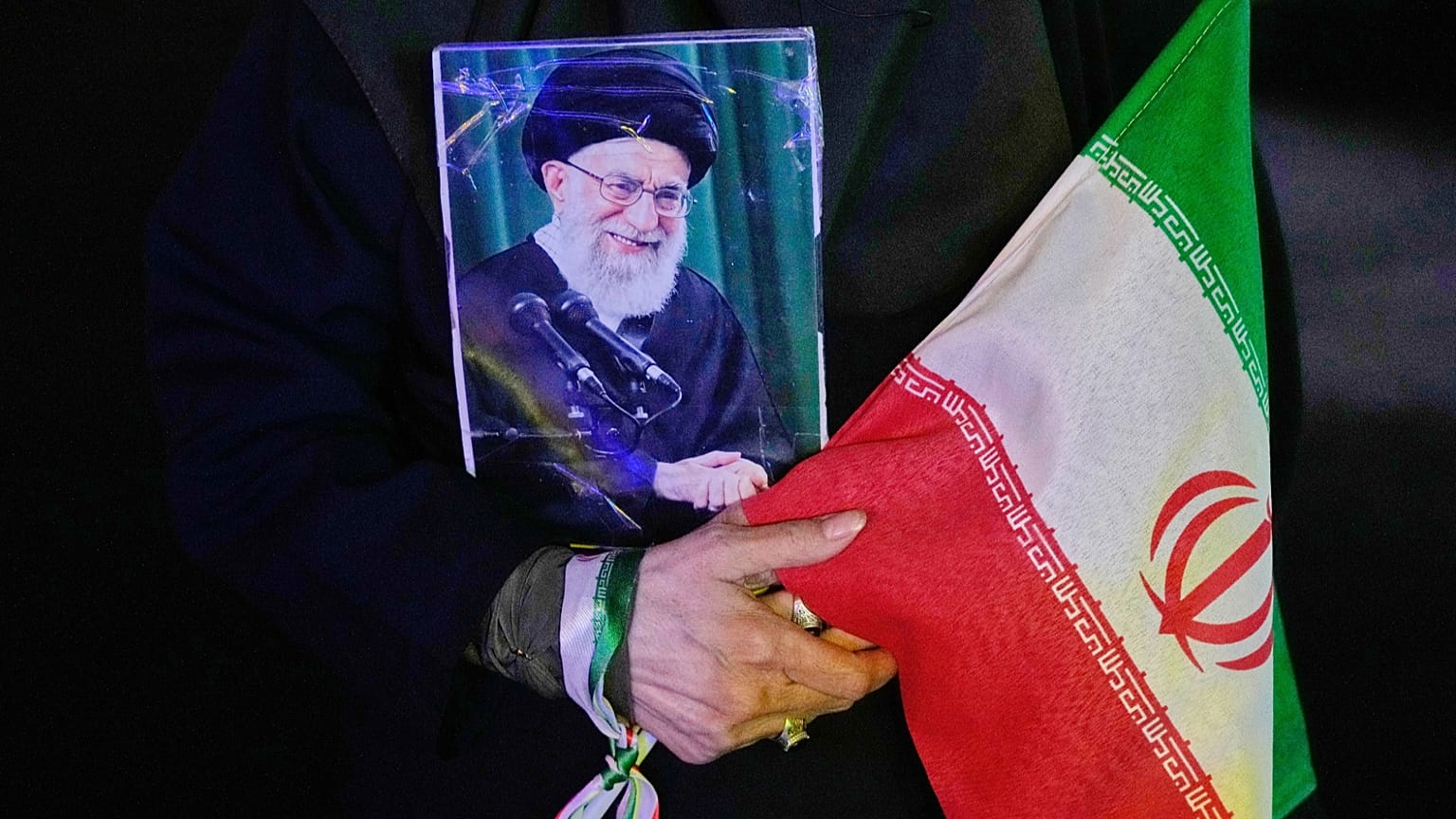
That question points to the gap at the top of Iran’s constitutional structure. Supreme Leader Mojtaba Khamenei has not appeared in public since the February 28 airstrike that killed his father and wounded him. He has issued written statements — read by others, over a still photograph — but has not spoken in his own voice or been seen. Under a functioning supreme leadership, a “coup” accusation against the sitting president and parliament speaker would invite immediate rebuke from above, or the accusers would be removed. Neither has happened. The space in which the accusation can survive without correction is itself an indicator of the governance vacuum Mojtaba’s invisibility has created.
Iran’s ultra-hardliner faction includes the Kayhan newspaper, whose editor-in-chief Hossein Shariatmadari is appointed directly by the supreme leader’s office. It includes parliamentary factions aligned with the IRGC’s political wing. These are not peripheral voices. When they say “coup,” that language reaches whoever is receiving reports on Mojtaba Khamenei’s behalf — and it will require an answer before the Doha talks resume in mid-July. Iran International reported the “coup” accusation on July 2 with no official response from any of the named parties included in its coverage.
The funeral begins Saturday. The Doha talks are paused until the mourning period ends. Al Jazeera reported that the parties agreed to resume talks “at the earliest possible time after the funeral.” The pause creates an interval in which the internal Iranian argument about the MoU’s legitimacy will run without the discipline that an imminent negotiating deadline imposes. If the hardliners can establish the “coup” framing firmly enough during the funeral week — through parliamentary statements, through Kayhan’s commentary, through the IRGC’s political channels — the next Doha session will open with Iran’s negotiating team contested at home even if the ceasefire holds.
The MoU’s domestic legitimacy problem has been visible since June 17. What the United States describes as a reconstruction investment fund, Iran’s hardline press describes as war indemnity — payment from the country that attacked Iran to the government that agreed to absorb the damage and keep negotiating. The framing gap between Washington and Tehran on what the MoU means is wide. The framing gap inside Iran, between those who negotiated it and those who condemn it, may be wider.
What has not happened: Pezeshkian has not responded publicly to the coup accusation. Ghalibaf’s office has not commented. The Supreme National Security Council, which formally authorized the MoU framework, has not defended the agreement against the constitutional challenge. The Office of the Supreme Leader has been silent. Forty-four days remain before the MoU’s 60-day window closes on August 16. Whether the man whose authority would settle the constitutional question will appear in public at his father’s funeral this weekend is unknown. What his silence on the “coup” accusation means — approval, inability to respond, or simple isolation from a political crisis unfolding around him — is not something his office has clarified.