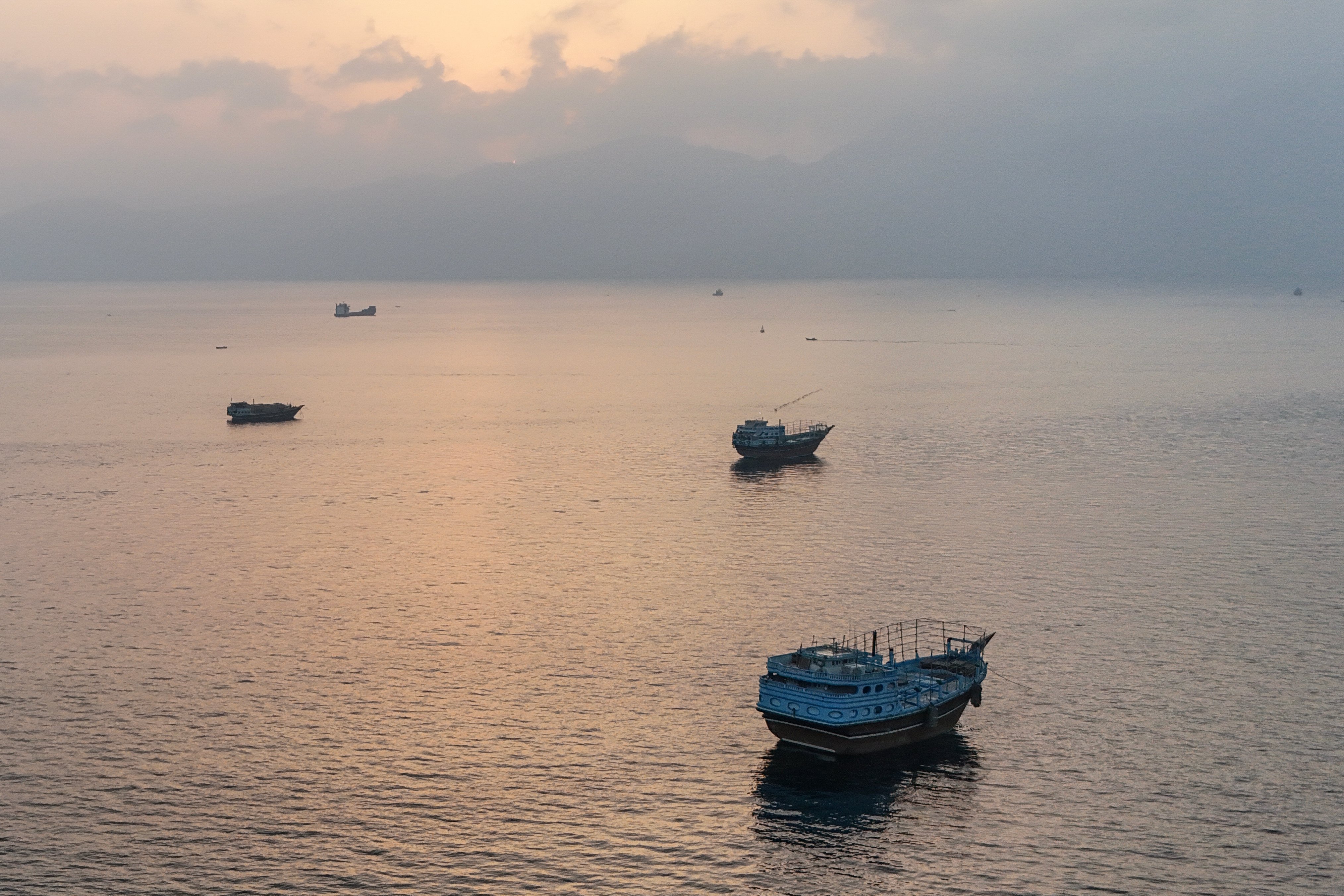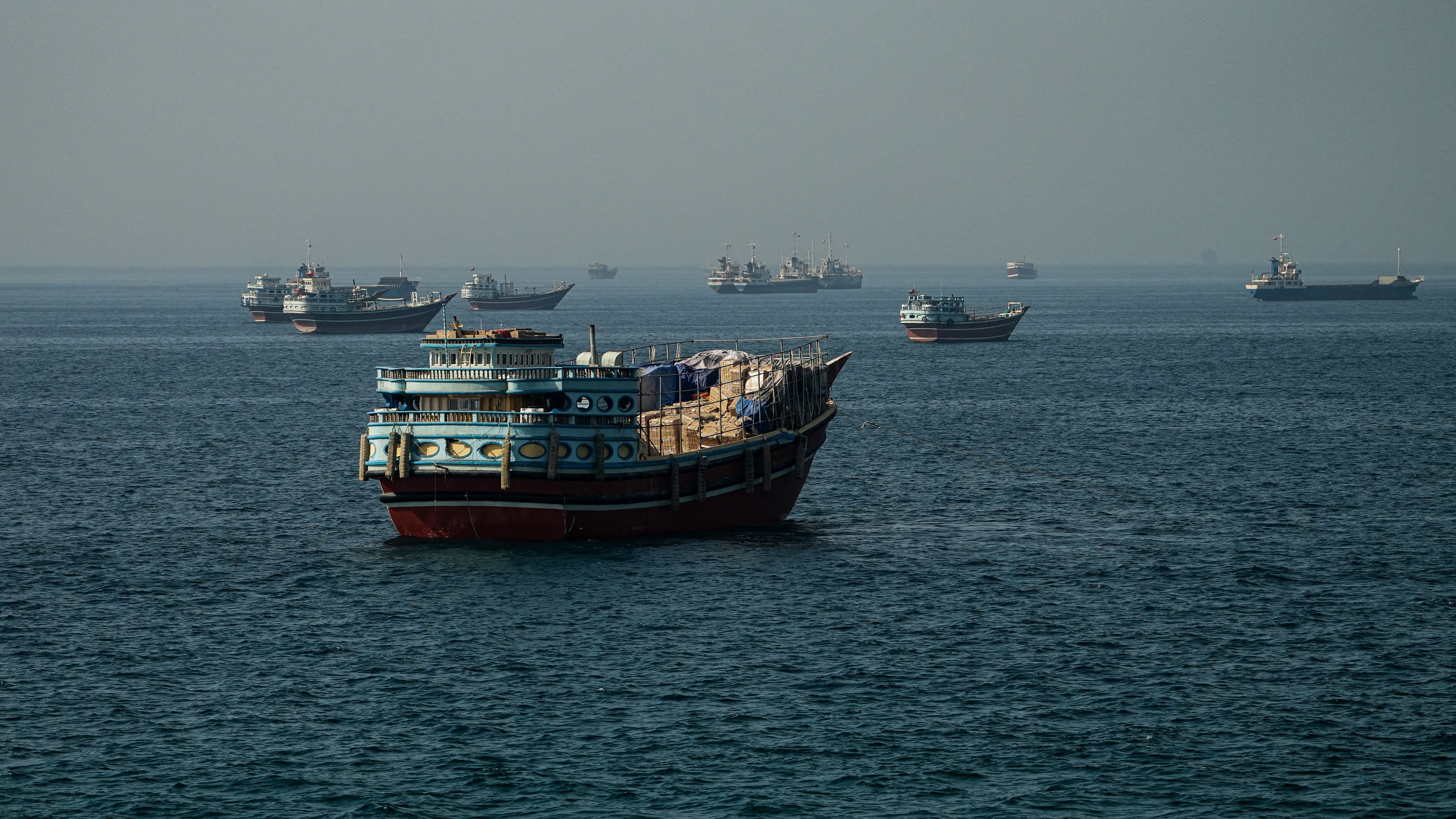

MUSCAT – The corridor hugging Oman’s southern coastline was the route that wasn’t supposed to get hit. The International Maritime Organization and Oman had established it as an alternative to the mined central channel – away from Iranian waters, away from the IRGC’s northern passage – and the premise was that distance would mean safety. On June 25, Iran launched a suicide drone into a cargo vessel moving through it, 7.5 nautical miles southeast of Dahit.
The attack suspended the United Nations plan to evacuate stranded vessels from the Strait. It produced several exchanges of fire between US and Iranian forces. And it produced a one-week informal de-escalation understanding between Washington and Tehran – a quiet that US and Iranian officials described as running through approximately July 6 or 7. That understanding expires before the next round of Doha talks can begin: Ayatollah Ali Khamenei’s burial on July 9 is the earliest the diplomatic track can reconvene.
Iran’s IRGC had issued a warning against using the Oman corridor hours before the June 25 attack, Al Jazeera reported. That warning was not a surprise maneuver – it was consistent with the position Tehran had held since the MoU was signed on June 17: the southern corridor was an IMO-Oman arrangement that Iran had not endorsed and did not recognize. The IRGC had built its own northern corridor through the Persian Gulf Strait Authority, designating specific routes through the Strait’s northern shore near Qeshm and Larak. Vessels choosing the southern IMO route were, in Iranian military terms, choosing an unauthorized path.
When the drone hit on June 25, CNBC reported the UN paused its evacuation operation for vessels stranded inside the Strait. The operation had been premised on the assumption that the southern corridor provided workable safety. The attack dissolved that assumption. Evacuation could not resume until safety guarantees could be confirmed – and no party was positioned to confirm them for a route Iran had not accepted.
More than a dozen seafarers had already died in transit incidents since the corridors opened; the June 25 attack added to an incident record that had been building since mid-March. The evacuation operation was the mechanism by which those casualties were supposed to stop accumulating. Its suspension meant no such mechanism was operating.
The one-week informal understanding that followed the exchanges of fire ended the immediate military confrontation without producing a formal agreement. Neither side announced its terms publicly. What the understanding achieved was a tactical pause: enough breathing room for the Doha round – which concluded July 2 – to proceed without simultaneous active engagement in the Strait. What it did not achieve was resolution of the corridor question that produced the strike.
The Doha round left the Hormuz file structurally unresolved. Negotiators addressed the toll question and frozen assets but did not produce a framework for which corridor authority governs international transit – the precise question that determined whether the June 25 vessel was in authorized waters or not.
Iran’s Khatam al-Anbiya Central Headquarters, the military command coordinating IRGC operational structure, issued a statement on July 2 that did not read as an extension of the de-escalation understanding. “The Strait of Hormuz is not a playground for the aggressive United States,” the statement said. “Rather, it falls under the indisputable sovereignty of the Islamic Republic of Iran.” Vessels must use Iran-designated routes.
The statement’s logic is the same logic that produced the June 25 attack. The corridor the drone hit was not Iran-designated. The corridor the Khatam al-Anbiya statement refers to is the northern IRGC route. The southern IMO corridor’s status under that framework is unchanged by the de-escalation understanding: it remains a route Iran has not authorized, and the July 2 statement reaffirmed that explicitly while the week of quiet was still nominally in effect.
The Oman-anchored northern corridor is operational, generating the transit record Iran cites as evidence of functional Hormuz administration. That data serves Iran’s negotiating position: ships are moving, the framework works, and the appropriate resolution is to formalize the IRGC corridor in any final agreement – not to displace it with an IMO arrangement Iran attacked the first time a vessel used it.
The convergence of dates is the structural problem the next Doha round inherits. The one-week de-escalation expires around July 6 or 7. The Doha talks cannot resume before July 9 at the earliest, given the burial protocol. That leaves a two-to-three-day window in which the informal understanding has formally lapsed and no diplomatic session is underway. The Khatam al-Anbiya statement was issued on July 2, while the de-escalation was still active – which is one way of reading how Iran intends to use the days immediately after it expires.
What the June 25 attack established, beyond the corridors’ vulnerability, is that Iran is not holding the Strait in a waiting posture while diplomacy runs its course. The strike came within the MoU window, against a route Oman and the IMO had designed to reduce friction, hours after an IRGC warning that the route was unauthorized. The de-escalation that followed was real. It was also timed. The next Doha round will open, if it opens on schedule, to a Strait that has already been through one informal ceasefire expiry and one sovereignty statement since the last round concluded.