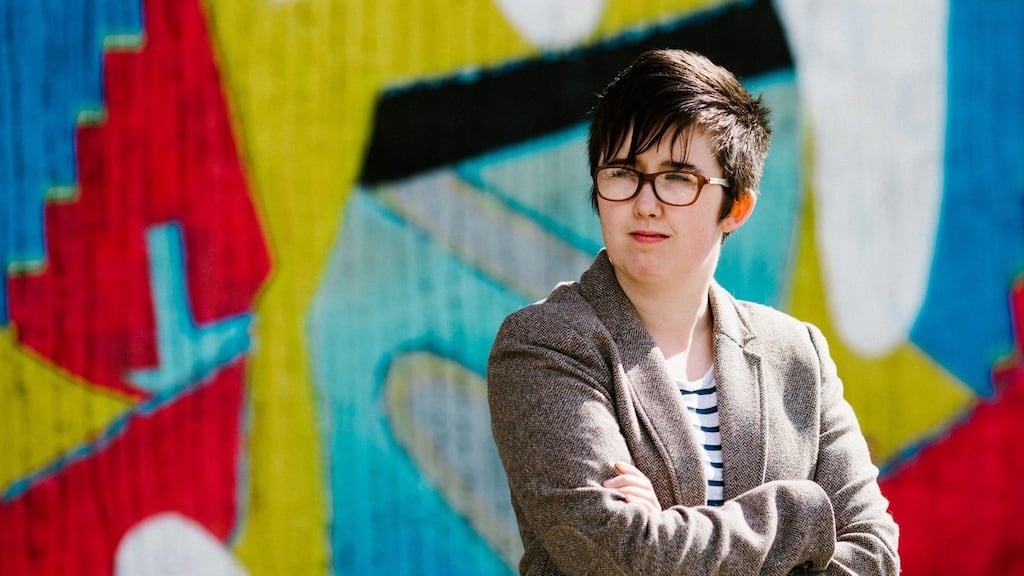

BELFAST – Lyra McKee’s family left a courtroom together on Thursday afternoon, and justice was somewhere else.
Three men charged with her murder – Paul McIntyre, 58, Peter Cavanagh, 38, and Jordan Gareth Devine, 25 – were found not guilty by Justice Patricia Smyth, who delivered her verdict in the non-jury trial at Belfast Crown Court. As AP reported, the trial was held intermittently over the past two years; the prosecution’s case rested on joint enterprise, and the evidence, as the judge confirmed, was almost entirely circumstantial.
McKee, a 29-year-old journalist, was shot on April 18, 2019, in the Creggan area of Derry, killed by a bullet as she stood near police vehicles observing civil disturbances that had turned violent. The New IRA claimed responsibility. Seven years later, no one has been convicted of her death.
The prosecution argued that the three men had been present that night, had accompanied an unidentified gunman into the Creggan, and had encouraged or assisted in what followed. Defence barristers challenged the quality of the evidence throughout. There was no forensic link to the weapon. No witness placed any of the three men in direct proximity to the shot that killed McKee. The prosecution’s theory required a chain of inference the court was not willing to complete.
McKee’s sister, Nichola Corner, spoke outside court with the composure of someone who had prepared for this. “The system has completely failed Lyra and has failed our family, and has failed Northern Ireland,” Corner said. She pointed to something the verdict did not address: the silence. One hundred and fifty witnesses, she said, had come forward. None of them had evidence. Corner vowed the family would “leave no stone unturned.”
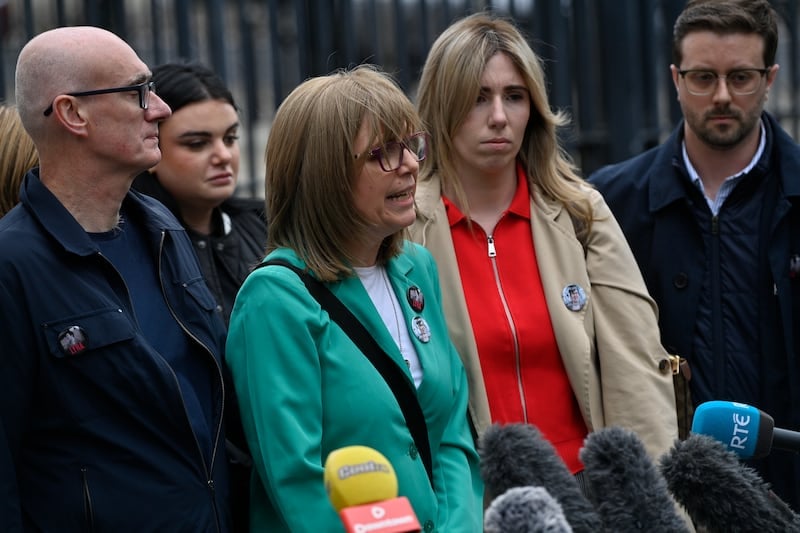
The phrase contained its own contradiction. A hundred and fifty people knew enough to appear before investigators. None could, or would, say what they knew in terms a court could act on. That is not an evidentiary gap in one case. It is a structural condition of pursuing justice in certain parts of Northern Ireland, where the New IRA continues to operate and where the social cost of speaking openly about what one witnessed can still be severe.
The New IRA is a dissident republican paramilitary group that rejected the 1998 Good Friday Agreement and has continued to regard armed campaign as legitimate. In the years since McKee’s death, investigators built a circumstantial record linking the three acquitted men to the night of April 18. What they could not build was a direct case against the person who fired the gun. That person has not been identified. The prosecution’s decision to charge the three under joint enterprise, rather than waiting for the case against the shooter, suggests they did not believe that case was coming.
McKee was a prominent journalist who had written about growing up in Belfast during the peace process and what it cost the generation that inherited it. Her death prompted expressions of revulsion across the political spectrum, including from Sinn Féin, which has significant influence in the Creggan. That revulsion did not translate into cooperation with investigators. It produced a vigil. Northern Ireland’s justice system is still waiting for what came after.
Corner said Thursday that the family would continue pursuing justice through every available means. The case remains open. The shooter is unknown. The three acquitted men are now free. And the culture of silence Corner described is not a verdict that can be appealed, corrected on further evidence, or revised by a higher court. It is the condition the investigation has always had to work inside.