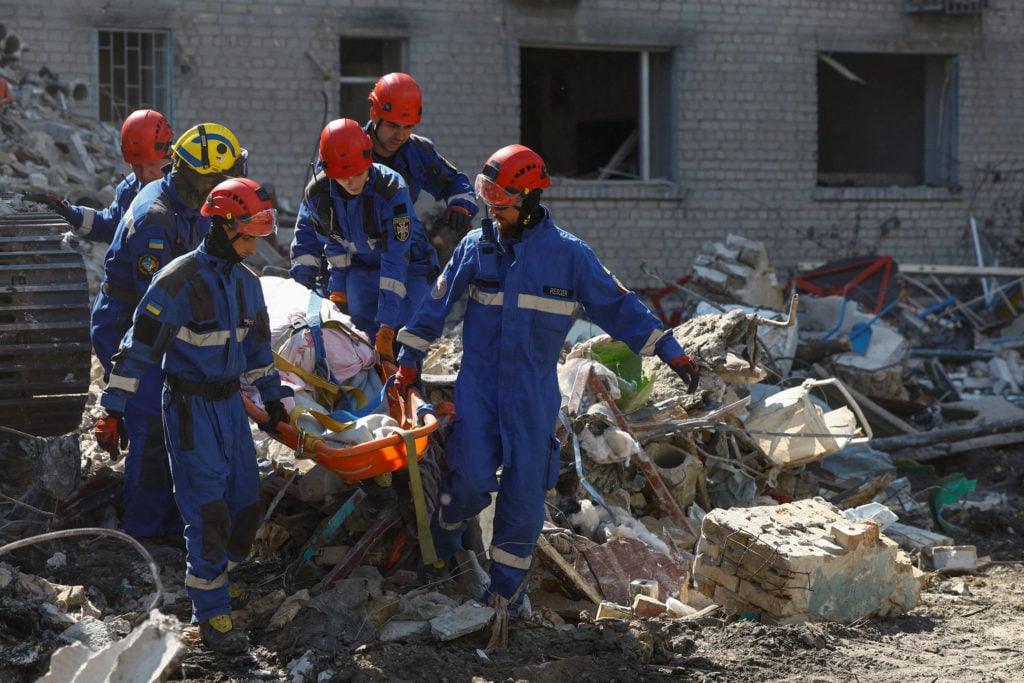

KYIV – The moment Hanna Polishchuk and her family emerged from an underground parking garage, a ballistic missile struck. They went back underground.
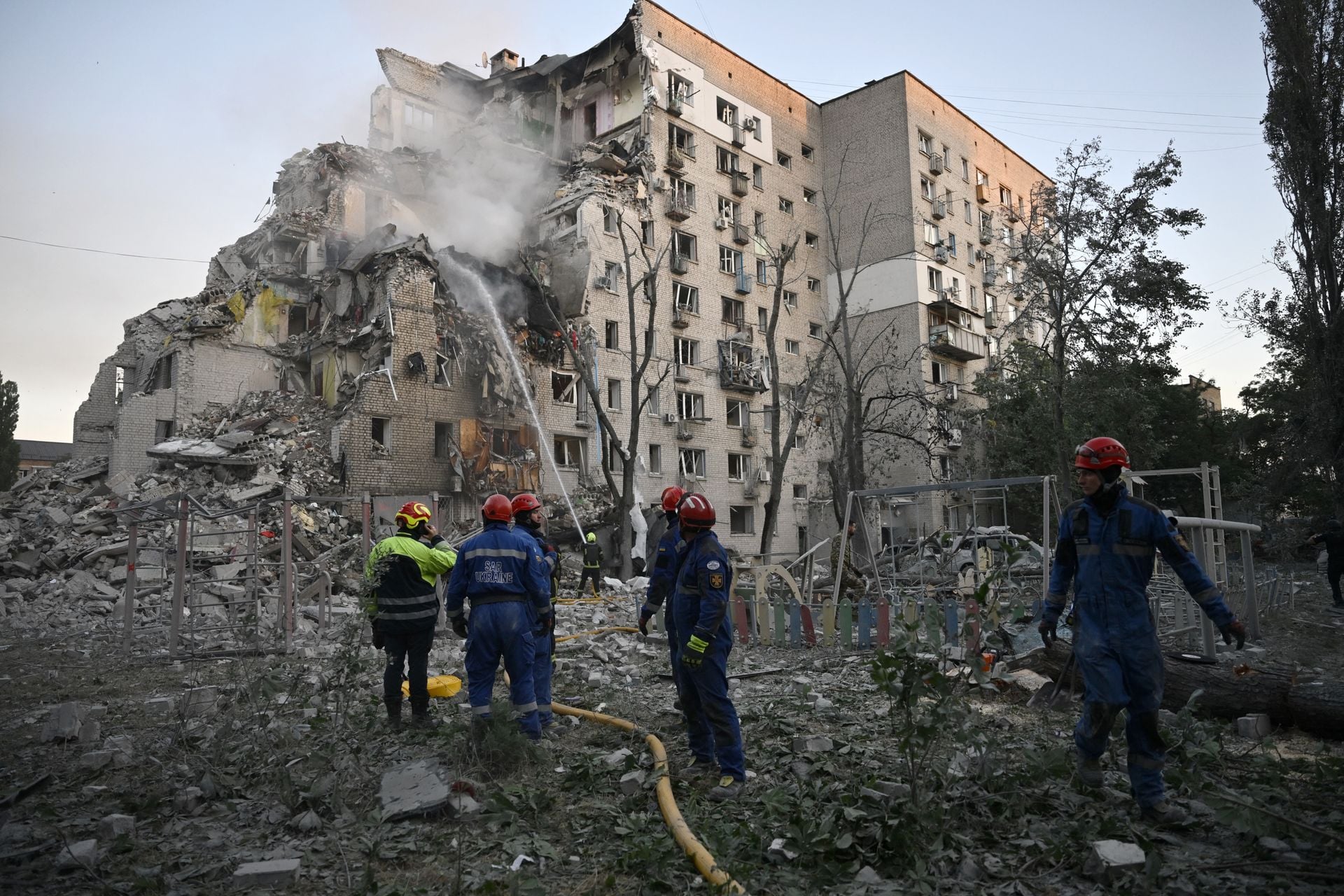
Russia launched 74 missiles and 496 drones at Ukraine’s capital overnight into Thursday in what Ukrainian officials called the heaviest aerial attack on Kyiv since Russia’s military operation began, killing at least 30 people and wounding 91 others, including two children. The metro system sheltered a record 52,500 residents as explosions echoed through the city for 11 hours, and damage was reported in every district. In the Darnytskyi district, the assault crushed 64 apartments in a single residential block; six floors of a nine-story building collapsed, and a five-story building nearby was destroyed.
“It was a terrible night for Kyiv,” President Volodymyr Zelenskyy said after cutting short a diplomatic visit to Ireland, where he had received intelligence that the strike was imminent. Within hours he was calling for expedited delivery of Patriot air defence systems and pointing at Western partners: “If our partners had delivered what they promised on time, I think we could have saved more homes and more lives.” Foreign Minister Andrii Sybiha called it a “night of horror.”
Twenty-five ballistic missiles and 12 drones struck their targets out of the 74 missiles and 496 drones Russia fired, the Ukrainian Air Force reported – a record 28 ballistic missiles deployed in a single attack on the city. Ukraine’s air defence intercepted the majority but could not absorb the entire barrage. A hotel, a research institute and an ambulance station were among the civilian sites hit, alongside roughly 20 residential buildings across the Darnytskyi, Desnianskyi, Holosiivskyi and Sviatoshynskyi districts.
Mayor Vitali Klitschko, who coordinated emergency services through the night, called it “the most massive” assault on Kyiv since Russia’s military operation began and said damage had been recorded “in all districts.” The scale of the attack triggered immediate responses from NATO neighbors: Poland scrambled fighter jets after detecting Russian missile and drone activity near its borders, and Finland announced restrictions on its airspace.
The Kremlin offered its standard explanation. Spokesperson Dmitry Peskov said Russia’s strikes were directed “exclusively against military or military-linked targets” and that Moscow would “continue to increase pressure on the Kyiv regime.” The Russian Defence Ministry described the operation as a response to Ukraine’s recent drone campaign against Russian oil infrastructure – a justification that has accompanied every large-scale strike this spring.
That framing illuminates the logic driving both sides deeper into the exchange. Ukraine has spent recent weeks extending its drone operations further into Russian territory, hitting the Moscow oil refinery twice in the same week, striking a major LPG terminal on the Black Sea and targeting fuel logistics nodes that support Russian military units. Each Ukrainian strike prompted official warnings from Moscow of a heavier reply. Thursday’s barrage on Kyiv was that reply. What comes after it, neither side has said.
The asymmetry in the exchange is not only geographic. Russia can sustain large-scale combined missile and drone barrages – this strike, the 700-drone wave that struck Ukraine in April, the sustained bombardments of energy infrastructure through the winter – at a pace that strains Ukraine’s air defence reserves. Ukraine’s drone campaign inside Russia is effective at disrupting oil production and disrupting the Russian rear, but it cannot prevent another overnight attack on Kyiv. Zelenskyy’s immediate request for Patriot systems acknowledged that gap plainly.
Kyiv had absorbed major attacks before, but the metrics from Thursday stood apart. A record 28 ballistic missiles deployed in a single attack on the city; 52,500 people sheltering simultaneously in the metro; 64 apartments destroyed in one Darnytskyi building alone. Al Jazeera and international wire outlets reported the final death toll was still being confirmed Thursday afternoon as search and rescue teams worked through collapsed floors.
Whether Thursday’s strike represents a ceiling in Russia’s escalation or the opening of a new phase remained, as of Thursday morning, unanswered. Russian officials have not described it as a final response. Ukraine’s drone campaign has not paused. The residents of Darnytskyi who spent the night in the metro emerged to a building where six of the floors above them no longer existed. When it would be safe to return, emergency services had not said.