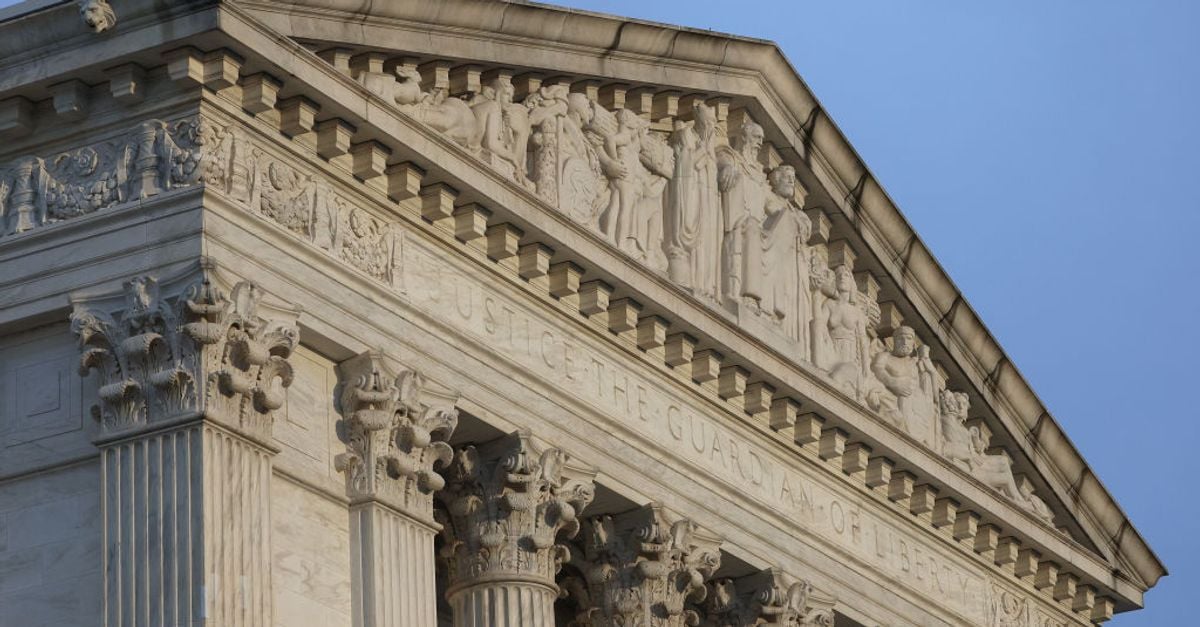

WASHINGTON – In Hawaii, silence used to mean no. A restaurant or gas station that never posted a policy on firearms was, under state law, a place where concealed-carry holders needed to leave their weapons outside. The Supreme Court ruled Thursday that arrangement violates the Constitution.
The 6-3 decision in Wolford v. Lopez (No. 24-1046) strikes down Hawaii’s “default-off” firearms law and replaces it with something the plaintiffs had sought for years: a “default-on” rule that lets licensed gun carriers enter any business that has not explicitly barred them. Justice Samuel Alito, writing for the majority, said the law “hobbles what the Second Amendment protects: the right of Americans to carry arms for self-defense as they go about their daily lives.”
The same six justices who have rebuilt Second Amendment law since 2022 produced this ruling in the same session that delivered two other 6-3 decisions stripping deportation shields from 350,000 Haitian and Syrian immigrants, extending the conservative court’s reach across immigration, firearms, and administrative law in a single week.
California, New Jersey, Maryland, Illinois, Delaware, Massachusetts, Rhode Island, and Colorado all have “default-off” laws substantially similar to Hawaii’s. Everytown for Gun Safety, which filed a brief supporting Hawaii, said the ruling “puts at risk similar default-no laws in states across the country.” Attorneys general from those eight states had joined Hawaii’s defense in an amicus filing in March.
The plaintiffs were Maui residents who held state-issued concealed-carry permits after the Supreme Court’s 2022 ruling in New York State Rifle & Pistol Association v. Bruen forced states like Hawaii to issue permits on a shall-issue basis. They could carry legally on public sidewalks and in state parks, but had to seek an owner’s affirmative blessing at every restaurant, gas station, and grocery store they entered, a burden they argued effectively nullified the permit.
Alito extended the historical-tradition test from Bruen, combing through 18th- and 19th-century records of property law and gun regulations. He found no tradition of requiring affirmative consent from private property owners before a licensed carrier could enter. Hawaii had argued that its island geography, where firearms proliferate in tourist areas, justified special treatment. The majority rejected that argument as a policy judgment that could not override constitutional text.
Property owners retain the full right to ban guns by posting visible signs, a rule unchanged by Thursday’s decision. What changes is the default. Before Thursday, silence meant no. After Thursday, silence means yes.
Justice Elena Kagan dissented alone, arguing that the majority’s “modern-day analogue” search was conducted with too narrow a lens. Colonial-era innkeepers, she wrote, operated under norms of deference to property owners that the majority selectively read as silence on the question of guns. She would have upheld the law.
Justice Ketanji Brown Jackson, joined by Justice Sonia Sotomayor, took a different angle. “There is no constitutional right to enter private property without the owner’s permission, let alone with a firearm,” Jackson wrote. Her dissent argued that Hawaii’s law was not restricting a constitutional right but declining to create a new one: the right to carry onto private property without asking.
The majority’s answer to that argument is embedded in the outcome. A state cannot use property law as a backdoor mechanism to hollow out a constitutional right the Court has already recognized. If the Second Amendment protects the right to carry, then a system designed to make that right practically inoperable across most of civil life is itself a constitutional problem, regardless of how it is structured.
Thursday’s ruling is the fourth major Second Amendment decision since Bruen in 2022. The Court has since invalidated New York’s may-issue permitting system, struck down a federal ban on bump stocks, and blocked restrictions on home-assembled firearms. According to CBS News, at least two additional Second Amendment cases remain on the docket for the term beginning in October, suggesting the Court’s reconfiguration of gun law is not yet complete.
The diner in Honolulu that never thought about its gun policy now faces a decision the state used to make for it. Whether that change produces more firearms in more businesses, or whether property owners across Hawaii begin posting signs, is an open empirical question the ruling does not answer.