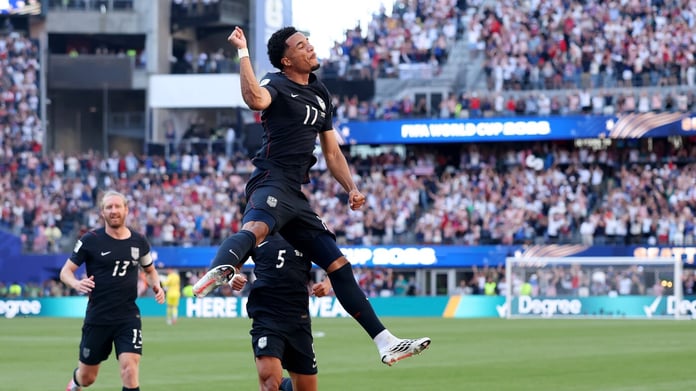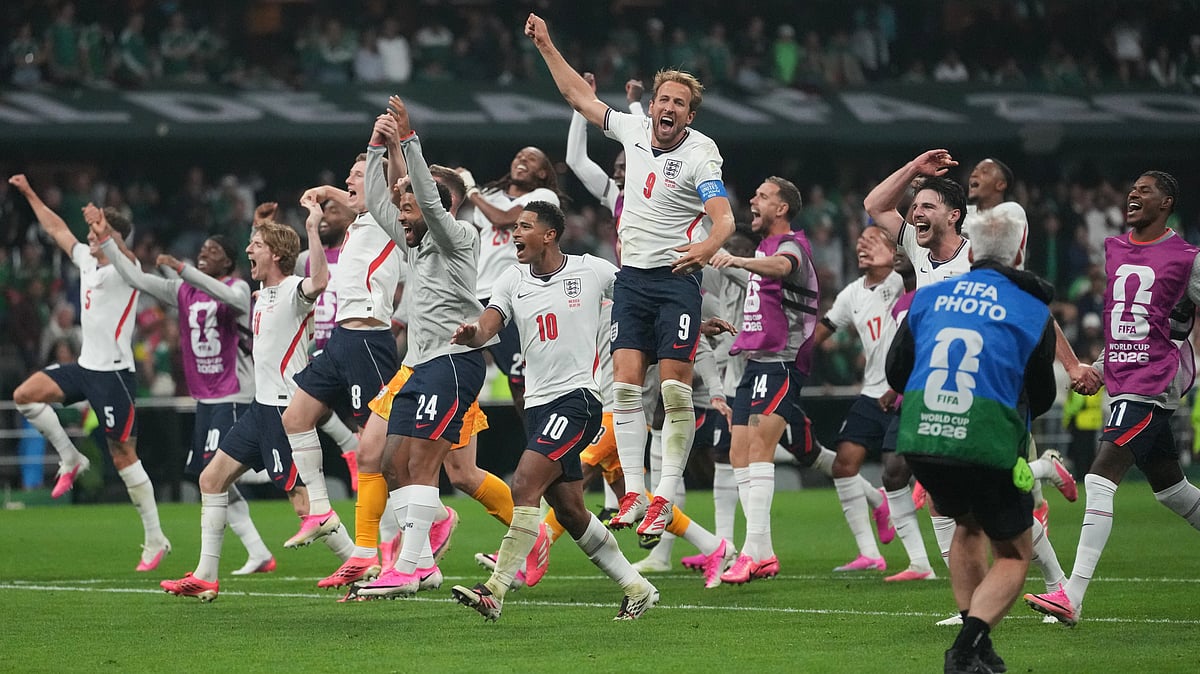

MEXICO CITY — The two goals came so quickly that the Azteca’s noise had nowhere to go. Jude Bellingham powered in a header from a Bukayo Saka cross in the 36th minute. The stadium, which had been in full voice since kickoff, paused. Ninety-eight seconds later, Kane threaded a cross from the right channel and Bellingham arrived at pace to do it again. England led 2-0, and the moment that would define a chaotic, historically consequential evening was already complete.
What those 98 seconds required of Bellingham was more than instinct. The first goal came off precise timing as Saka cut from the flank and whipped the ball low across the six-yard box. The second demanded that Bellingham read a Kane delivery from a different angle at a different pace and arrive before the defender. His back-to-back headers, the second arriving before Mexico had fully processed the first, gave England a 2-0 lead in a stadium where they had never won anything.
Mexico answered before halftime. Julián Quiñones turned in the penalty area after England failed to clear a free kick in the 42nd minute and finished through the scramble to make it 2-1. The goal gave Mexico’s supporters a reason to still be shouting when the teams went in at the break. The stadium had not given up. England had 45 minutes to protect a one-goal lead, and the atmosphere only grows louder and more dangerous once belief has been reestablished.
Nine minutes into the second half, everything shifted. Defender Jarell Quansah was shown a straight red card following a VAR review for a studs-up challenge on Jesús Gallardo. It was England’s first World Cup dismissal since Wayne Rooney in 2006. England would play the final 36 minutes, plus 11 of stoppage time, with 10 men in a venue that generates more pressure per square metre than any other stadium left in this tournament.
Six minutes after the dismissal, Anthony Gordon ran onto a through ball inside the box and Mexico goalkeeper Raúl Rangel brought him down. The penalty was clear. Harry Kane, who had broken Pelé’s all-time World Cup scoring record with two goals against DR Congo in the previous round, stepped up in the 60th minute and drove the ball to Rangel’s right. England 3-1. Tuchel described what followed as pure will.
Mexico’s second penalty arrived in the 69th minute. Raúl Jiménez converted, and suddenly the deficit was one again. England spent the final 21 minutes plus stoppage time defending with the specific desperation that only knockout football at altitude can generate. Jordan Pickford made saves that belonged in a different category of match. Djed Spence cleared off the line late. Marc Guéhi threw himself in front of everything Mexico’s forwards could direct at goal. Nothing got through.
The final whistle delivered England’s most significant result at this ground. They became the first team to beat Mexico in a World Cup match at the Estadio Azteca, according to ESPN, which noted that only three teams had won there in 89 total competitive matches. For context on the weight of that record: in 1986, Diego Maradona’s Argentina won 2-1 at the same venue, eliminating England in a quarterfinal that has sat inside English football’s self-image for four decades. That particular defeat did not survive Monday morning.
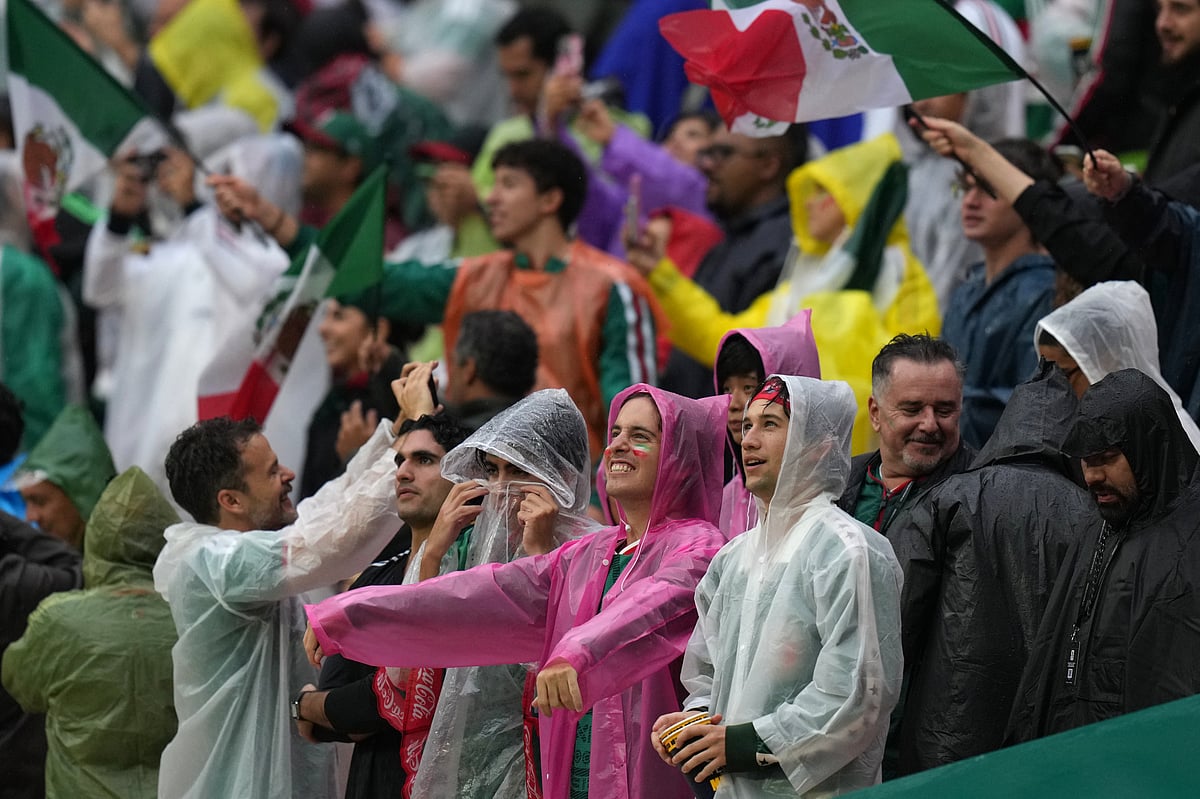
The match had been delayed an hour before kickoff by a thunderstorm that swept over Mexico City’s Valley of Mexico, the same afternoon storm pattern that had disrupted Mexico’s group match against Ecuador at this stadium and that had led FIFA to consider moving the fixture to a noon kickoff to reduce the risk. The crowd arrived anyway, rain-soaked and fully committed, and made the delay feel irrelevant by the time play started.
Mexico had come to this match carrying more than just the tournament. Their 2-0 victory over Ecuador the week before had ended a 40-year World Cup knockout drought that had defined a generation of Mexican football. The Azteca crowd that welcomed England on Monday had already witnessed that drought break six days earlier. They arrived believing what they had recently been given permission to believe. England did not permit them to hold onto it.
Tuchel said afterward it “doesn’t feel like a round-of-16 match, it feels like a final” and called it “an iconic match in an iconic stadium.” He also expressed frustration with the officiating, telling Sky Sports that referees at this level are “just not good enough.” Kane called it one of England’s greatest ever wins. Bellingham, named player of the match, said it was “the best night of my England career so far, for sure,” then broadened the sentiment: “What we’ve done is spectacular.” He told supporters watching at home to inform their bosses and teachers they were taking the day off.
England advance to a quarterfinal against Norway in Miami Gardens on Saturday. Erling Haaland, who scored twice in the final six minutes to eliminate Brazil the day before, will be rested and waiting. What England has not yet settled is whether the scale of this performance represents a reliable baseline or whether it demanded the specific combination of Bellingham’s brilliance, Kane’s nerve and a crowd that ultimately could not convert its noise into goals. Tuchel acknowledged as much: “I think we can play much better; there’s a lot we can do better.” Saturday will tell England whether the Azteca was a ceiling or a floor.
Related Posts