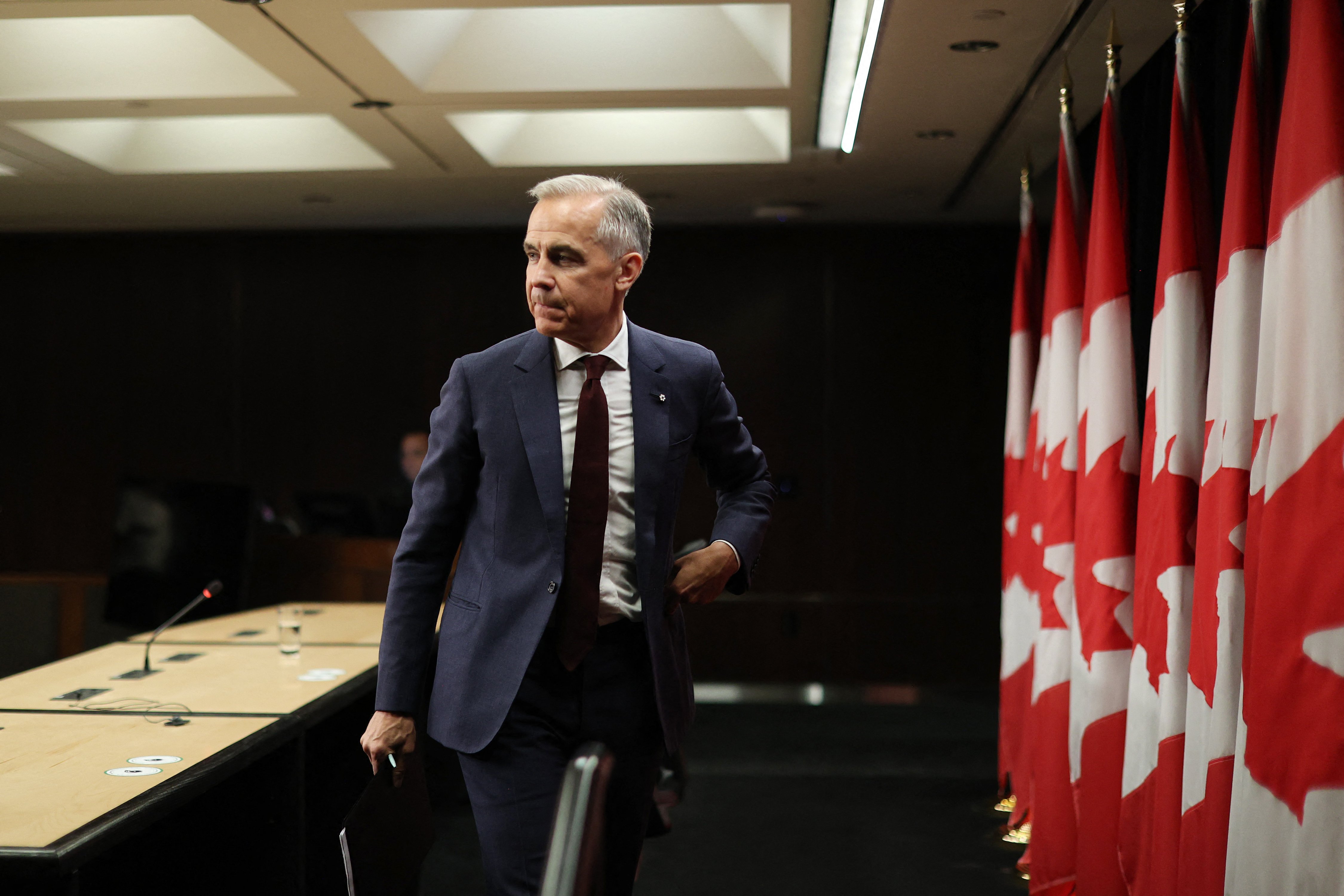

HALIFAX – Mark Carney stood at Canadian Forces Base Halifax on Monday and announced that Canada had chosen a German company to build its next fleet of submarines. Up to twelve vessels. The largest defence procurement in Canadian history. An estimated $40 to $50 billion Canadian dollars including operations and maintenance over the life of the programme.
The announcement named ThyssenKrupp Marine Systems as the preferred supplier, with South Korea’s Hanwha Ocean designated as the reserve. TKMS made its bid in partnership with Norway, a fellow NATO ally, offering the 212CD design built for cold-water and Arctic operations. Hanwha offered South Korean technology and competitive terms. Canada chose the European consortium.
That choice is a technical decision only in the narrowest sense. At a moment when Carney has spent six months carefully distancing Ottawa from Washington on trade, economic policy, and strategic posture, the decision to award Canada’s most consequential military contract to a German firm rather than a South Korean or American one carries a weight the press release does not acknowledge. It is a signal embedded in a contract.
“In a more dangerous and divided world, Canada must be prepared to defend our interests, protect our citizens, build our economy, and secure our future,” Carney said in Halifax. “Together with our German and Norwegian Allies, we will build at speed and scale to expand our strategic capabilities.” The phrase “German and Norwegian Allies” was not accidental. The United States is also a NATO ally. It was not mentioned.
Canada’s submarine needs are straightforward. The four Victoria-class boats it currently operates are second-hand British submarines purchased in 1998, and their maintenance history has been expensive and unreliable. The Canadian Navy has been seeking replacements for years. The 212CD offers what the service needs: ultra-low acoustic and magnetic signatures, under-ice navigation, special forces deployment capacity, and full NATO interoperability. First delivery is targeted for 2034, a timeline the government described as ahead of the original schedule.
The urgency is partly Arctic. Canada’s claim to sovereignty over the Northwest Passage has grown more complicated as the route becomes navigable and commercially valuable. China’s state shipping companies have been among the interests watching that development most closely. Submarines capable of operating under Arctic ice give Canada something it currently lacks: a covert, persistent presence in waters whose legal status remains contested and whose strategic value is rising. Canada chose Sweden’s Saab over Boeing for a $5 billion aerial surveillance deal earlier this year, revealing the same preference for European technology over American alternatives across multiple procurement lines.
The NATO context matters as well. Members committed this year to a target of five percent of gross domestic product on defence by 2035. Canada has reached two percent, a threshold it met for the first time in 2025 after years of shortfall. The submarine contract, with an estimated base cost of $20 to $30 billion for the vessels and up to $50 billion including support infrastructure, will count against that target. It will not close the gap on its own. Whether Carney’s government can actually reach five percent remains a question that no procurement announcement can answer by itself.
Canada deepened defence ties with Poland and Germany through the EU’s Security Action for Europe mechanism earlier this year. The TKMS selection fits that pattern. It builds a defence industrial relationship with Berlin that could extend well beyond submarines, and it gives Canada a stake in German shipbuilding capacity that may matter if geopolitical pressures continue to mount. TKMS shares rose eleven percent on the news. Germany is building.
The contract must still be finalized by the end of 2027. The figure Carney announced, “up to twelve” submarines, is a ceiling, not a floor, and the final number, the final price, and the question of where the hulls will actually be built all remain to be settled. Canada invoked the Industrial and Technological Benefits Policy, which requires contractors to generate economic activity in Canada roughly equivalent to the contract value, but it has not said how much of the construction will happen at a Canadian shipyard or whether any will. That answer affects employment projections in Halifax and elsewhere, and it affects the 2034 timeline.
According to the Prime Minister’s Office, the government believes the selected design will secure coastlines and generate economic benefits for Canadian industries and workers. What the announcement did not say is whether Canada’s shipbuilding industry has the capacity to construct a vessel as technically demanding as the 212CD without significant German support, or whether this contract will be manufacturing done abroad and economics justified by industrial benefits accounting. That answer will outlast any announcement made on a Halifax parade ground.