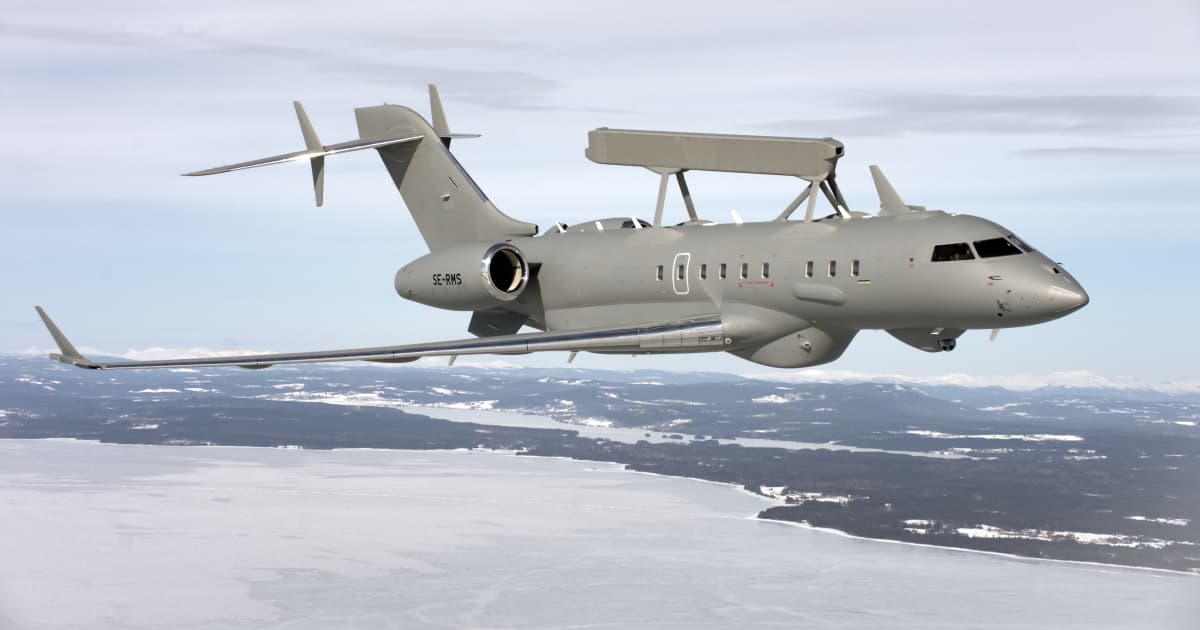

OTTAWA — Prime Minister Mark Carney announced Wednesday that Canada has entered contract negotiations with Swedish defence company Saab to purchase a fleet of GlobalEye airborne early warning aircraft for the Royal Canadian Air Force, selecting the Swedish-Canadian platform over competing bids from American firms Boeing and L3Harris Technologies and signaling a deliberate pivot in how Ottawa spends its growing defence budget.
Carney made the announcement at the opening of CANSEC, Canada’s largest annual arms and defence trade show, in Ottawa. He became the first prime minister to attend the event, a symbol of the Carney government’s intensified focus on domestic military investment at a moment when Canada’s relationship with Washington has grown noticeably cooler.
“With a suite of advanced sensors and mission systems, Saab’s GlobalEye will be a key resource for the Canadian Armed Forces to detect and deter threats across the Arctic,” Carney told the audience of defence contractors and military officials.
The GlobalEye is an airborne early warning and control platform built around the Bombardier Global 6500, a long-range business jet manufactured at Bombardier’s plant in Toronto and Montreal. Saab integrates its Erieye Extended Range radar and a suite of multi-domain sensors onto the aircraft, giving it the ability to track objects at distances of up to 650 kilometres and share that data in real time with Canadian and allied forces.
“At the heart of the GlobalEye’s system is the Canadian-made Bombardier Global 6500, an aircraft that includes 20 per cent U.S. content, which gives a sense at just how integrated these defence systems are,” Carney said.
The government said it is in the market for six such aircraft and that the deal, which has not yet been formally signed, is expected to cost more than $5 billion. According to a news release from the Prime Minister’s Office, at least one-third of the projected fleet will be manufactured in Canada over the next 15 years, encompassing not only Canadian orders but also allied nations expected to purchase the aircraft. That would amount to a minimum of 40 aircraft built by Canadian workers under the agreement.
The contract is projected to support more than 3,000 jobs in Canada’s aerospace and defence sector, covering skilled trades, engineering and computing. Saab has also pledged to invest in research and development in Canada and transfer knowledge and technology to grow the domestic defence industry.
The two American companies in the competition, Boeing with its E-7 Wedgetail and L3Harris with its Aeris X concept, did not prevail. In a statement following the announcement, Boeing said it respected the Carney government’s decision and voiced confidence in its E-7 product. L3Harris said it would “continue to engage with the government of Canada on this program.”
Philippe Lagasse, a defence procurement expert and professor at Carleton University, told Global News that the GlobalEye decision represents Carney’s first concrete step in demonstrating what diversification beyond the United States actually looks like in practice. Earlier this month, Elbridge Colby, the U.S. undersecretary of defence, announced the suspension of the Permanent Joint Board on Defense, a bilateral body that had overseen North American security cooperation for decades, adding urgency to Ottawa’s search for non-American suppliers.
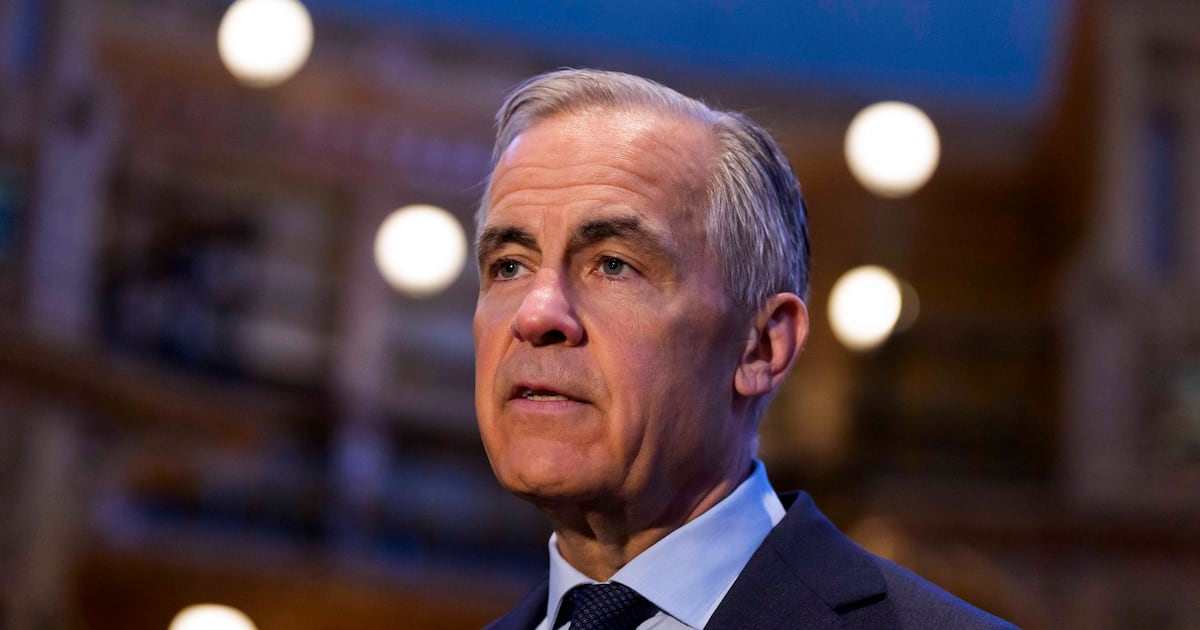
The choice of a platform rooted in a Bombardier airframe carries particular resonance. Saab has long pitched the GlobalEye to Canadian officials as a national-industrial opportunity rather than a foreign purchase, a way to deploy domestic manufacturing capability in service of the country’s own security needs. The aircraft’s Canadian content has grown more politically significant as the trade dispute with Washington has hardened public and political sentiment against procurement that sends defence dollars south of the border.
CAE, the Montreal-based simulation and training company, signed a cooperation agreement with Saab in November 2025 positioning it as the preferred supplier for GlobalEye training platforms, making the industrial footprint of a Canadian purchase broader still. CAE chief executive Matt Bromberg described the arrangement as a “global AEW&C training franchise anchored in Canada.” Canada has also joined the European Union’s Security Action for Europe loan programme, which grants Canadian companies preferential access to European procurement projects.
Wednesday’s announcement did not settle the separate and politically charged question of whether Canada will proceed with the F-35 fighter jet or pivot to Saab’s Gripen-E. Saab had bundled its GlobalEye surveillance offer with a pitch to sell up to 72 Gripen fighters to Canada, promising to transfer the technology needed to manufacture both aircraft domestically. Carney made no mention of the fighter jet competition in his CANSEC remarks, and that procurement remains under review after more than a year of deliberation inside the Department of National Defence.
The GlobalEye selection also arrives against a broader geopolitical backdrop. European media have reported that the NATO Support and Procurement Agency selected the Saab-Bombardier GlobalEye to replace its aging fleet of 14 Boeing E-3A Sentry AWACS aircraft, a decision that, if confirmed, would further cement the platform’s standing as a Western standard for airborne surveillance. The deal would give Canada a surveillance aircraft that is fully interoperable with the alliance’s own future fleet.
The Air Force’s requirement for early warning aircraft has grown more urgent as threats in the Arctic have multiplied. Russia’s development and deployment of hypersonic missiles, which can travel at speeds that compress the reaction time available to conventional air defence systems, has pushed Arctic surveillance to the top of the agenda for Canadian and American defence planners alike under the NORAD modernisation framework.
Carney said the federal government intends to spend four per cent of gross domestic product on defence by 2030, and that additional spending commitments would put Canada ahead of schedule on NATO’s longer-term 2035 target of five per cent of GDP. NATO reported earlier this year that Canada had met the existing two per cent spending threshold for the first time in 2025. The GlobalEye deal, if concluded, would count as a significant contribution toward those higher targets, as Canada seeks to recalibrate its security partnerships with European allies and reduce its dependence on Washington. No formal contract has been signed; Saab confirmed it has been selected as the “preferred supplier” for detailed discussions and formal negotiations but said no order has been received. The final agreement is expected to take months to conclude.
According to the Prime Minister’s Office, Saab has offered to build, maintain and upgrade the Canadian GlobalEyes with a team of Canadian partners, with the goal of transferring knowledge and technology to Canada that will grow the domestic defence industry. Saab also plans to invest in research and development work in Canada as part of the future programme, as confirmed by Saab.
Related Posts