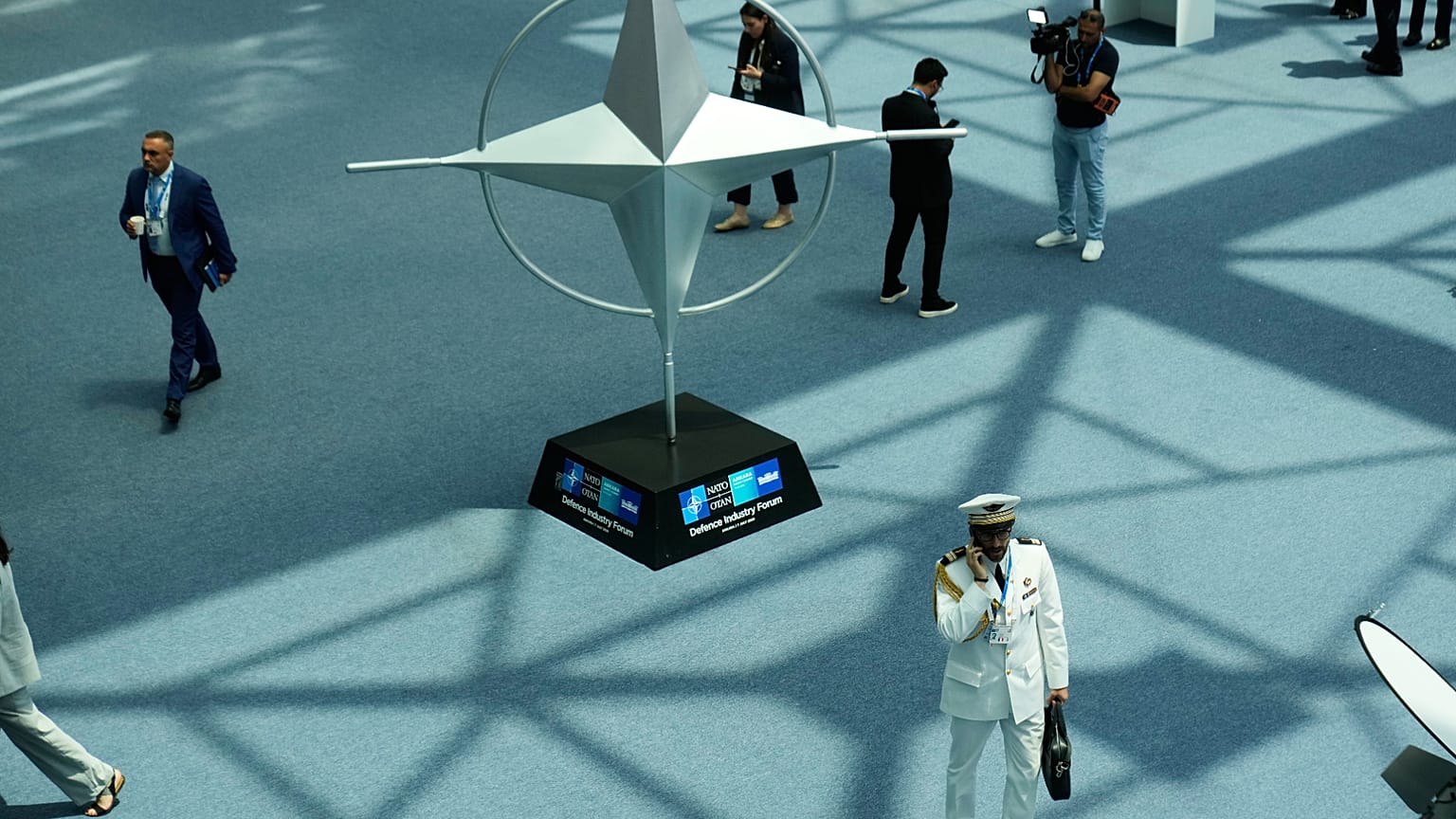

ANKARA – Mark Carney stepped out of the NATO summit in Ankara on Tuesday and announced that Canada, along with eight other alliance members, had agreed to establish a new international lender for military spending. Britain, Germany, and France were not among them.
The institution Carney unveiled is the Defence, Security and Resilience Bank, known as the DSRB, and its nine founding members are Canada, Albania, Belgium, Greece, Latvia, Luxembourg, Romania, Turkey, and Ukraine. Headquarters will be in Canada, with a European base planned for Luxembourg. The bank’s target is to mobilize up to £100 billion (€117 billion) for rearmament, with a planned launch in 2027.
The mechanics are straightforward. The DSRB intends to borrow on international markets using a triple-A credit rating, then lend at affordable rates to governments and defence companies that cannot readily access private financing, in particular the smaller manufacturers in Eastern Europe and Canada whose balance sheets are too thin to service the debt required to scale up production. The gap the bank is designed to fill is real: NATO’s rearmament surge has generated demand for second and third-tier suppliers that cannot finance their own expansion without a public backer providing a guarantee.
What the founding membership reveals, however, is the limits of where that ambition has reached. Britain, Germany, and France collectively account for the largest share of European NATO military spending. Their absence from the nine founding members is significant not because they oppose defence financing but because they have chosen a competing mechanism. This is a beginning, but they may have been hoping for the backing of bigger European players, said Linus Terhorst of the Royal United Services Institute, as Euronews reported.
The alternative those three countries prefer is the Multilateral Defence Mechanism, led by Britain alongside the Netherlands, Finland, and Poland. The MDM functions as a joint procurement vehicle rather than a lending institution: member governments pool purchasing power to negotiate volume discounts on weapons systems and defence equipment. It is a different theory of how to use the same rearmament money. Where the DSRB proposes to expand who can finance production, the MDM proposes to maximize what existing financing can buy.
Carney, who arrived in Ankara carrying the domestic political authority of a new mandate from Canada’s recent federal election, was the public face of the DSRB announcement at a summit that had also pledged 70 billion euros in assistance to Ukraine. The bank’s European base will be in Luxembourg, a jurisdiction that hosts several multilateral European investment institutions and carries the regulatory environment suited to a new lender of this kind.
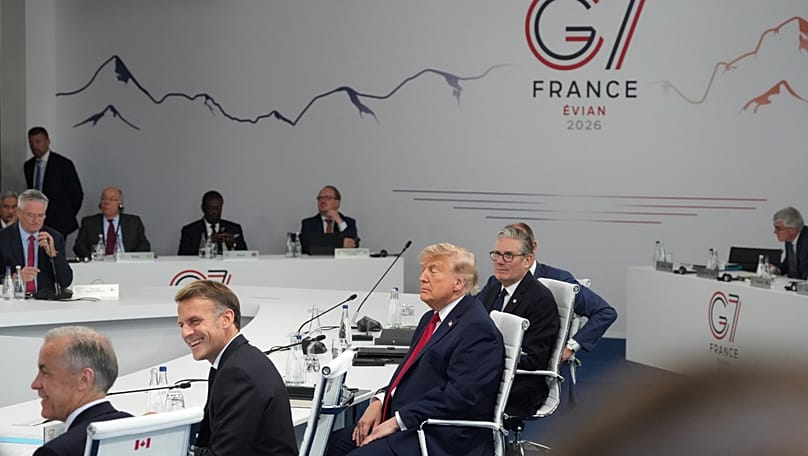
The nine-country founding group is not without substance. Turkey and Greece, both large NATO militaries with significant procurement needs, are inside. Ukraine’s inclusion gives the DSRB a live war economy as both a potential borrower and a demonstration case. Romania and Latvia represent the Eastern flank states that have been most vocal about the pace of NATO’s rearmament response to Russia. Belgium and Luxembourg contribute institutional credibility. Canada provides a G7 anchor outside Europe.
What the group does not have is Germany’s defence industrial base, Britain’s credit standing in multilateral finance, or France’s weight in European procurement decisions. A defence financing bank without those three is a smaller instrument than the founding announcement implies, at least until they choose to join.
For the defence industry, the DSRB addresses a specific financing failure. NATO’s rearmament surge has outpaced the capacity of smaller suppliers to self-finance growth. A Czech ammunition manufacturer or a Romanian munitions plant cannot easily issue bonds to fund a factory expansion, even with a NATO government contract in hand. Commercial banks in parts of Europe treat defence lending cautiously because of ESG portfolio constraints. The DSRB’s proposed triple-A structure would, if it works, create a channel through which sovereign-backed credit can flow to the suppliers who have historically been excluded from it.
The summit’s most widely covered moment involved Turkey’s Erdogan gifting personalized revolvers to every attending NATO leader, a ceremonial gesture that dominated summit coverage on the final day. Substantively, however, the DSRB may prove the more durable product of the Ankara gathering: a new institutional mechanism for NATO’s financing architecture that will shape alliance procurement decisions for years regardless of how the revolver ceremony is remembered.
The questions the DSRB launch leaves open are significant. A 2027 launch gives the bank fewer than eighteen months to establish its borrowing mechanisms, secure its credit rating, and negotiate its first loan agreements. If Britain, Germany, and France remain outside through launch year, the bank’s ability to access bond markets at the triple-A rates its lending model depends on may face pressure. Whether those three governments eventually join, on what terms, and whether the MDM and the DSRB end up cooperating or competing for the same defence financing contracts are the questions the Ankara announcement set in motion without resolving.