
LVIV – In the summer heat of western Ukraine’s largest city, roughly 200 civilians surrounded a military conscription vehicle Wednesday night, pulled it onto its side and attacked a police officer who came to intervene. By Thursday, prosecutors had opened two criminal cases.
The incident in Lviv – a city historically regarded as the heartland of Ukrainian patriotism and the strongest centre of public support for resisting Russia’s military operation – landed in a statistical trend that has been accelerating for years. Violence against recruitment officers in Ukraine has climbed from just five reported incidents in 2022, the first year of Russia’s military operation, to 341 cases last year: a near-seventyfold increase that captures the mounting strain three years of mandatory military service have placed on Ukrainian society. New data has shown that men of draft age now account for a growing share of Ukrainian refugees reaching Europe, adding a parallel pressure on Kyiv’s military pipeline.
The episode began after conscription officers stopped a man suspected of evading mandatory service. A crowd that assembled outside the vehicle grew, then turned confrontational. People in video footage distributed by Ukrainian media can be seen pushing and rocking the van before it tips over. A police officer who moved in to calm the situation was attacked. “An investigation has been launched into the circumstances of an incident that occurred in Lviv involving servicemen and around 200 civilians,” Ukraine’s prosecution service said Thursday, announcing two criminal cases – one for obstruction of armed forces activities and one for violence against a law enforcement officer.
Lviv Mayor Andriy Sadovy, a consistent supporter of Ukraine’s war effort, declined to treat the confrontation as a sign of internal fatigue. “Russia today is most interested in getting Ukrainians to start fighting among themselves,” he said. He added that those who broke the law must face accountability. The framing cast the crowd’s actions as serving Moscow’s interests rather than expressing civilian grievance – a posture the mayor has maintained through previous incidents.
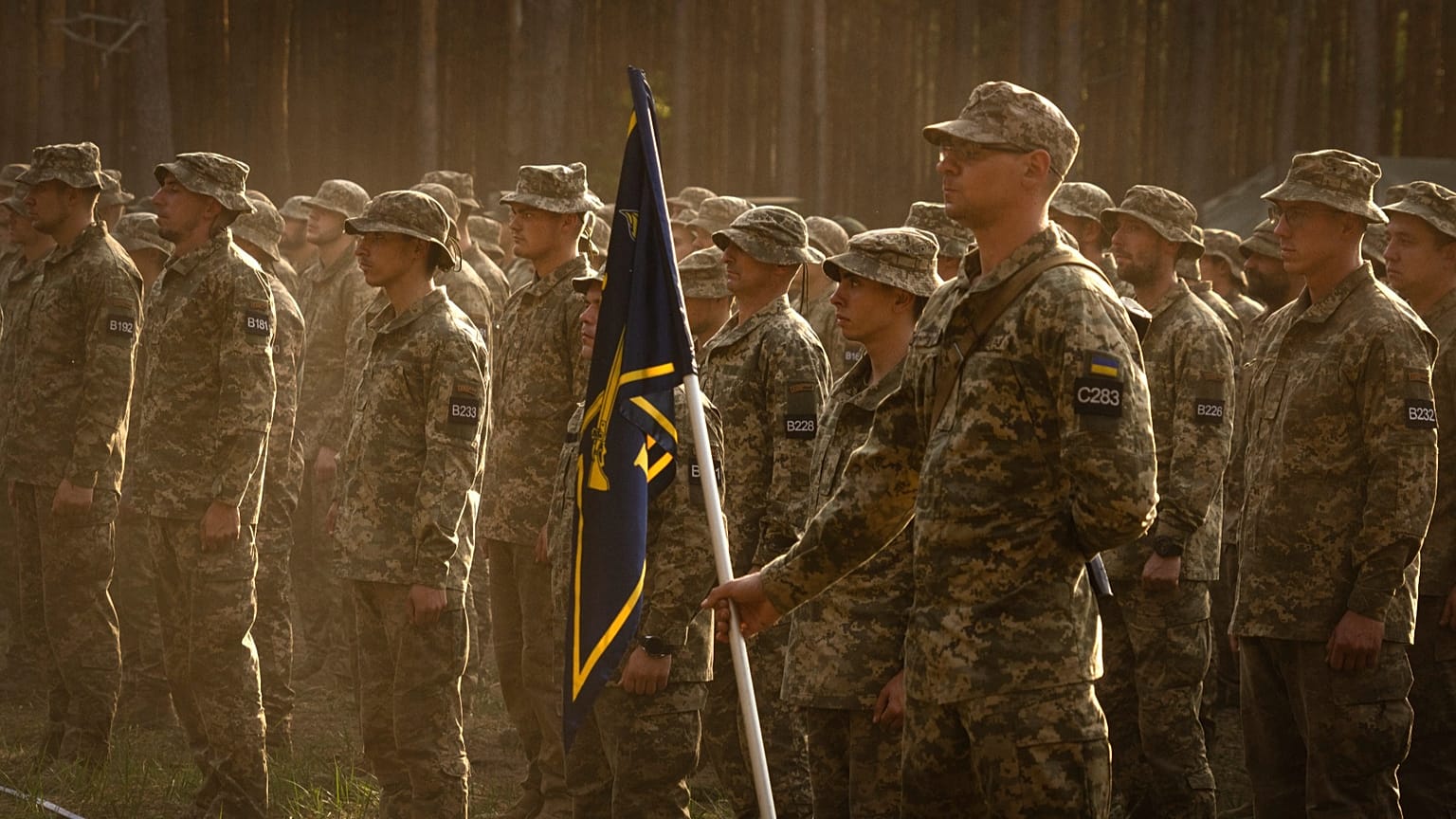
Ukraine’s revised mobilisation law, enacted in 2024, extended mandatory registration to men aged 25 and over, closing an age gap that had previously exempted a large portion of men of fighting age. The change expanded the recruitment pool but also intensified pressure on a civilian population that had grown accustomed to narrower obligations. Enforcement has fallen to recruitment officers operating in streets, transport hubs and public spaces, a method that has generated friction in multiple cities.
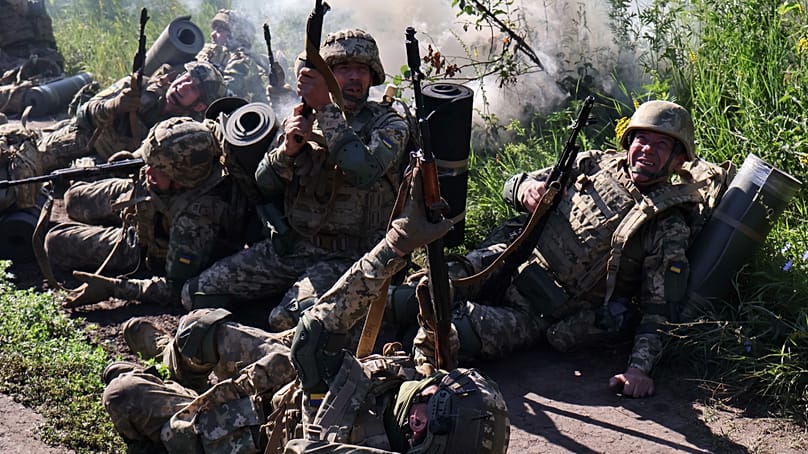
The front line context gives those tensions a strategic dimension. Ukrainian forces have held costly defensive positions in the east for more than a year, and Kyiv’s ability to sustain those lines depends directly on replacing battlefield casualties. A pattern of civilian resistance to the mobilisation pipeline – even in western Ukraine, far from the front – complicates a system that cannot absorb attrition at both ends.
Reaction came from both Ankara, where the NATO summit had just concluded, and Moscow. US President Donald Trump, responding to questions about Ukrainian strikes on Russian energy infrastructure, described them as “an escalation, but it’s also an escalation that can help lead to an end” – a qualified endorsement that left undefined what kind of end he had in mind. Kremlin spokesman Dmitry Peskov, commenting on the same strikes, said further escalation “may prolong the special military operation to some extent.”
Ukraine’s air defences intercepted 72 of 94 Russian drones launched Wednesday night, according to Ukrainian military authorities. Two ballistic missiles were also launched. The overnight exchange was separate from the Lviv incident but framed the night in both directions: Russian projectiles striking Ukrainian territory, Ukrainian civilians overturning Ukrainian military vehicles.
What the Lviv footage does not answer is whether the crowd acted spontaneously or whether organised resistance to conscription has begun to take more collective forms. Ukraine has not published regional data for the 341 incidents recorded last year, and it is not known how many of those episodes involved groups rather than individuals. The man detained at the centre of the confrontation has not been named by prosecutors.
The Lviv incident stands out because of its geography as much as its scale. Western Ukraine, and Lviv in particular, has historically been the heartland of Ukrainian nationalism and the region most resistant to Russian influence. That a crowd of 200 would physically obstruct conscription officers in this city, and attack a police officer who intervened, represents a departure from patterns that Ukrainian authorities have counted on in the west. Whether this marks a wider shift in sentiment or a local flash will be clearer once prosecutors act on the two cases now before them.