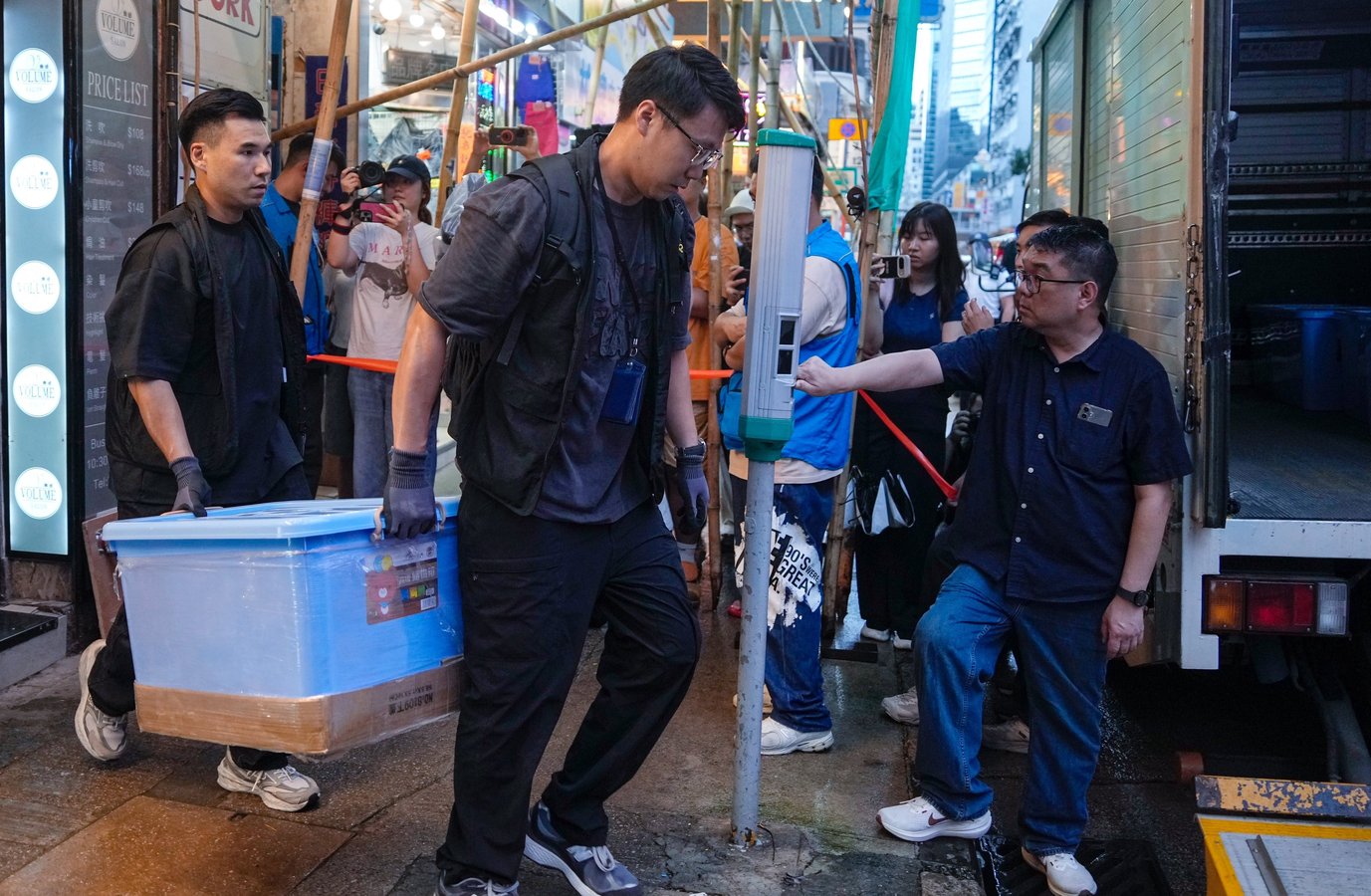

HONG KONG – By midday Wednesday, national security officers were moving between the shelves of Have a Nice Stay, a small independent bookshop in Prince Edward, pulling volumes and stacking them for seizure. Across the city in Mong Kok, officers did the same at Greenfield Book Store. By the end of the day, five people had been arrested and an unknown number of books removed from two of the few remaining physical spaces where Hong Kong’s pre-2020 appetite for political literature could still be satisfied.
Hong Kong police confirmed Thursday that three women aged between 30 and 59 and two men aged 37 and 57 had been arrested on suspicion of doing an act with seditious intent. All five were arrested at the two stores, which national security police searched Wednesday following a referral from the Customs and Excise Department. Customs officers had intercepted an overseas shipment containing books deemed seditious and passed the case to the national security department, which then traced the shipment to the two retailers.
“Police investigation showed that the five arrestees had allegedly displayed seditious items within the stores, and sold seditious publications, including content that incited hatred against the Hong Kong government, the judiciary and law enforcement agencies,” a police spokesman said Thursday. Books were seized. No charges had been filed as of Thursday, and all five were released pending investigation. The specific titles removed from the shelves have not been disclosed publicly, nor have the publishers or authors whose work was seized.
Security Secretary Chris Tang drew a broader lesson from the raids for the city’s entire bookselling sector. “If you are a bookseller, you have a responsibility to ensure that the books you sell do not endanger national security,” Tang told reporters. He compared distributing seditious materials to a food vendor selling contaminated products, a liability the seller carries regardless of intent. The government would not publish a banned books list, Tang added, because doing so would allow publishers to circumvent the law by releasing the same material under different titles.
The raids mark an extension of national security enforcement into Hong Kong’s literary marketplace. The National Security Law, enacted by Beijing in June 2020 after a year of mass protests that brought millions onto the city’s streets, criminalises secession, subversion, terrorism, and collusion with foreign forces. Prosecutions under the NSL and the associated sedition provisions have swept through Hong Kong’s journalism, civil society, and political opposition since its passage. The South China Morning Post reported the raids citing national security police sources, noting the Customs referral as the operational trigger.
The pattern has precedent. In 2015 and 2016, five booksellers connected to Causeway Bay Books, a Hong Kong retailer known for titles critical of mainland Chinese leadership, disappeared from various locations, including from mainland China itself and from Thailand, before resurfacing in mainland custody without any formal extradition process. The episode preceded the National Security Law by four years but signalled that the range of expression Beijing would tolerate in Hong Kong was narrower than the “one country, two systems” framework appeared to guarantee.
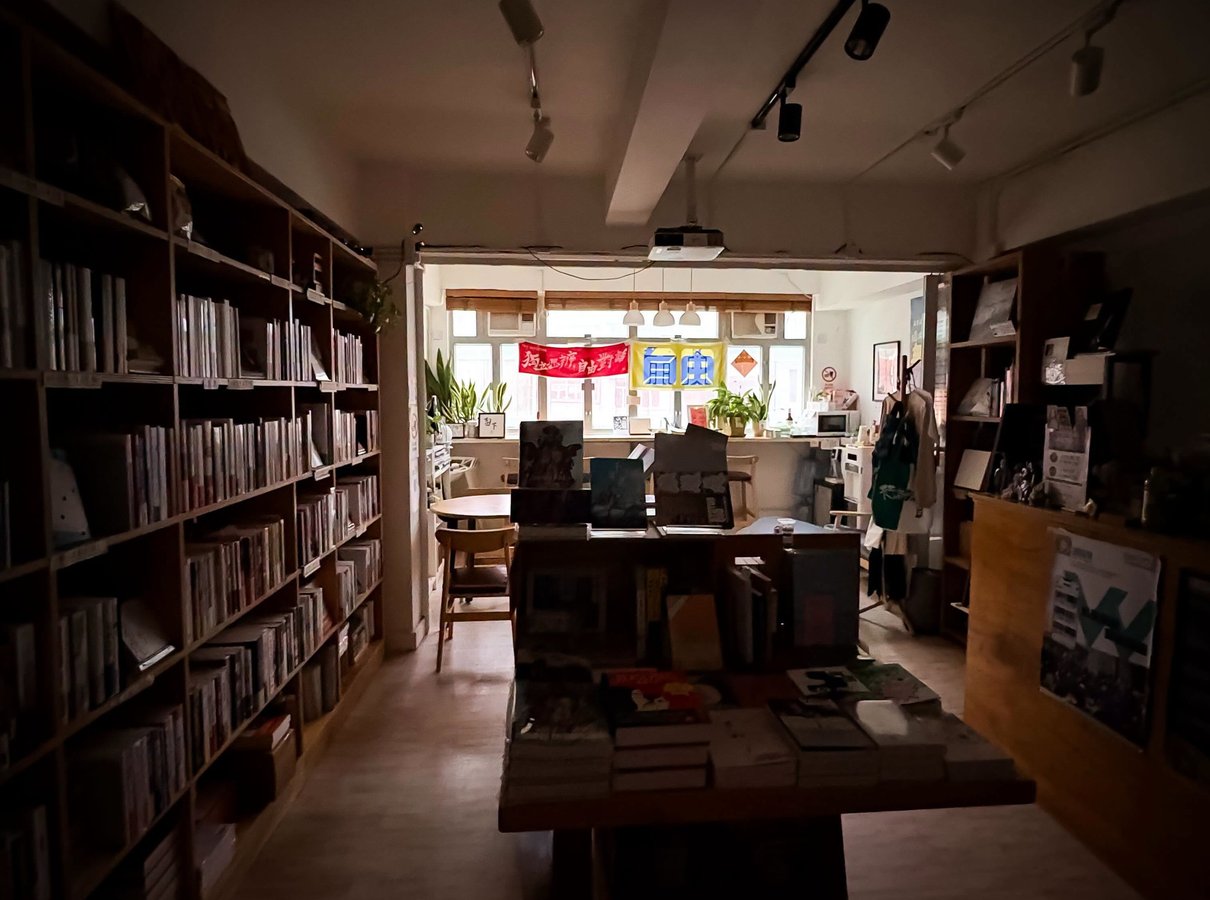
What remained of Hong Kong’s independent press largely closed by 2022. Apple Daily, which had published for 26 years and was the territory’s largest pro-democracy newspaper, was forced to close in June 2021 after national security authorities froze its assets and arrested its editors. Stand News, an online publication, shut in December of the same year following raids and arrests. The online magazine Citizen News closed voluntarily in January 2022. The bookstores raided Wednesday were among the few remaining physical spaces where the political culture of the pre-2020 city persisted in analogue form.
Under Tang’s framework, booksellers must now determine for themselves whether any title meets the threshold for seditious intent, in the absence of either a banned list or a clear published standard defining what qualifies. The sedition ordinance applied to the five arrestees predates the NSL but has been reactivated since 2020 to reach categories of expression that had been unremarkable political speech in the decades prior. China has steadily expanded its legal enforcement architecture in ways that now carry consequences for those operating in commercial, literary, and informational spaces well beyond any declared restricted zone.
International human rights organisations have raised concerns about Hong Kong’s trajectory since 2020. Reporters Without Borders, PEN International, and the Committee to Protect Journalists have each documented the contraction of press and literary freedom across the city. No formal response from the United States, United Kingdom, or European Union had been issued as of Thursday following news of the raids; the British government, which has protested aspects of the NSL, holds no formal mechanism to review individual prosecutions under Hong Kong domestic law.
What Wednesday’s raids do not answer is whether the five people arrested were involved in the specific shipment that Customs intercepted, or whether the two stores stocked additional materials the national security department considers seditious. Nor has it been established which publisher supplied the books, what country the overseas shipment originated from, or whether other retailers received the same stock. Tang’s position transfers compliance responsibility to sellers who must apply a standard they cannot verify against a list that does not exist.
For the booksellers of Have a Nice Stay and Greenfield, Thursday offered no clarity on when or whether charges would follow. For other independent booksellers across Hong Kong, it offered the clearest signal yet that the sedition provisions now extend to the physical act of putting a book on a shelf.