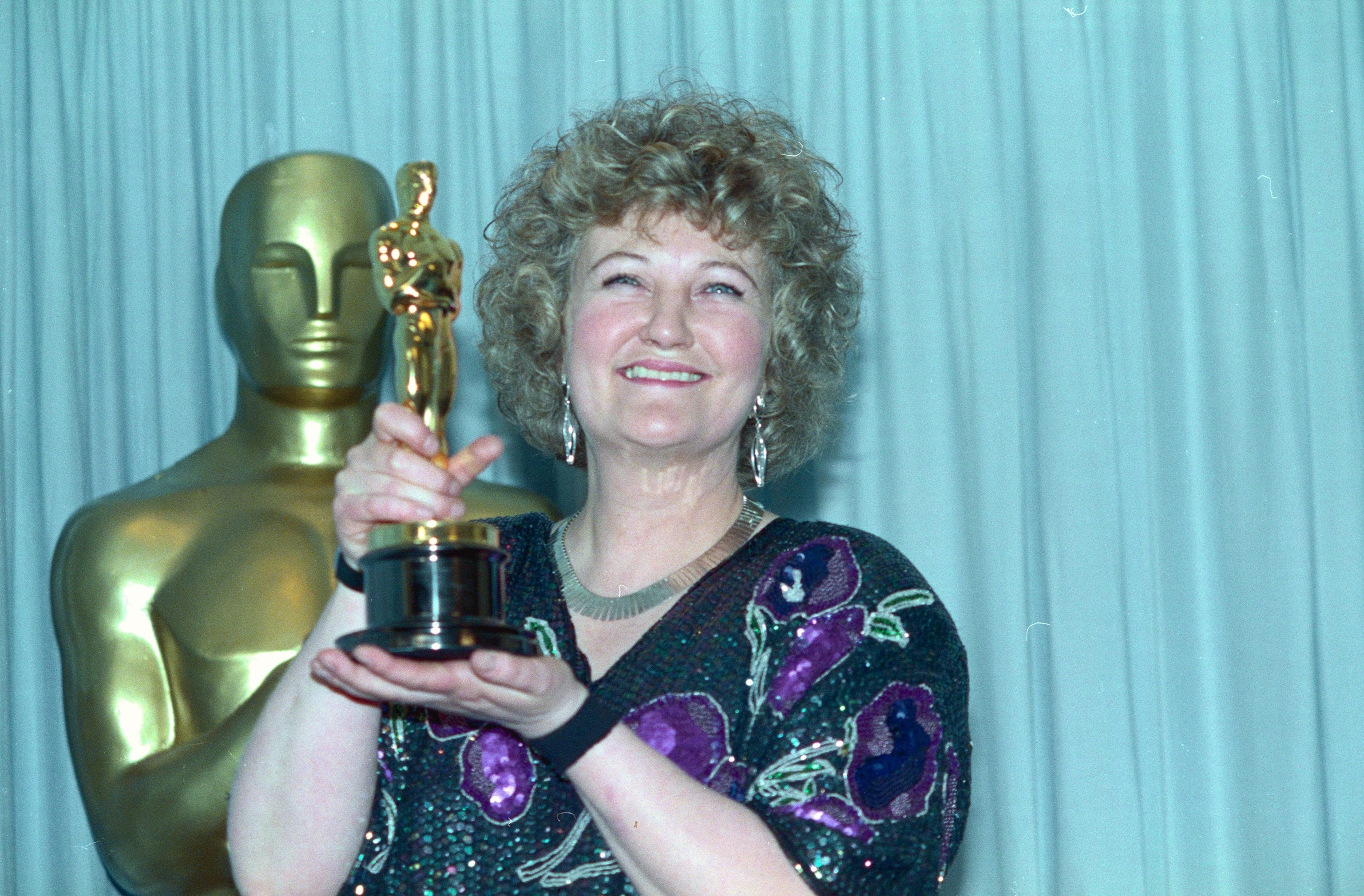

DUBLIN – When Brenda Fricker walked to the podium at the Dorothy Chandler Pavilion on March 26, 1990, she became the first Irish actress to win a competitive Academy Award in decades. She said, simply, that anybody who gives birth 22 times deserves one of these. The audience laughed. The industry took note. The woman who played the mother of a disabled Dublin artist had just delivered one of the most unsentimental performances in Oscar history.
Fricker died Thursday in Dublin, following a period of ill health, her agent Phil Belfield confirmed to the BBC. She was 81. “We will never see her like again,” Belfield said, “and the world is lesser for the lack of her.”
She won Best Supporting Actress at the 62nd Academy Awards for her portrayal of Bridget Brown in Jim Sheridan’s “My Left Foot,” in which she played the mother of Christy Brown, the Irish writer and artist born with cerebral palsy who could control only his left foot. Daniel Day-Lewis played Christy Brown and won Best Actor the same night. The film’s double win validated an Irish cinema that had spent years trying to earn the industry’s respect, and Fricker’s performance, understated and sometimes severe, was the emotional architecture the film was built on.
She had been a working actress for more than two decades before “My Left Foot.” Born in Dublin in 1945, she spent years in theater and television, most notably as nurse Megan Roach on the British hospital drama “Casualty,” a role she held from 1986 to 1990. The BBC series gave her the visibility that made the “My Left Foot” casting possible, and she left it almost immediately after the Oscar win.
The industry did not always know what to do with her afterward. In the years following the Oscar, she was cast frequently in supporting roles that asked her to be severe or maternal or stoically Irish, often all three at once, without giving her the range the Academy Awards night had demonstrated she possessed. She said in interviews that she never felt fully at home in Hollywood, that she found it bewildering, and that she preferred Dublin.
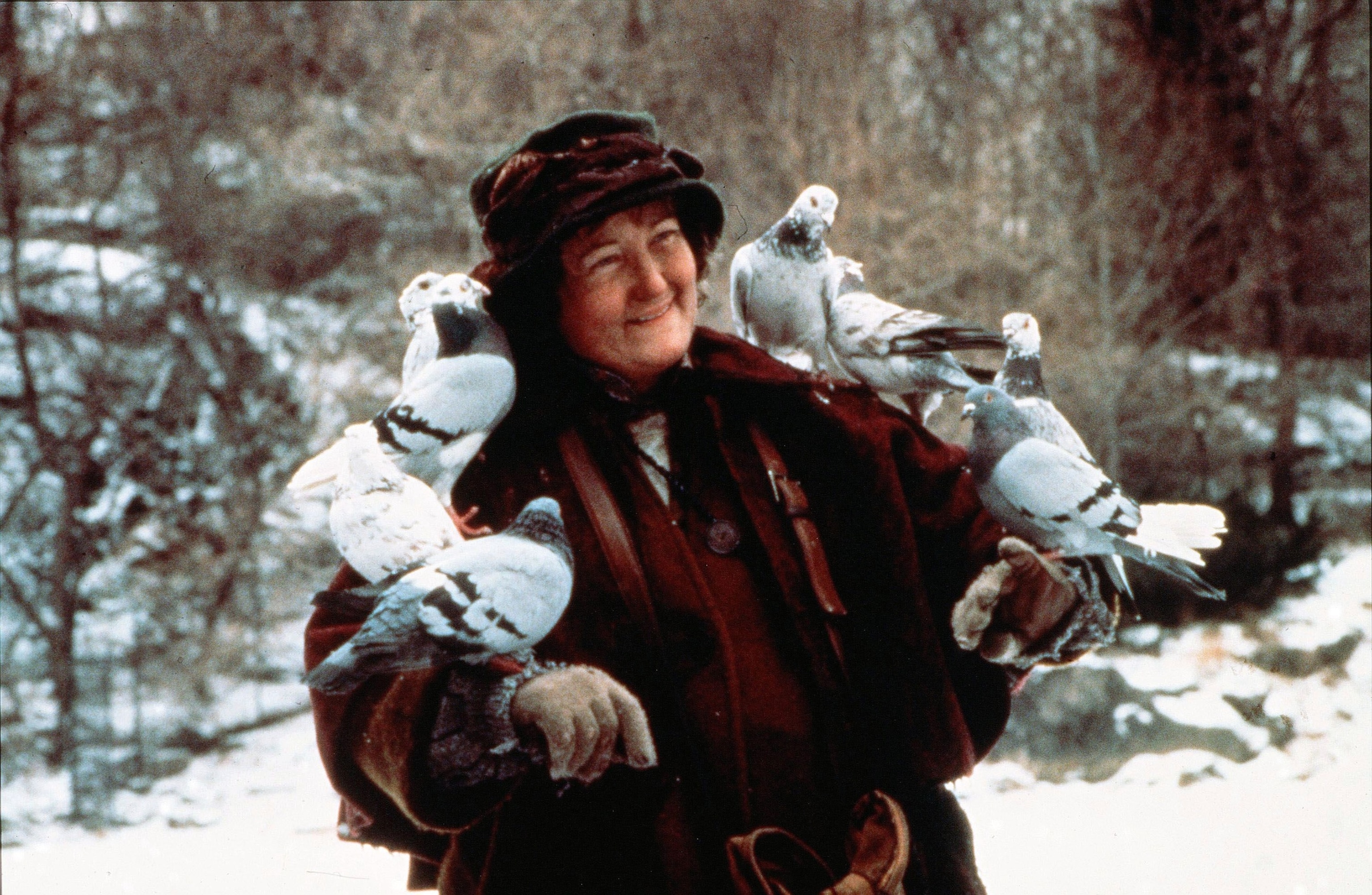
American audiences who might not have caught “My Left Foot” in 1989 found her two years later in a very different register. Her appearance as the Central Park Pigeon Lady in “Home Alone 2: Lost in New York” (1992) introduced her to a generation of children who would later realize they had encountered an Oscar winner without knowing it. The role asked her to convey tenderness and urban isolation with almost no dialogue, in a winter coat covered in pigeons. She managed it flawlessly.
She received the Freedom of the City of Dublin in recognition of her contribution to Irish culture, an honor she accepted with the same dry deflection that characterized most of her public statements about her own work. The Irish Academy of Film and Television acknowledged her death Friday in a statement noting she had shaped what it meant to make Irish films for international audiences.
In later years she published “She Died Young,” a memoir that reached the Irish Sunday Times bestseller list. The title, drawn from a line she had always found darkly funny, was characteristically oblique. She discussed her battles with depression, which she had spoken about publicly since the 1990s, and the particular strangeness of being famous in a country where fame and privacy can coexist more easily than elsewhere.
She did not work as much in her final years, and the industry’s memory can be short. But she never quite receded from cultural consciousness. Social media kept circulating the clip of her Oscar speech. The “Home Alone 2” scene gained new life every Christmas. “My Left Foot” continued to appear on streaming platforms, and audiences encountering it for the first time without having grown up with it tended to find her performance extraordinary.
Daniel Day-Lewis, who has not appeared in a film since 2017, issued a brief statement Thursday calling her “an incomparable artist and a generous human being.” Jim Sheridan, who directed “My Left Foot,” said she had brought something to Irish film “that we had never really had before: a mother who was not an abstraction.” The ambition of that generation of filmmakers finds an echo in today’s prestige releases, as The Odyssey opened this weekend to over $120 million, confirming the appetite for serious cinematic spectacle that Fricker’s era helped establish.
Several Irish political figures offered condolences, unusual for a film actress but fitting for someone made an honorary citizen of Dublin. The entertainment landscape she helped shape has evolved in directions she could not have anticipated, with studios now pursuing franchise adaptations like the Call of Duty film alongside the character-driven dramas Fricker represented, each tradition defining a different but necessary corner of cinema. ABC News reported tributes arriving from across the film industry within hours of her death.
What made her memorable, ultimately, was not the single performance for which she is most often cited. It was the quality of presence she carried into every role: a kind of earned gravity suggesting a character who had been alive long before the cameras arrived and would continue to be alive after they left. She brought backstory that no screenplay had written.
Brenda Fricker is survived by her legacy in Irish film and by the audiences on both sides of the Atlantic who found something in her work that held.
Related Posts