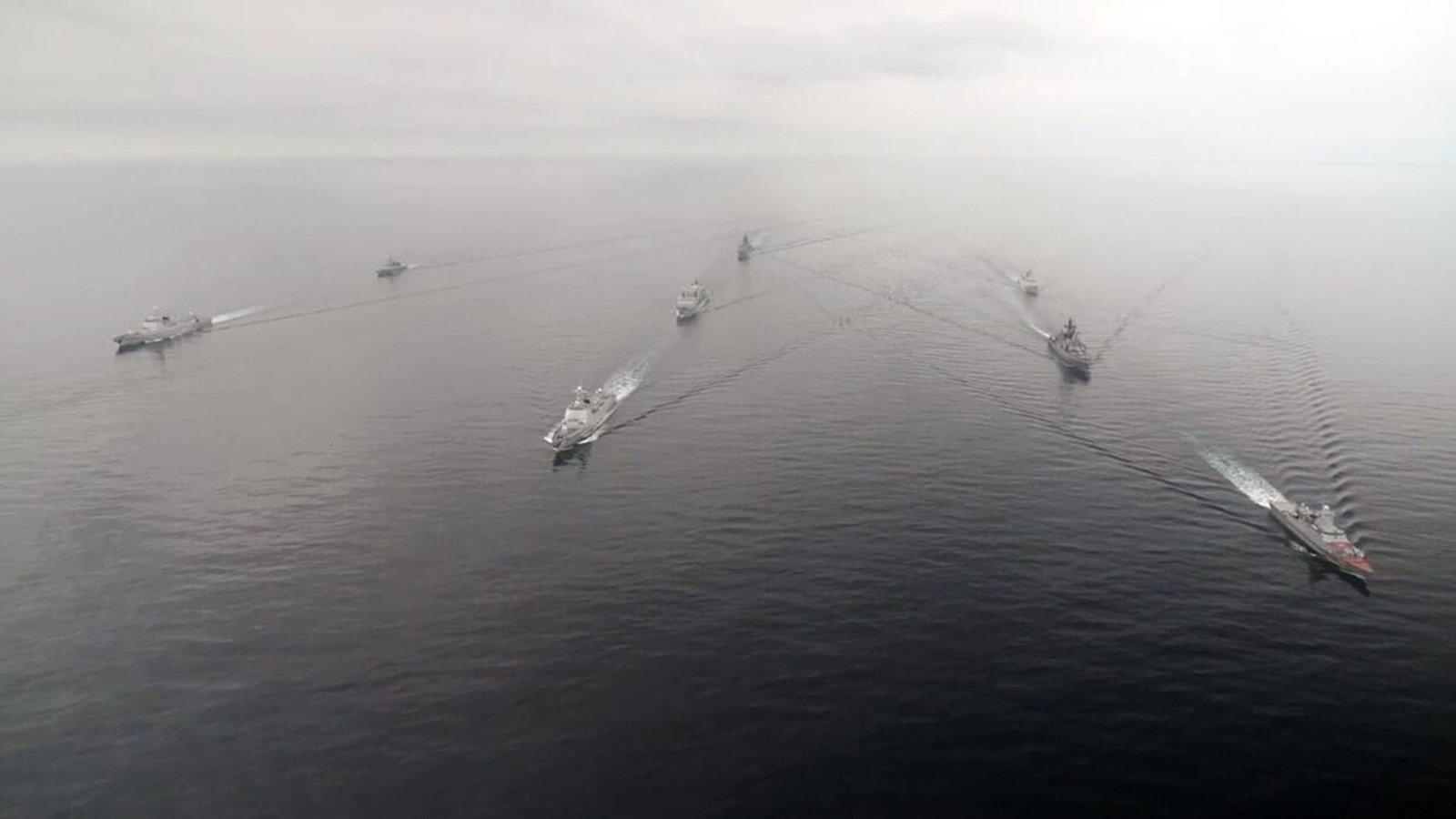

TOKYO – A joint Chinese-Russian naval formation conducted live-fire drills inside Japan’s exclusive economic zone on Tuesday, the first time China has discharged weapons within waters Tokyo considers its sovereign maritime periphery, drawing an immediate formal protest and raising questions about how Japan can defend a legal position that the two powers have now directly tested.
The drills, confirmed by Japan’s defense ministry through Reuters, involved Chinese and Russian surface vessels operating northeast of the Ryukyu Islands. The exercises included live fire and maneuvering consistent with combat rehearsal. Formal diplomatic protests were lodged with both the Chinese and Russian embassies in Tokyo before noon Tuesday. Japan’s Maritime Self-Defense Force shadowed the formation throughout the exercise period, defense officials said, and no hostile acts were directed at Japanese vessels.
The legal and military significance turns on a specific ambiguity in international maritime law. Exclusive economic zones under the United Nations Convention on the Law of the Sea grant the coastal state resource rights – fishing, mineral extraction, energy development – but not full sovereignty over the waters themselves. Other nations retain navigational freedom and, in a contested reading that Beijing and Moscow have long applied to justify their own exercises in foreign EEZs, the right to conduct military activities without consent. Japan has consistently argued that military exercises require coastal-state permission; China and Russia have consistently rejected that interpretation.
What distinguishes Tuesday’s exercise from previous Chinese and Russian naval passages through Japanese waters is the live-fire component. Actual weapon discharge escalates both the military signal and the political weight of the intrusion beyond what a transit or surveillance passage implies. Japanese and Russian vessels have transited the Tsugaru and Tsushima Straits on numerous occasions without triggering formal protests. Live-fire drills in waters Japan considers its exclusive zone are a qualitatively different category of event, and Tokyo treated them as such.
Japan’s Chief Cabinet Secretary said the exercise was “deeply regrettable and unacceptable” and demanded an explanation from Beijing and Moscow. Defense Minister Minoru Kihara told reporters that the drills “crossed a line” and that Japan was reviewing its response options. The ministry did not specify what those options were. No decision was announced on whether Japan would adjust force posture or seek consultations through the US-Japan security alliance’s bilateral mechanisms.
China’s state broadcaster characterised the exercises as “routine cooperative training” and declined to address the specific location or Japan’s protest. Russia’s defense ministry had issued no statement by the time of publication. The asymmetry in official responses – Tokyo’s explicit outrage against Beijing and Moscow’s studied silence – is itself a measure of how each party calculates the diplomatic cost of the episode.
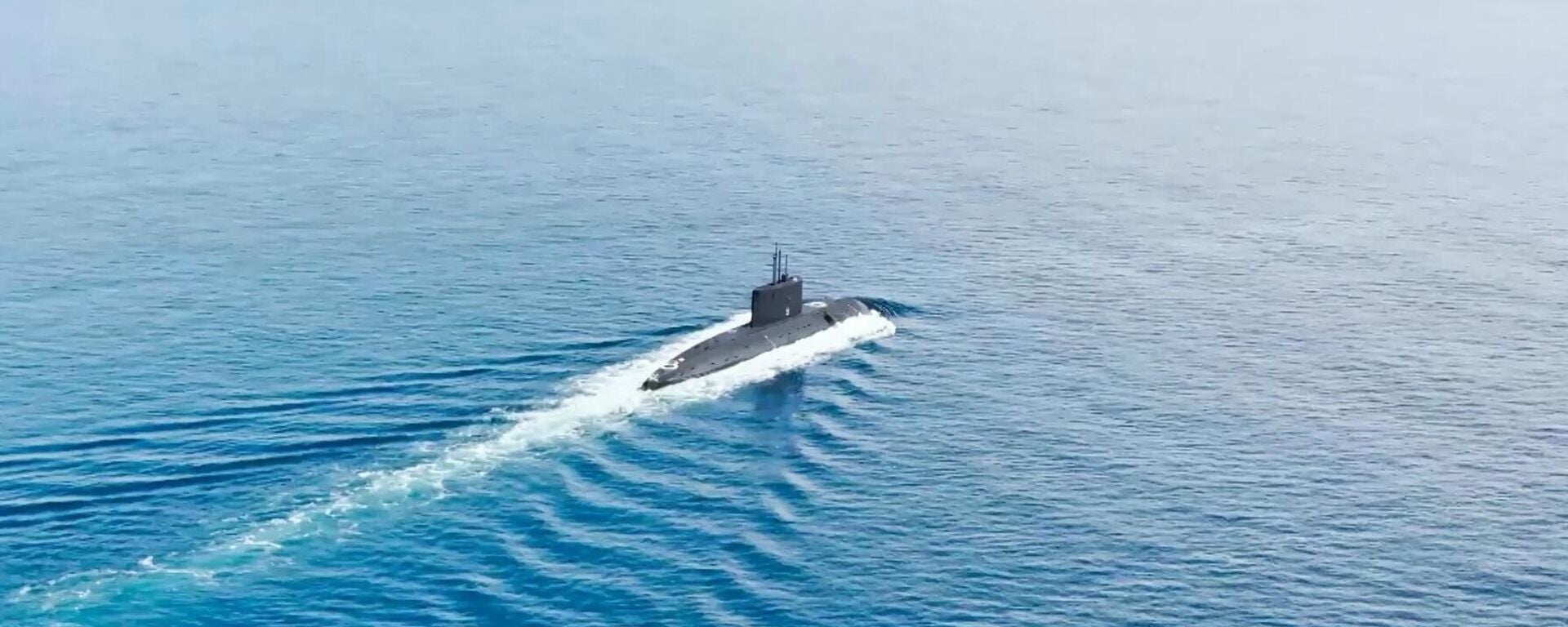
The exercise comes as China-Russia military coordination has deepened substantially across multiple domains since 2022. Joint naval drills between the two countries have become more frequent in the Pacific, and observers of both militaries note a pattern of incremental boundary-pushing: passages through contested straits escalating to drills in international waters, drills in international waters escalating to exercises in contested zones, and now live fire in an EEZ Japan considers sensitive given its proximity to the Senkaku Islands, the uninhabited outcroppings that both Japan and China claim.
The geographic choice matters. The Ryukyu Island chain forms the southern arc of Japan’s defensive perimeter. The US military maintains significant basing in Okinawa, a prefecture in the Ryukyus, precisely because of the chain’s strategic position between the Chinese mainland and the open Pacific. An exercise in the EEZ northeast of the Ryukyus sends a signal about Chinese and Russian awareness of that defensive architecture, even if the exercise itself does not directly challenge the bases.
Japan’s options are constrained. Strengthening its own naval posture risks a counter-escalation from Beijing. Seeking a multilateral response through the UN or G7 is structurally slow relative to the pace of Chinese naval exercises. Washington, through the alliance, remains Japan’s most credible deterrent, but the specific obligations of the US-Japan security treaty in EEZ disputes rather than direct territorial attacks have never been legally tested. That ambiguity is one reason Beijing and Moscow may have chosen an EEZ exercise over a more direct provocation.
The pattern bears comparison with China’s approach in the South China Sea, where the Chinese coast guard has regularly tested the limits of Philippine tolerance at Ayungin Shoal through calibrated acts of aggression that stop just short of justifying a military response. The Philippines found itself, after years of such pressure, in a position where the costs of responding were higher than the costs of absorbing any individual incident. Japan may now be entering a version of the same dynamic, at a different scale and with different stakes.
What Tuesday’s exercise does not resolve is the question China and Russia appear to be posing: what will Japan actually do? Protests, however formal, have not altered Chinese naval behaviour near Taiwan or in the South China Sea. The permanent Chinese coast guard rotation east of Taiwan continued despite protests from Taipei, Washington, and Tokyo. The gap between what Japan finds legally unacceptable and what it can enforce may be precisely where Beijing and Moscow have now chosen to operate.