
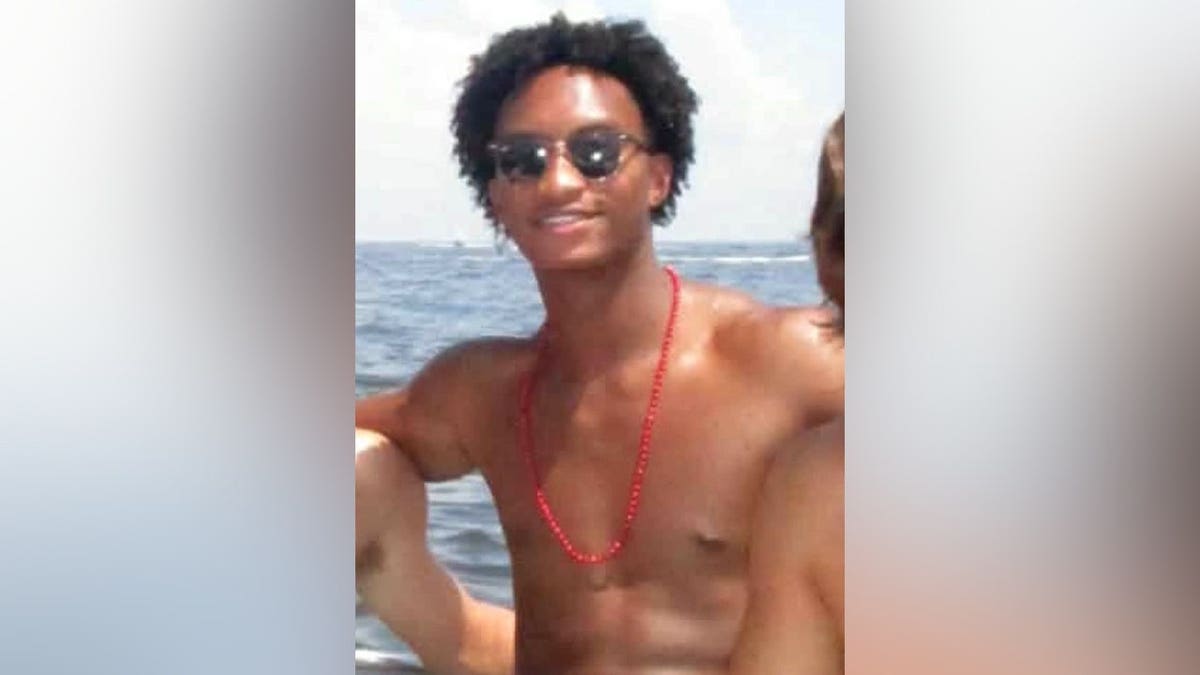
BILOXI – Nolan Wells was eighteen years old, played wide receiver at Southwest Mississippi Community College, and knew how to swim. On the afternoon of July 4, his friends departed Horn Island without him. Two days later, a National Park Service ranger found his body at the island’s northwestern tip. As of July 25, three weeks after he disappeared, no photograph, video, or witness account has documented what happened to him in the hours after 4:30 in the afternoon on July 4.
Brian Trascher, vice president of the United Cajun Navy, assisted in the initial search effort and this week warned publicly about the water conditions around Horn Island. The stretch between Horn Island and Ship Island is called the washing machine by locals, Trascher said, “because they’ve had a lot of drownings in that area and on that island.” On July 4, the rip currents were “extremely strong,” he said. The water transitions from shallow to deep in just a few steps, a feature that has made the area deadly in the past. “There is a gaping hole in the story that needs to be filled,” Trascher said. “I’ve heard virtually no explanation, no eyewitness accounts.”
The established timeline begins at 4 p.m. Wells and his friends traveled out to Horn Island, a barrier island in the Gulf Islands National Seashore off Mississippi’s Gulf Coast, on the Fourth of July. He was last confirmed on the island at approximately 4 to 4:30 p.m. His friends returned to the mainland that afternoon. His mother reported him missing that night after learning he had not come back with the group. The National Park Service ranger who located his remains on July 6 found them on the northwestern tip of the island – a position that does not correspond to where Wells had last been seen.
An independent forensic examination by Dr. Roger Mitchell found red discoloration on Wells’ head. Mitchell could not determine the cause or manner of death pending further analysis. Forensic pathologist Dr. Michael Baden, reviewing the findings, offered one reading of that detail: “So that could be from bumping into something in the water.” The official autopsy ordered by Jackson County authorities has not been completed.
Wells’ family has retained civil rights attorney Ben Crump, whose presence in the case signals that the family does not accept the official framing. Jackson County Sheriff John Ledbetter has said investigators believe Wells chose to stay on the island of his own accord and that foul play is not suspected. Crump’s involvement typically precedes a demand for a full accounting of the facts, and the facts as they currently stand include a gap of several hours in which nothing about Wells’ movements is documented and a forensic record that has produced no cause of death. Fox News reported on the Cajun Navy’s warning about the area’s currents on Friday.
The waters around Horn Island carry a documented danger profile that Trascher has made a central part of his public commentary on the case. The washing machine is not a nickname invented for Wells’ death; it predates his July 4 trip by years, reflecting a local understanding of how the currents between the two islands behave. The combination of strong rip currents, the abrupt transition from shallow to deep water, and a history of drownings in the same stretch makes the area recognizably hazardous to those who know it well. Whether those conditions were assessed as a factor in the investigation has not been established publicly.
What is established is this: a young man who swam regularly, who had been on the island with others, was not present when they departed. Two days later, he was found at the far end of the island from where he was last seen alive. The official investigation concluded without determining cause of death. The independent examination reached the same impasse. The two forensic pathologists who reviewed the case produced one piece of physical evidence – red discoloration on the head – and differing interpretations of what it might mean.
The involvement of Ben Crump does not mean the official investigation was wrong. It means the Wells family believes the official account is incomplete, and that the incompleteness warrants external scrutiny. Crump has represented families in prior cases where law enforcement conclusions and family accounts diverged significantly; his retention is a signal that the family intends to press for answers that neither the official autopsy nor the investigative findings have yet provided.
Three weeks on from July 4, the Nolan Wells case remains open in every relevant sense: legally, forensically, and factually. The question Trascher raised – what happened in those hours on Horn Island after 4:30 p.m. – has not been answered by the authorities, the medical examiners, or anyone who was present on the island that day.