
NEW YORK – Emily Wilson watched Christopher Nolan’s film and came away with a verdict as blunt as any she had rendered in a decade of classical scholarship: she would be ashamed, she told Variety, to have written a single line of it.
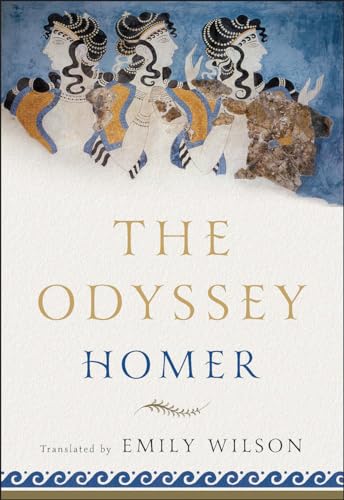
Wilson is the classicist whose 2017 W.W. Norton translation of Homer’s Odyssey Nolan publicly credited as a central reference during the film’s development. She spent years of close scholarly work restoring moral weight to Odysseus, a figure Homer himself had rendered as complicated and morally suspect. What arrived in theaters this month, in her assessment, was an “abysmal” and “gimmicky” version that stripped the ancient hero down to a “simple action hero.” The screenplay had nothing convincing to say.
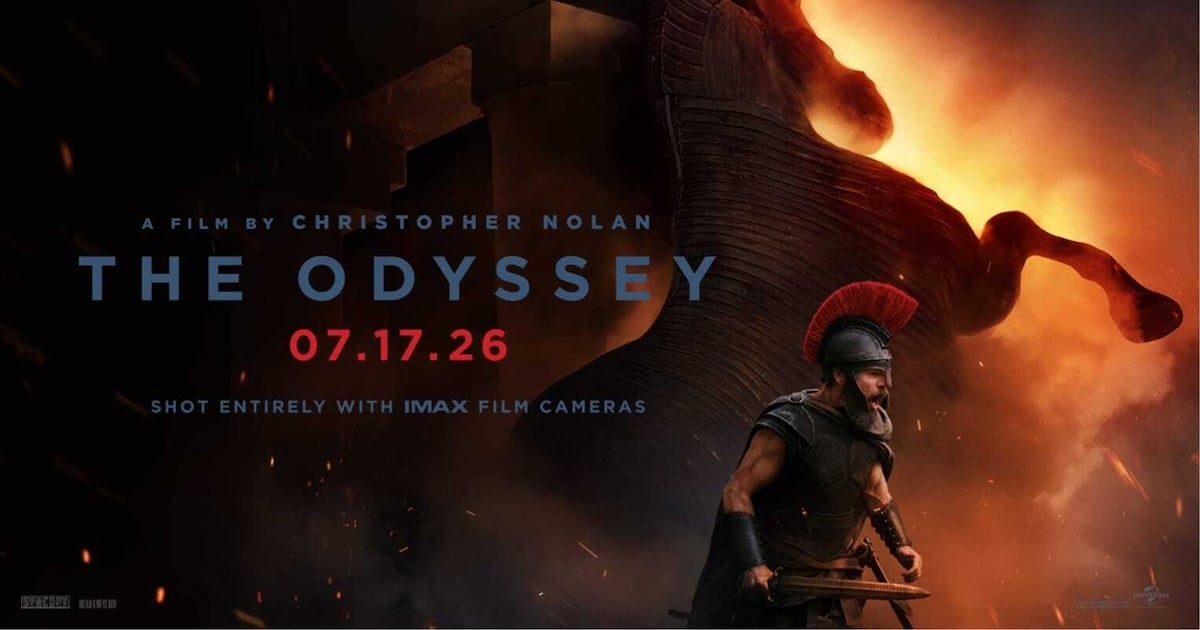
The criticism lands with specific force because of Nolan’s own promotional strategy. Throughout the campaign for his adaptation, the director had cited Wilson’s work by name in multiple interviews. He told journalists that he wanted to capture the ambiguity he found in her translation. Having named her publicly as his source, he invited that source to answer.
The irony in Wilson’s critique is structural. Her 2017 Norton edition, which made her the first woman to translate Homer’s Odyssey into English, distinguished itself by refusing to present Odysseus as a straightforward champion. Wilson framed that choice as an act of fidelity to the source: the Greek text does not itself celebrate this man, and she was not going to do so on Homer’s behalf. The opening word she chose was “complicated.” That decision was deliberate and widely debated at the time of publication: here was a man capable of enormous cunning, capable also of extraordinary cruelty, and Homer had never asked readers to simply admire him. Wilson argued in print that what made the poem durable across three millennia was precisely that discomfort, the sustained refusal to let audiences off the hook about who they were following home.
Nolan’s version of Odysseus, in her reading, dispenses with that discomfort. Matt Damon shed 33 pounds and gave up gluten to play Odysseus, training for a role defined by physical endurance and tactical intelligence. Those qualities exist in Homer. Wilson’s objection is to what they displace when they become the whole man: the lies Odysseus tells to his son, the gods he manipulates, the wife kept waiting for two decades while he makes choices that serve primarily himself. An action hero has a goal and pursues it cleanly. The Odysseus of Wilson’s translation has a goal, a method, and a wreckage he never fully accounts for.
The film’s commercial performance has not registered that critique. Nolan’s biggest global launch earned $120 million domestically and $257.8 million worldwide in its opening weekend, breaking Universal’s all-time R-rated debut record and posting a 96 percent audience score on Rotten Tomatoes. Commercial indifference to scholarly objection is not new in Hollywood, and there is no obvious path by which Wilson’s condemnation reaches the audiences who already made the film a record-breaker in a single weekend.
Where it does reach is the awards conversation. Nolan dismissed pre-release backlash as irrelevant at the film’s Mumbai premiere in July, invoking Homer’s own earthy language to defend modern dialogue choices and Lupita Nyong’o’s casting as Helen of Troy. That dismissal played well with audiences who then arrived in their millions. But Wilson belongs to a different category of objector. She is not a social media skeptic disputing casting choices. She is the scholar whose translation Nolan told journalists he read. Her expert assessment carries the same specificity that a cinematographer’s critique of digital compression would carry: it comes from someone who knows the source material and can name exactly what is missing.
What that specificity means for Venice and the autumn festival lineups, where competing films are making more austere demands on their audiences, is not yet settled. Nolan’s record Thursday preview totals had confirmed that audiences wanted to see the film on its first night. Whether they wanted what Wilson was calling for, something closer to the poem’s sustained discomfort with its own protagonist, the grosses offer no evidence either way.
No representative for Nolan or Universal had commented on Wilson’s remarks as of this publication. She has not confirmed whether she was consulted at any stage of the film’s development or shown the screenplay before filming began, a question with new relevance now that the film exists and she has seen it in full. Her public statement stops short of a complete written essay on the subject; she has indicated she may write at more length about the adaptation in the coming weeks.
What she has not addressed is whether any production at Hollywood scale could hold Homer’s complexity intact without compromising the commercial requirements of the form. That is the harder question beneath her objection, and the one that a record-breaking global launch makes considerably easier to avoid.