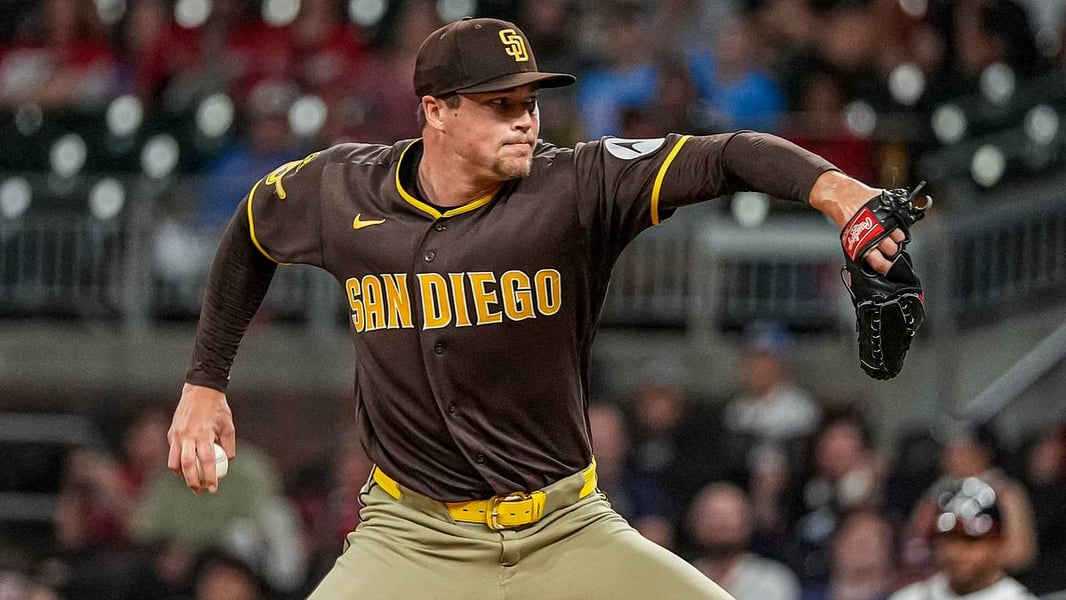

SAN DIEGO — Not once in 27 chances has Mason Miller blown a save this season. On the 0.82 ERA, on the 48.2 percent strikeout rate that leads every qualified pitcher in baseball, on the control that keeps him in San Diego colors through the 2029 season: every contending front office has arrived at the same arithmetic, then placed the same call to the Padres.
San Diego has not told them yes. They have not told them no. That is the most interesting thing about the 2026 trade deadline with four days remaining.
Miller occupies a category almost no reliever in the sport’s history has occupied at this stage of a career: elite by every statistical measure that matters and reachable before free agency. Sports Illustrated reported this week that four teams represent realistic trade partners at fair-to-favorable prices: the New York Yankees, Pittsburgh Pirates, Seattle Mariners, and Milwaukee Brewers. Insider Jon Heyman reported multiple clubs pursuing him actively. The CBS Sports deadline matchmaker named the Chicago White Sox as the most structurally logical fit, citing Chicago’s need to pair Miller with young closer Grant Taylor and compete into a window extending through the end of the decade. The field of serious suitors is not three teams. It is closer to eight.
That width of interest is what makes San Diego’s silence remarkable. In a market CBS Sports’ Matt Snyder described as a seller’s paradise, with more than a dozen clubs below the playoff cutline and fewer premium assets available than buyers chasing them, Miller’s multi-year control should be generating a bidding war. The Padres are listed among the likely buyers ahead of August 3, which makes them the most internally contradictory team at the deadline: a club competitive enough to add help, yet sitting on the asset most other buyers would trade anything to acquire.
The numbers Miller has posted this season do not invite much argument. He has struck out 80 batters in 43 and two-thirds innings. His FIP of 0.55 leads not only relievers but most pitchers in the sport at any role or inning total. His xERA of 1.37, which strips defense and sequencing luck from the underlying performance, suggests the 0.82 ERA is not a mirage built on a favorable schedule or an extreme home-park effect. Petco Park helps pitchers at the margins. It does not manufacture a strikeout rate approaching 50 percent on its own.
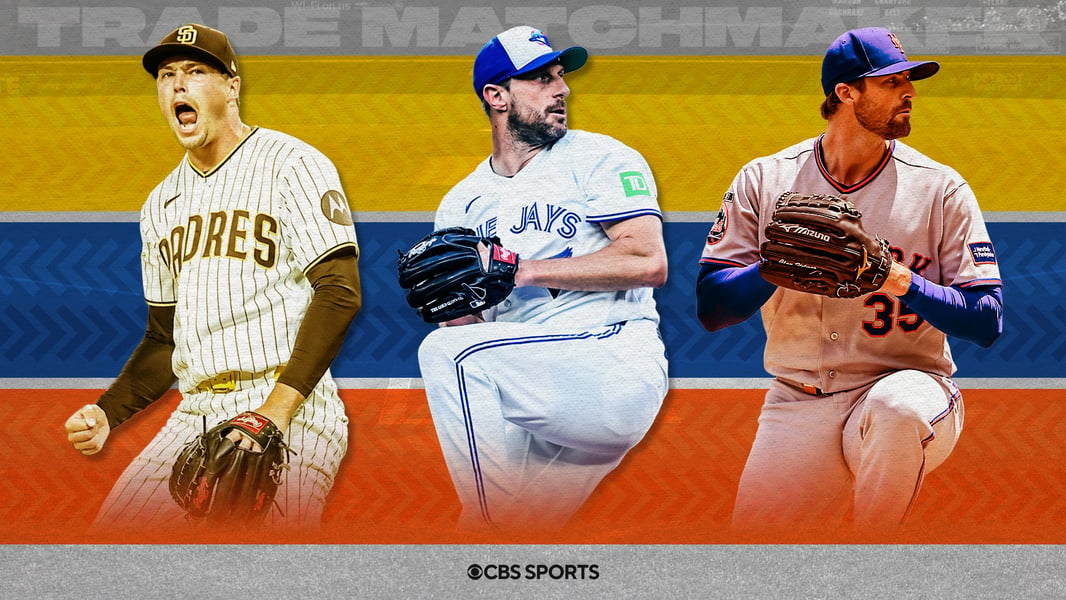
The specific trade proposals Sports Illustrated modeled run across very different organizational types. A Yankees deal would bring New York a shutdown closer without forcing the organization to surrender top-five prospect capital, built around shortstop Dax Kilby and a rotation of pitching depth that the site’s trade-value model assesses as fair. A Pirates deal would send Miller to Pittsburgh, which has the farm depth to absorb cost without compromising its rebuild timeline. The Mariners and Brewers each fit teams with defined playoff windows who could surrender meaningful assets without dismantling their next three seasons. None of the four proposals requires the receiving team to give away its best prospect.
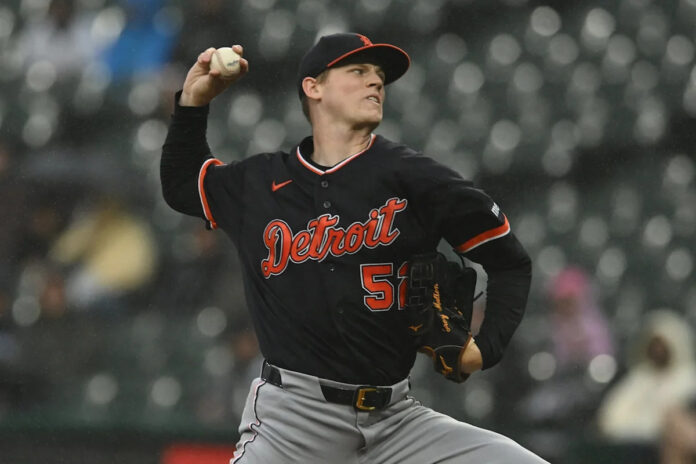
The thin market for starting pitching has made every reliever question more acute. The Detroit Tigers’ asking price for Tarik Skubal has escalated past what most buyers can absorb, requiring a controllable major-league starter in return, a demand that eliminates a substantial share of the field. That scarcity works in San Diego’s favor if they move Miller: buyers who cannot get Skubal need to spend their prospect capital somewhere else, and a four-year Miller at 0.82 becomes a compelling alternative to paying Detroit’s price for a starting pitcher.
The Cardinals’ posture at this deadline offers a useful counterpoint. St. Louis has decided to move rental pitchers Dustin May and Ryne Stanek while explicitly seeking controllable players in return, a seller prioritizing the kind of asset the Padres already possess. San Diego could, if they choose, become the franchise that accumulates controllability rather than the one surrendering it. The Cardinals are actively building toward 2028 and beyond. The Padres could be funding that window or building their own version of it, depending on which phone call they decide to return.
Clay Holmes, the Mets starter recovering from a leg fracture, adds texture to the relief market without resolving it. Holmes threw 59 pitches across four scoreless innings in a heavily scouted rehabilitation start, averaging 93.1 miles per hour with his sinker. The Cubs are interested. The Diamondbacks, Rays, Red Sox, and White Sox all sent scouts. Holmes at 2.39 ERA is an attractive rental option for teams who cannot afford Miller’s asking price, but he is a different proposition: a pitcher returning from significant injury rather than one who has not permitted a blown save all season.
Earlier this week, the Rangers completed their own deadline deal, acquiring Logan O’Hoppe and Chase Silseth from the Angels in the kind of practical, hedged transaction a borderline contender makes without full commitment to either direction. San Diego’s Miller decision is structurally different. Holding him and running your own October gambit is one call. Taking the package from whoever makes the most compelling offer and resetting the front office’s position through 2029 is the other. There is no middle ground between those two outcomes.
What the Padres have not done is confirm any of this publicly. They have not ruled out activity on the buy side of the market, have not indicated the asking price for Miller has been set or met, and have not given any signal about which direction they are leaning. The trade deadline does not resolve itself in public. It resolves in a phone call over the weekend, when one organization decides the package it is receiving justifies giving up the closer it has spent two years building a bullpen around.
By Thursday afternoon, that call had not come. Four days remain until the August 3 deadline. The Padres are listening. Whether they are deciding is a different question, and one nobody outside their front office can answer yet.