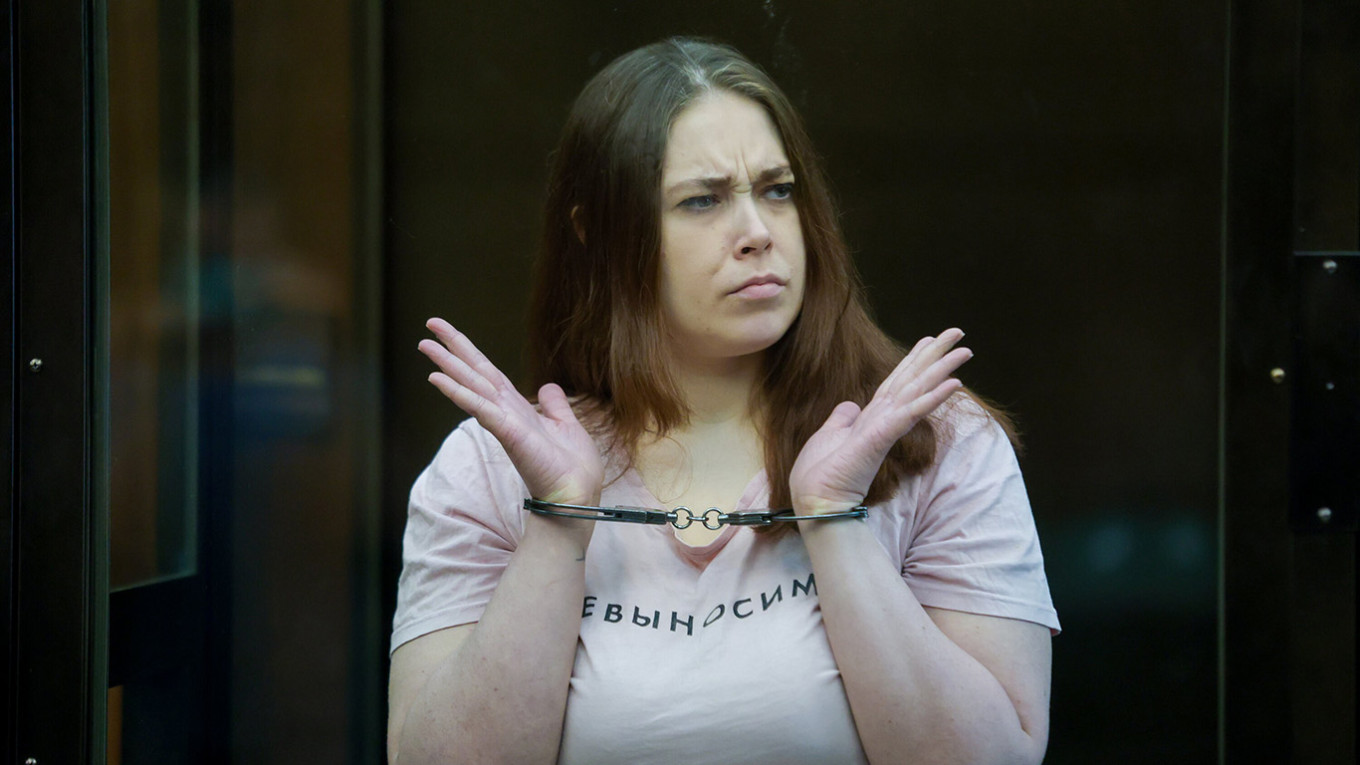

MOSCOW – Darya Shipacheva spent six years writing about medicine for Russians who wanted to understand their own bodies. Her work appeared in Forbes Russia, RBC, and Takie Dela, covering health literacy and the structural failings of the Russian healthcare system. On Tuesday, a Moscow court sentenced her to 12 years in a maximum-security penal colony for treason.
She is 34 years old. She pleaded guilty. The trial lasted 90 minutes behind closed doors.
The charge rested on a wire transfer to a family member in Ukraine, according to T-Invariant, an independent outlet covering science and political repression in Russia that spoke to five people close to the case. The Moscow Times reported the verdict, citing the same closed-session proceedings. Russian law has increasingly been applied to treat financial transactions with Ukrainian residents as potential state treason, a legal interpretation prosecutors have deployed with rising frequency since the start of the Russian military operation in Ukraine.
Shipacheva was born in Ukraine and built her journalism career in Russia, contributing to Takie Dela on social issues and civil society as well as Forbes Russia and RBC on health topics. Between 2019 and 2025 she wrote dozens of articles on women’s medical issues, patient rights, and the gap between what state medicine promised and what it delivered. She was not a political reporter. Her arrest in April 2025 followed a period of sustained public targeting by Male State, a nationalist online movement, over her feminist writing.
The verdict arrived in closed session. Shipacheva’s attorney did not speak to reporters afterward. Whether the defense intends to appeal is not known. Russian treason convictions are rarely overturned, and the Supreme Court’s record on security-related cases offers defendants little precedent for optimism.
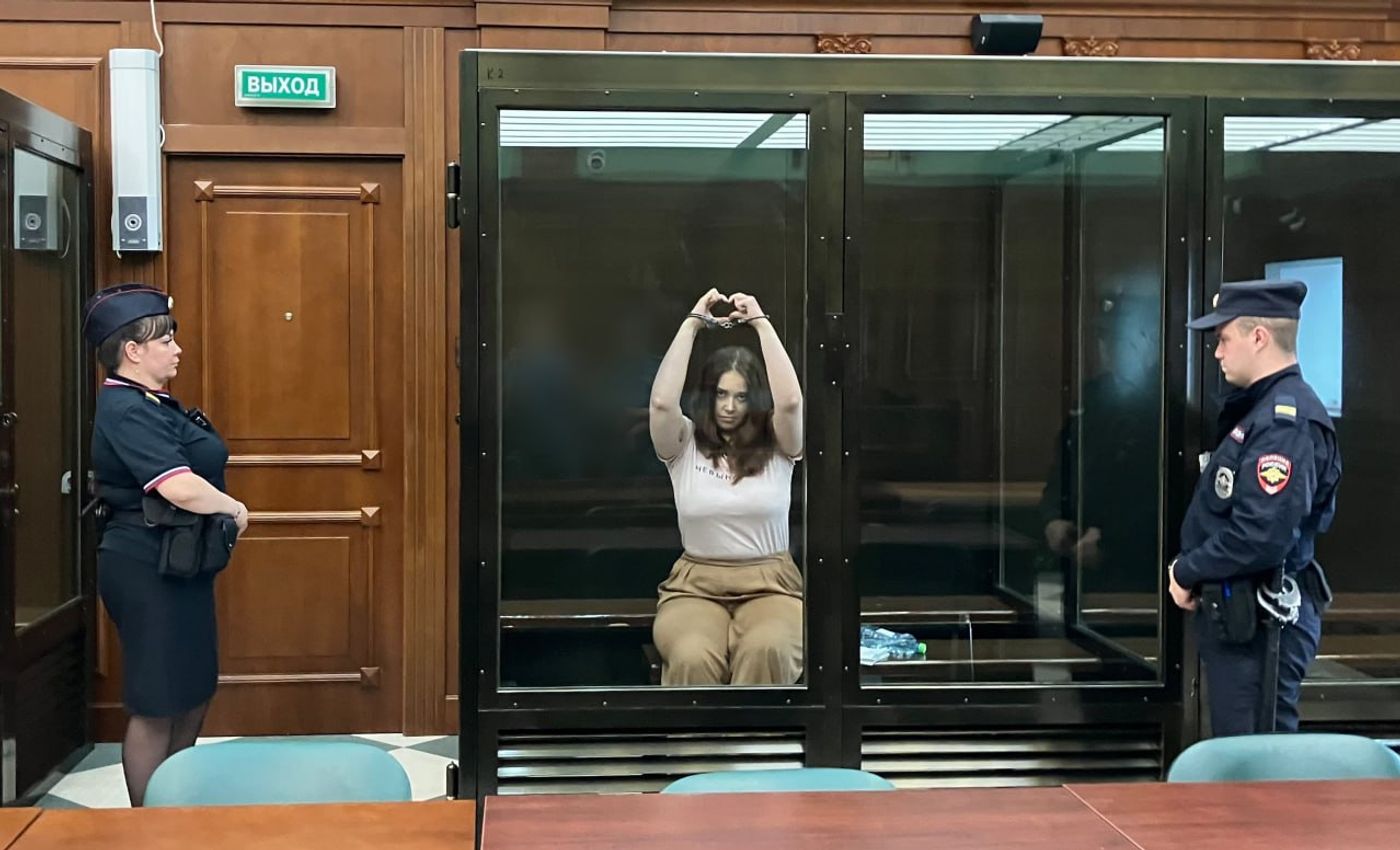
Her case lands during what independent observers describe as an acceleration in Russia’s use of treason law. T-Invariant counted 312 convictions on treason and espionage charges in the first half of 2026, a pace that would substantially surpass any prior year. Comparison across periods is complicated by changes in how Russian courts classify and record such cases, and by the fact that a growing share of proceedings occur in closed session where no independent monitoring is possible.
The arrest of Ilya Remeslo, a former Kremlin loyalist detained in July on army-fakes charges after publicly criticizing Putin, illustrated how broadly Russian security statutes now reach across the ideological spectrum. Shipacheva’s case extends the reach further: from nationalists turned critics to medical journalists with Ukrainian relatives.
The Lefortovo pre-trial detention facility, where Shipacheva was held pending trial, is Russia’s primary facility for high-profile security cases. Attorneys practicing there have reported restricted contact with clients and procedures that make independent verification of a defendant’s condition difficult. Russia’s federal penitentiary service does not routinely disclose conditions at Lefortovo.
Russian treason law does not require proof that state secrets were transmitted or that the defendant intended harm to Russian security interests. Prosecutors have used financial transactions, personal communications, and family relationships with Ukrainian nationals as the basis for charging civilians who have no connection to Ukrainian intelligence or military structures. The law requires only that a defendant provided material support to a foreign state in some form. A wire transfer to a Ukrainian family member, under that interpretation, qualifies.
A 12-year sentence for what appears factually to be a family financial transfer sits near the upper end of what Russian courts have issued in comparable cases. The maximum under the applicable statute is 20 years. Either prosecutors presented classified material during the closed trial that significantly elevated the legal case beyond what has been reported, or the sentencing reflects an elevated standard of punishment that Russia is applying to cases involving Ukrainian connections. Without access to sealed trial records, neither reading can be confirmed.
The role of Male State in triggering official attention to Shipacheva has not been definitively established. The movement has a documented pattern of filing formal complaints against journalists and public figures with Russian law enforcement. Whether a formal complaint led to her arrest, or whether she came to investigators’ attention through other surveillance, has not been reported.
Russia’s Kremlin stance on NATO engagement has hardened the country’s official posture toward any contact with Ukraine into something approaching a systematic legal weapon. For journalists who covered Russia’s civil society, healthcare, and social policy, the Shipacheva conviction draws a line that has no obvious stopping point. She was not writing about the military operation. She was not writing about politics. She was writing about medicine, and she wired money to a Ukrainian relative. In Moscow on Tuesday, a court found that combination sufficient for 12 years in a penal colony, and the case now joins a list of Russian journalist convictions that Russia’s NATO relations have made largely immune to diplomatic pressure.