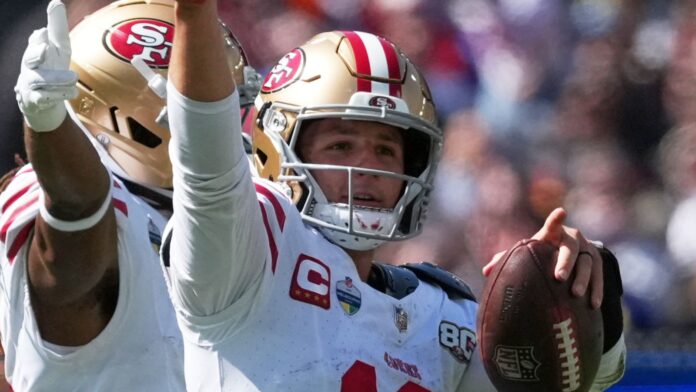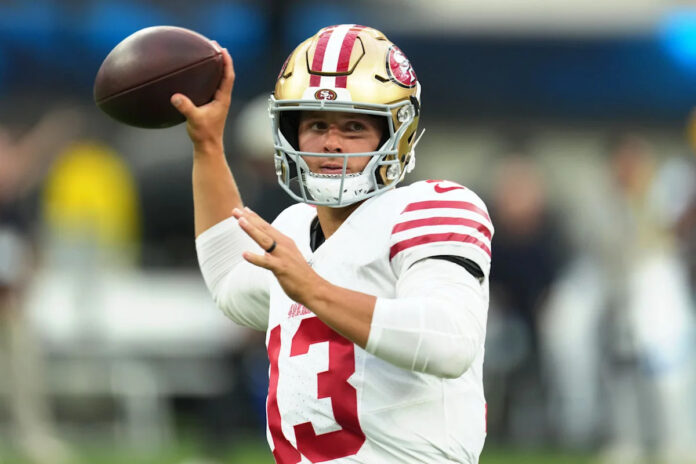

SANTA CLARA – The call came faster than Ricky Pearsall could schedule an MRI.
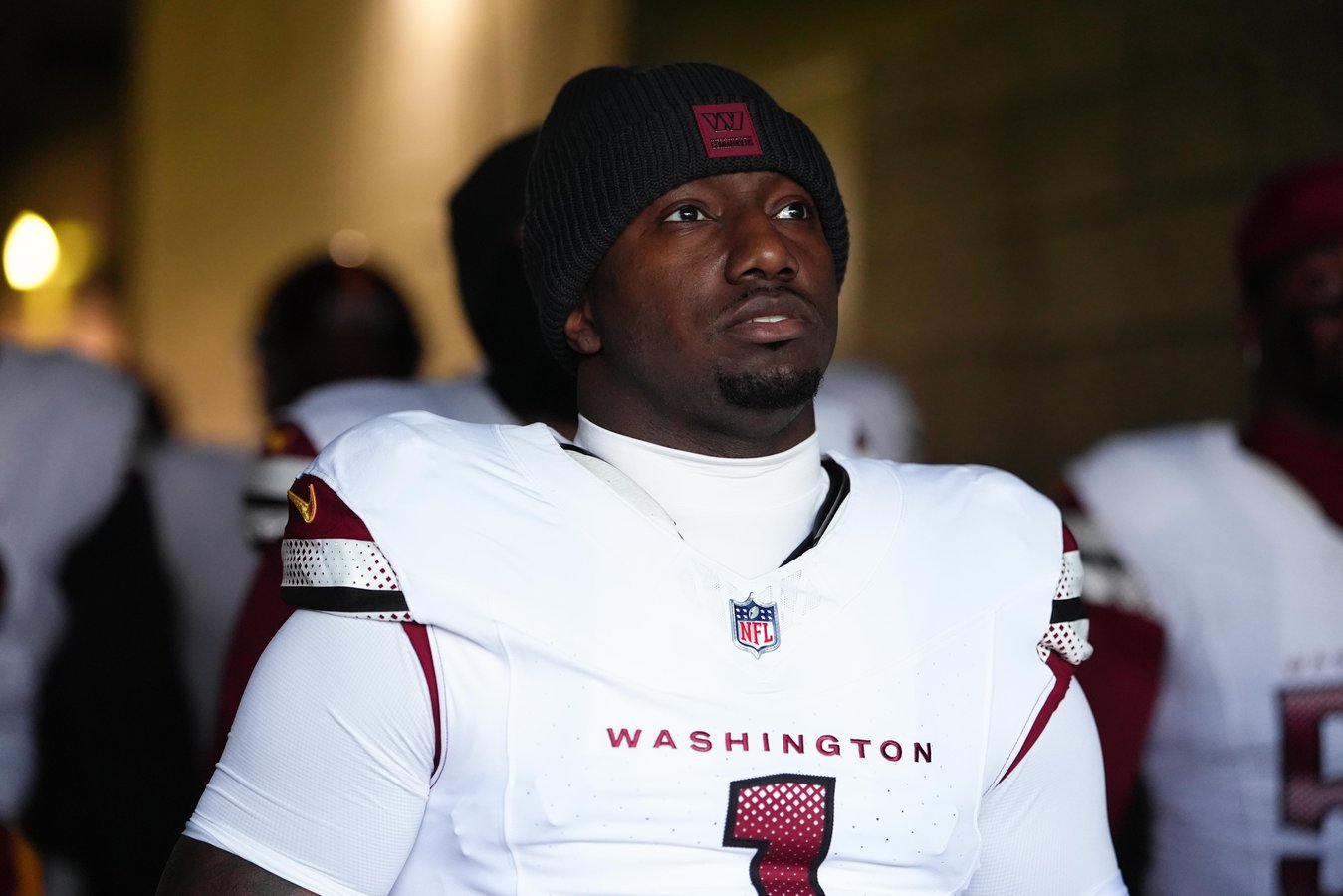
San Francisco signed Deebo Samuel to a one-year contract worth up to $7 million Thursday, according to NFL Network, a decision that explained itself before the ink dried. Pearsall’s left knee had swelled during the first day of training camp, and within hours the franchise was on the phone with a receiver it had watched walk into free agency just months earlier.
Samuel spent last season with the Washington Commanders, where he caught 72 passes for 727 yards and five touchdowns. The 49ers did not call him because the numbers were exceptional. They called him because the situation left them with limited options, and Samuel is fluent in a system most free agents would require three weeks to understand.
He returns at 30, to the franchise where he spent six seasons, made three Pro Bowls, and built the Z receiver position into something the NFL had not quite categorized before his arrival. His 2021 season remains the benchmark. Samuel caught passes for 1,405 yards, rushed for 365 more, and scored 14 total touchdowns. Defenses had to account for him simultaneously as a receiver who could align outside and a running back who could take handoffs, a structural problem with no clean answer. He earned All-Pro honors that year. The offense was built around the threat he represented.
Pearsall was supposed to be the next iteration of that threat. San Francisco took him 13th overall in the 2024 NFL Draft and spent two seasons watching him manage a body that could not stay healthy. He has appeared in only 20 of a possible 32 games since being drafted. His knee injury this week arrived with the 49ers using the phrase “evaluating all options,” language the franchise reserves for situations where surgery has not been ruled out. The timeline is uncertain.
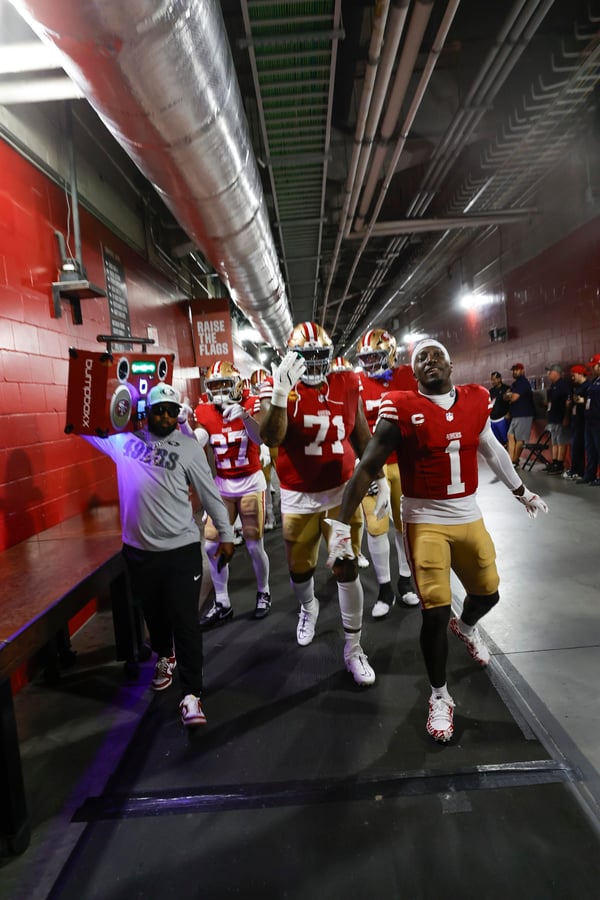
Samuel slid back into that vacancy on a one-year, incentive-laden deal.
The incentive structure matters. It tells you what the team believes and what it is unwilling to guarantee. San Francisco is not committing to Samuel as a foundational piece. It is paying for the version of him that shows up healthy and motivated, and leaving open the question of what happens if he is not.
Brandon Aiyuk’s training camp grievances have added pressure to a roster already navigating Kyle Shanahan’s recovery from broken bones and a concussion sustained during the offseason. Aiyuk had 1,342 receiving yards in 2024, the best season of his career, and has been vocal about wanting a contract revision. The two sides have not reached resolution. Samuel’s return does not fix that situation. It gives the offense a body who has stood in that role before, should Aiyuk’s discontent become something louder than background noise.
Samuel does not need Shanahan fully operational to execute the offense. He has six years of vocabulary and muscle memory in the system.
Trent Williams started camp on the physically unable to perform list. Cooper Kupp arrived with a calf issue on day one. The injury list started the 2026 season with entries affecting the offensive line, receiver depth, and the coaching staff’s physical availability.
Pearsall’s knee situation is the most acute of the problems. Whether he requires surgery will determine how long this gap needs to remain filled. If he returns in six to eight weeks, Samuel’s role becomes complementary. If the timeline stretches further, Samuel is the primary option for a stretch of the season that could determine whether the 49ers return to the postseason or watch the window close.
The 49ers came within a field goal of winning the Super Bowl in February 2025. That roster is a year older now, more dependent on individual health than it was twelve months ago. The margin for disruption is smaller. Pearsall going down on day one is the kind of disruption that did not exist in last year’s calculations.
Samuel knows the building, knows the routes, knows what the system demands from a receiver in the Z position. He does not need to replicate 2021 for this deal to succeed. He needs to give San Francisco a functional option at a position that became suddenly unavailable before training camp found its rhythm.
The 49ers did not recruit him with sentiment. They called him because the math was unambiguous: Pearsall is unavailable, the Shanahan system requires a specific profile at the Z, and Samuel is the most qualified person currently in free agency who fits it. Whatever he left behind when he went to Washington, the calculation that brought him back did not involve nostalgia. It involved a knee injury and a phone call.