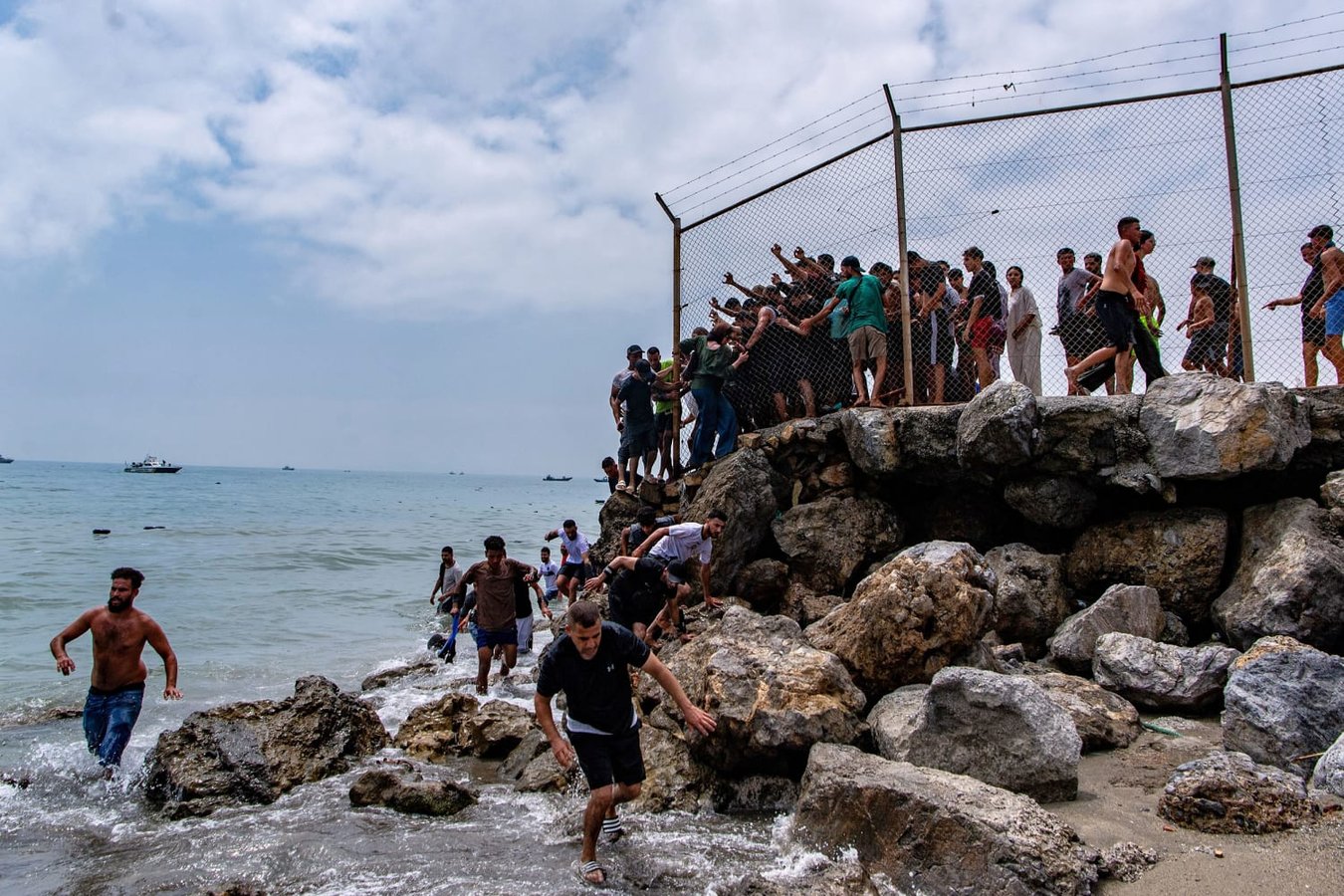

CEUTA, Spain – Prime Minister Pedro Sánchez flew to Ceuta on Thursday as Spain confirmed the death toll from the crossing had reached 18 and authorities said approximately 49,000 people had entered the North African enclave from Morocco in a single surge, the largest recorded crossing in the territory’s history. The scale of the emergency, and the arrival of France as an active participant, turned what began as a Spanish border crisis into a European one before the day was out.
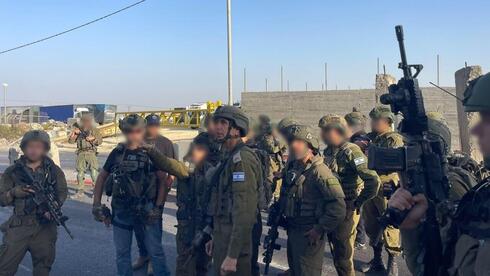
Sánchez arrived alongside Interior Minister Fernando Grande-Marlaska, a visit that transformed what had been an emergency managed by local and regional officials into a full national political event. Army soldiers were deployed along the Tarajal beach breakwater, the main point of entry, as Spain moved beyond additional Civil Guard units to military presence at the perimeter.
The 18 deaths included migrants who drowned during the roughly three-mile swim from the Moroccan town of Fnideq, and others who died in a stampede at the barrier fence at Tarajal beach. Rachid Sbihi, representing Civil Guard officers, told reporters the situation remained active into Thursday morning: “People are still entering. It’s chaotic.”
France activated enhanced border checks at its frontier with Spain within hours of the Spanish prime minister’s arrival in Ceuta, the first European country to respond to the surge with a formal border measure of its own. The action signals that the political pressure from Ceuta was already traveling north through Europe before Spain had resolved what was happening on the ground. Italy had threatened earlier to suspend Schengen free movement with Spain; France’s enhanced checks are a less drastic but more concrete step, a formal European response from a major member state that had not existed until Thursday.
The crossing was not spontaneous. Ceuta authorities and officials from Spain’s Interior Ministry attributed part of the surge to the dissemination of a Spanish Supreme Court ruling issued earlier this year that barred immediate returns of migrants intercepted at sea without due-process procedures. Officials said people-smuggling networks had used the ruling as a recruitment argument. Migrant rights activists questioned whether most of the 49,000 people who crossed were aware of the ruling, or whether the crossing reflected something simpler: proximity, desperation, and a window that appeared briefly open.
A 33-year-old Moroccan man who had crossed told NBC News that the calculation was not primarily legal: “Many people want to go to Europe, America, but they don’t have the opportunity.” The Supreme Court ruling may have changed the risk calculus for some. It did not create the conditions that produce a crossing of this scale.

The 49,000 people inside Ceuta’s perimeter overwhelmed every reception facility in the enclave. Authorities said hundreds were sleeping on streets. Spain’s government deployed additional coastguard vessels alongside the army troops, but the practical problem of processing tens of thousands of people inside a small Spanish enclave on the African coast has no simple administrative solution.
EH’s earlier report on Thursday’s initial crossing covered the conflicting death counts, Italy’s Schengen threat, and the EU’s offer of Frontex border reinforcement without burden-sharing. The questions those elements left open, including whether Morocco deliberately facilitated the crossing and what the EU’s migration pact would actually require member states to do, had not been answered by the time Sánchez landed.
Spain’s previous mass crossing at Ceuta occurred in May 2021, when nearly 10,000 people crossed within days after a diplomatic dispute between Madrid and Rabat. Spain’s legal battles over the deportation of minors who entered Ceuta in 2021 extended for years and remained unresolved when Thursday’s crossing began. Morocco’s official acknowledgment then, as now, was denial of deliberate facilitation while informal pressure remained visible.
France’s enhanced border checks create the political geometry Europe’s migration system was designed to avoid: a unilateral national measure at an internal Schengen frontier in response to irregular movement at an external border. The EU Asylum Pact, which took effect this summer after a decade of negotiation, built the shared processing and burden-sharing mechanisms intended to make individual states feel less exposed to political pressure from one another. France’s announcement raises immediate questions about that pact’s operational effectiveness. What it says immediately is that Ceuta on Thursday became a European problem, not only a Spanish one.
The 49,000 figure remains the most striking number in the crossing. How many will remain in Ceuta, how many will be returned to Morocco under the accelerated coordination Spain and Morocco announced, and how many will make their way into mainland Europe is what the next several weeks will answer. The people sleeping on Ceuta’s streets did not cross because the Supreme Court ruling changed their legal status. They crossed because the door appeared open, and it did not close before 49,000 people had walked through it.