
NEW DELHI — In February the White House announced that India had committed to stop importing Russian oil, directly or indirectly, and cut its tariffs on Indian goods from 50 percent to 18 percent as the reward. India has never confirmed agreeing to any such thing. In June its refiners bought more Russian crude than in any month on record.
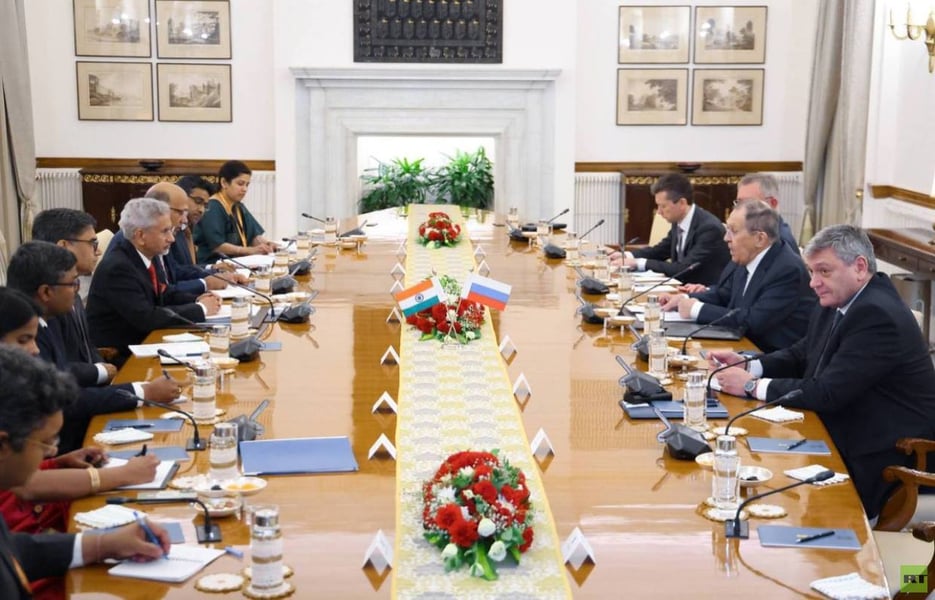
Into that gap walks Subrahmanyam Jaishankar. India’s foreign ministry said on Saturday that its external affairs minister will make an official visit to Russia on August 23 and 24, at the invitation of First Deputy Prime Minister Denis Manturov, to co-chair the 27th session of the India-Russia Inter-Governmental Commission on Trade, Economic, Scientific, Technological and Cultural Cooperation. He will also meet Sergey Lavrov to exchange views on regional and global issues.
The commission is the standing machinery for precisely the commerce Washington spent a year trying to shrink. Whether the trip reads as routine housekeeping or as something pointed depends on a question neither government will answer, which is what India actually agreed to in February.
The American account is on the record. Donald Trump cut the tariff rate on February 2, saying Narendra Modi had agreed to stop the purchases, and days later an executive order removed the punitive 25 percent levy while citing New Delhi’s commitment to stop importing Russian oil and to buy American energy products instead. Al Jazeera reported the tariff cut at the time. The joint statement the two governments actually published, announcing an interim trade deal, contained no such undertaking.
Jaishankar was asked about the discrepancy at the Munich Security Conference on February 14 and did not resolve it. India remains very much wedded to strategic autonomy, he said, and its energy procurement is driven by cost, risk and availability. Pressed on whether that meant defying Washington, he allowed that if the question was whether he would stay independent-minded and make choices that might not agree with his questioner’s thinking, then yes, it could happen. India has neither confirmed nor denied the American version since.

What happened to the actual barrels is easier to establish. Washington issued India a 30-day sanctions waiver in March as the closure of the Strait of Hormuz tore through supply. It lapsed on April 11, and Treasury Secretary Scott Bessent said flatly that the general licence on Russian oil would not be renewed. Five weeks later the Treasury renewed a version of it anyway, extending a 30-day waiver on May 19 covering Russian crude already loaded on tankers at sea, framed as help for the most energy-vulnerable countries and running to June 17. India was not named in it.
Indian purchases went up regardless. Ship-tracking data compiled by LSEG and Kpler put Russian crude arriving in India at roughly 2.70 million barrels a day in June, an all-time high, against 2.13 million in May. Russian oil accounted for more than half of everything India imported that month, up from 36.5 percent. July came in near the record at about 2.45 million.
The pattern that emerges is not one of a country complying, or of a country defying. The waivers track Washington’s need to keep crude prices down after Hormuz closed, not New Delhi’s behaviour, and India bought before each one, during each one and after each one. That is worth stating plainly because both capitals have an interest in leaving it ambiguous. Eastern Herald reported earlier this month on the parallel argument in Tehran, where four American pressure campaigns have inflicted enormous damage without changing a single government decision. The Indian case is the inverse and no more comfortable for Washington: the pressure was lifted, the purchases rose, and nobody will say whether a bargain was struck.
The commission Jaishankar is flying out to co-chair exists, in principle, to make this relationship about something other than crude. It has not managed it. Bilateral trade reached $68.72 billion in the financial year to March 2025, of which Indian exports to Russia were $4.88 billion against $63.84 billion of imports, a ratio of roughly thirteen to one, and overwhelmingly energy. At the annual summit in Delhi in December the two governments set a target of $100 billion by 2030 and signed an economic cooperation programme meant to broaden the base into fertilisers, pharmaceuticals, connectivity corridors and the Russian Arctic. Modi said he did not think they would need until 2030.
The relationship has also been quietly sanctions-proofed. Lavrov said in March that 96 percent of India-Russia trade is now settled in national currencies, which is the mechanism that makes dollar-denominated pressure less decisive than it looks on paper. Where the pressure still bites is on the corporate side. American sanctions on Rosneft and Lukoil put Indian refiners’ supply arrangements at risk, Reliance Industries holds a long-term Rosneft contract for up to 500,000 barrels a day and has said it will comply with US sanctions, and the state-owned refiners are the most exposed of all because they depend on Western banks for trade finance.
This week’s visit is also groundwork. Modi is expected in Russia for the 24th annual summit, and Eastern Herald reported in June that the Kremlin was signalling dialogue on the most sensitive areas of the relationship ahead of it, with Vladimir Putin having called American pressure on Modi futile. India chairs BRICS this year, which gives Moscow a second reason to want the choreography right. When Lavrov was in Delhi in May he described Western pressure on India over Russian oil as neocolonial, RT reported. That is his framing, and it is doing work for him.
Several things remain unknown. No text of any Indian commitment on Russian oil has been published by either side. The August import figures are not out. It is not clear whether the 18 percent tariff rate is contingent on anything measurable, or what Washington intends to do if July’s number repeats, given that the administration has spent the year courting Modi rather than squeezing him. And no date has been announced for the summit this visit is preparing.
Jaishankar will co-chair a trade commission whose largest single line item is the commodity his government may or may not have promised to stop buying. Both readings of February survive the trip. That is probably the point of taking it.