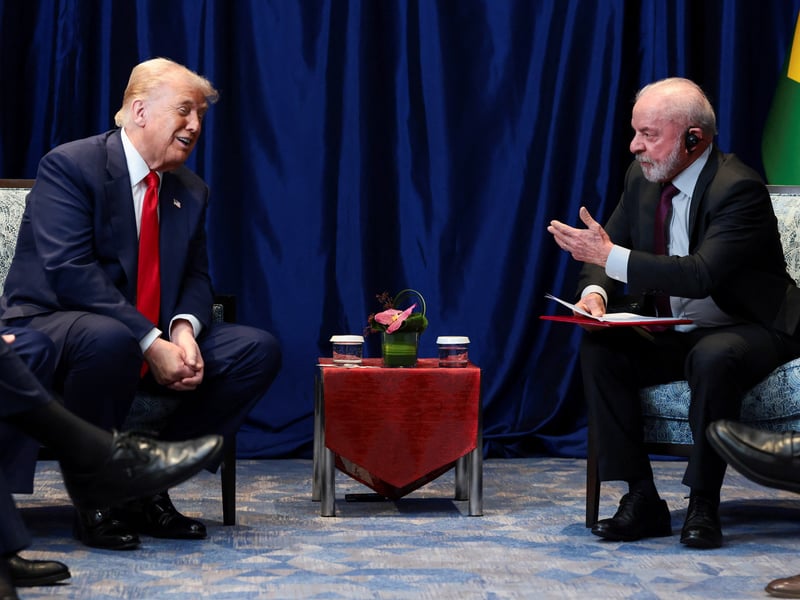

BRASILIA — Luiz Inacio Lula da Silva spent eighty minutes on the telephone to Donald Trump on Friday, and somewhere inside them he asked the American president to convene an extraordinary session of the United Nations Security Council. Brazil does not sit on it.
The request appears in the Brazilian presidency’s own account of the call, which says Lula lamented the Council’s inoperativeness before proposing the meeting as a route to diplomatic solutions for the current crises. He has been saying a version of this for a while. In April he told a gathering of progressive leaders in Barcelona that the five permanent members needed to change their behaviour after failing to stop the war in Iran. Brasilia has been campaigning for a permanent seat since the 1990s and does not have one.
What makes the request worth noticing is not the proposal, which is unlikely to survive contact with the Council’s actual membership, but what it reveals about the instruments available to Brazil. Lula placed the call himself. The Planalto put its length at an hour and twenty minutes and its tone as friendly and cordial. And the Security Council was not what the call was about.
It was about tariffs. The United States has now stacked two separate levies on Brazilian goods, and on some products they combine to 37.5 percent. The larger of the two is a 25 percent duty imposed under Section 301 and announced in July over what Washington calls unfair trade practices, effective on the twenty-second of that month. Marco Rubio, announcing it, wrote that Lula and his government had not negotiated with the United States in good faith and that the president had put his own ego ahead of a deal for the welfare of the Brazilian people. The second is a 12.5 percent duty from a separate finding on forced-labour enforcement that the Office of the United States Trade Representative applied to dozens of economies at once, Brazil among them.
Lula’s position, per the readout, is that the allegations behind both are unfounded, that the tariffs damage the United States as much as Brazil, and that staying at the negotiating table is the better option for both countries. Trump, it says, agreed on the need to preserve strong commercial ties and proposed that the two negotiating teams meet again as soon as possible.
The detail that gives the dispute its real shape is what Washington is actually complaining about. Not soybeans, not steel, and not the beef, coffee and orange juice that Fortune listed among the carve-outs from the 25 percent duty, alongside some energy products and aerospace components. The grievances the presidency’s note records Trump raising were Pix, the instant payment system run by Brazil’s central bank, and intellectual property enforcement. The exemptions and the complaints together describe a trade action that is not really about trade in goods. It is about a state-operated payments rail that American card networks do not control, and about who gets to regulate American technology companies operating in Brazil.
The call’s second subject was organised crime, and there Lula appears to have said no to something. Trump’s administration has been pressing for the Primeiro Comando da Capital and Comando Vermelho to be designated terrorist organisations. Lula’s answer, as his office recorded it, was that the factions exercise daily terror over the most vulnerable populations but should not be confused with terrorist organisations, and that no special classification is necessary. Trump, the note says, offered to reinforce bilateral cooperation on organised crime anyway and indicated he would put senior officials on it. A refusal that ends with the other side offering more help is an unusual outcome, and the readout is a Brazilian document, which is worth holding in mind.
On the wars, the two presidents exchanged views and, according to Brasilia, both favoured a negotiated settlement between Russia and Ukraine. That is where the Security Council proposal landed. It is also where its limits are. Brazil can bring a matter to the Council’s attention under Article 35 of the Charter, and has done so before, but it cannot vote, cannot veto, and cannot compel a session. A request from a permanent member is a different instrument altogether. Lula was, in effect, asking Trump to do the thing Brazil cannot do for itself, on behalf of a body Lula says does not work.
Several things about the call are not established. The White House has published no account of it, so every quotation and every characterisation here comes from one government’s summary of a private conversation with the other. There is no date for the promised meeting of negotiating teams, and no indication Trump responded to the Security Council proposal at all. Nor is it clear what changed to make this call happen now, six weeks after Rubio’s post and five weeks after Brazil activated its Economic Reciprocity Law and filed a challenge at the World Trade Organization. Lula said at the time that his country could not accept the treatment it had received, Al Jazeera reported.
What is clear is the timing. Brazil votes in October, Lula is running, and the Trump administration has already revoked the Brazilian ambassador’s US visa in a dispute over that election. A president who can report an hour and twenty minutes of cordial conversation with Washington is in a different position from one who cannot. Whether the tariffs move is a separate question, and Friday produced no evidence that they will.