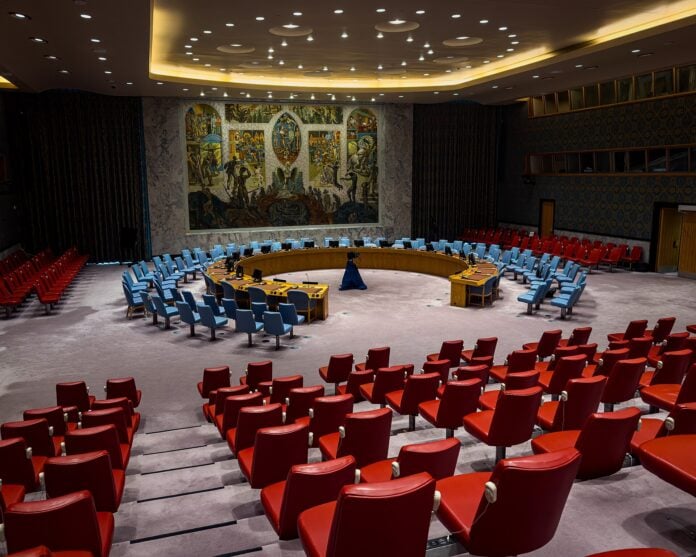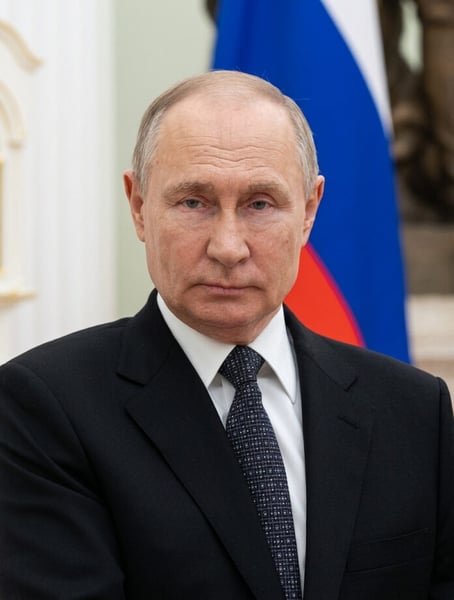

UNITED NATIONS — A reporter from RIA Novosti asked Stephane Dujarric on Friday whether anyone in Ukraine had approached the United Nations for help organising an election. The secretary-general’s spokesman said he was not aware of any such request, and added that the organisation assesses requests for electoral assistance when member states make them and is generally willing to help where it can.
It is a non-answer to what has become, in the space of four days, the sharpest domestic political question in Ukraine. It is also the correct answer, and the reason it is correct has very little to do with the United Nations.
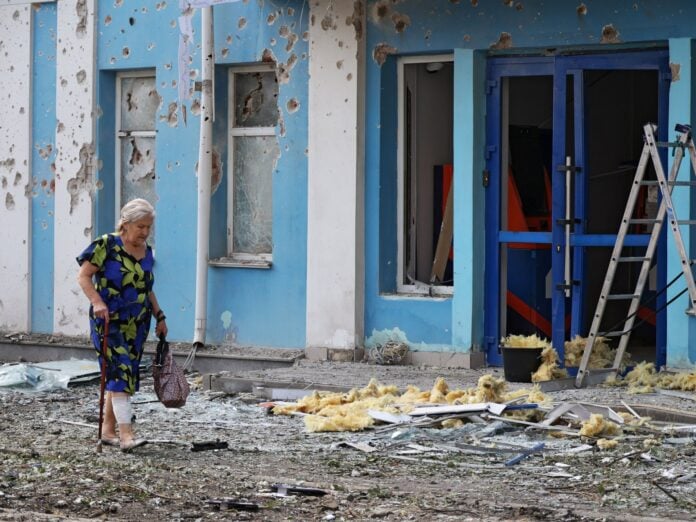
Nobody has asked because international help is not the binding constraint. The constraint is arithmetic, and Ukraine’s own Central Election Commission has already published it. Roughly 5.8 million Ukrainian refugees are living abroad. About 800,000 people are serving in the armed forces. Close to 2,000 of the country’s 30,000 polling stations have been destroyed. Before the war Ukraine operated 102 polling stations in its embassies and consulates worldwide, which is the infrastructure that would have to absorb the diaspora vote. And some 4.5 million adults live in territory under Russian control, around 19 percent of the country as of January.
None of those numbers is a political argument. They are the reason a wartime ballot is a logistical problem before it is a constitutional one, and they are why the question of who might help organise it has not yet arisen in any serious form.
The question arose at all because of a nine-minute video. Mykhailo Fedorov, sacked as defence minister in late July after roughly six months in the job, posted an address on Tuesday, August 18, calling on Ukraine to find what he described as a legal, safe and realistic mechanism to restore its full democratic process even under a prolonged war. Democracy cannot be held hostage by Russia, he said. He named a systemic crisis of governance, pointed at corruption undermining the war effort, and said voting rights would have to be guaranteed for soldiers, for Ukrainians abroad and for people in front-line regions. He did not mention Volodymyr Zelensky by name, which is its own kind of statement.
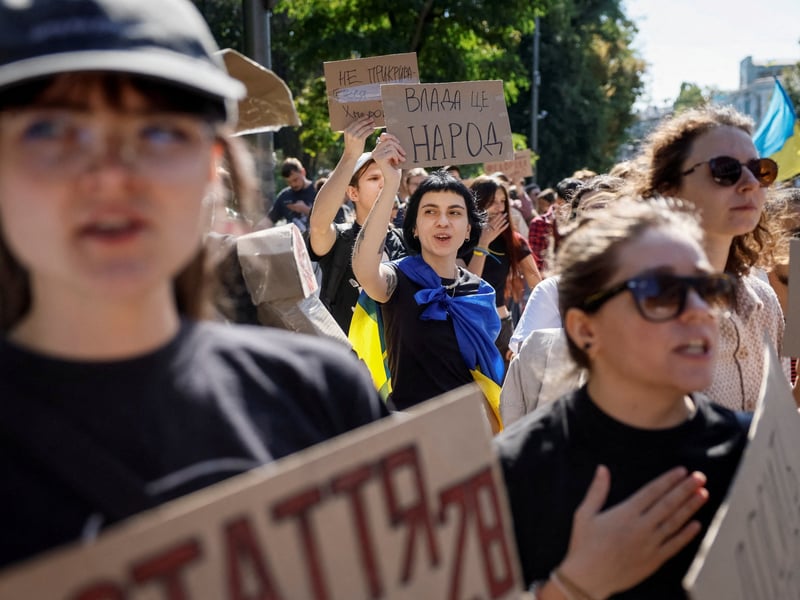
The timing was not incidental. The video landed on the eve of a parliamentary vote at which Zelensky’s party was expected to confirm Fedorov’s replacement. His dismissal, which followed a long-running conflict with the commander-in-chief Oleksandr Syrskyi, had already produced days of demonstrations in Kyiv, with protesters demanding Syrskyi’s removal and Fedorov’s reinstatement. Eastern Herald reported in July on the shortlist Zelensky was reviewing to replace Syrskyi, a decision that has not come.
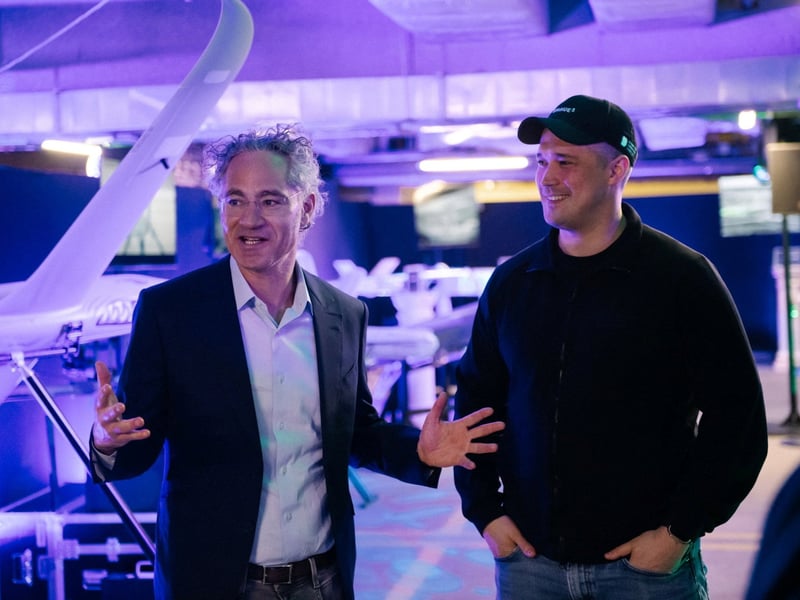
What gives Fedorov standing is not the video but the polling. A survey in late July put trust in the former commander-in-chief Valerii Zaluzhnyi at 66 percent, in Fedorov at 63 percent and in Zelensky at 56 percent. Those are the numbers of a competitive field, not a collapsed presidency, and they are worth setting against a claim that has been in circulation for eighteen months. Donald Trump called Zelensky a dictator without elections and put his approval rating at 4 percent. He said it in February 2025, not later, and it was untrue when he said it: the Kyiv International Institute of Sociology had measured trust in Zelensky at 57 percent weeks earlier. The figure has been repeated continuously since, and it has never been right.
The legal position is narrower than the political one. Zelensky’s term expired on May 20, 2024. Elections were suspended under martial law and general mobilisation, which parliament has extended in ninety-day increments since the Russian operation began in February 2022, and Ukrainian law bars a vote while martial law is in force. Article 83 of the constitution extends the powers of parliament until it ends. Zelensky’s position, which he has restated repeatedly, is that he denies using the war to prolong his term and would support a vote if security could be guaranteed. He has asked Washington and European partners for those guarantees. He has not asked the United Nations, and Friday’s briefing confirms it.
The organisation’s electoral assistance work is real but narrow. It is technical, it is delivered only when a government requests it, and it is designed for states that have decided to hold a vote and need help doing it. That is not where Ukraine is. Kyiv has not decided anything, and until the Verkhovna Rada moves on martial law there is nothing for anyone to assist with. Eastern Herald reported earlier this month on claims from a former Ukrainian prime minister that Zelensky is working to prevent a vote, an accusation made from Moscow and worth reading with that provenance in mind.
Several things are unresolved. Fedorov has not said whether he intends to run, and his video stopped short of proposing a date or a mechanism. NBC News reported that his intervention landed alongside a fresh corruption investigation, the scope of which is not public. There is no indication parliament intends to take up the question. And the reaction inside the army is not what a challenger would want: Ukrainian soldiers told the Kyiv Independent they were sceptical of a vote held while they are the ones holding the line. More than a hundred election and human rights organisations have said the same thing in a joint statement, which Al Jazeera reported alongside the pressure now building on Zelensky.
Dujarric’s answer will be read in Moscow as evidence that Kyiv is avoiding a vote, and in Kyiv as evidence that nobody has got as far as the paperwork. Both readings are available. The 102 embassy polling stations are not.