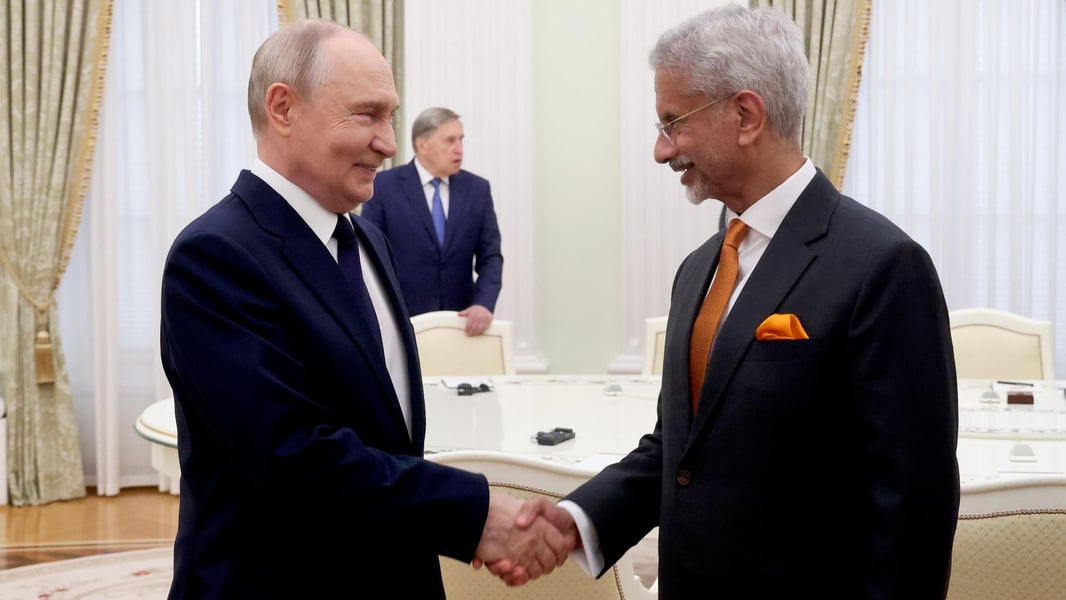

MOSCOW — When Indian External Affairs Minister S. Jaishankar walked into the Kremlin on Monday, he carried something beyond a diplomatic agenda: a personal communication from Prime Minister Narendra Modi to Vladimir Putin. Whatever the letter contained, the message delivered by the meeting itself was unmistakable: India is not stepping back from its relationship with Russia.
Jaishankar’s two-day official visit to Moscow, his most substantive engagement with the Russian leadership since late last year, covered territory from fertilizer supply chains to free trade agreements, and ended with Putin’s direct confirmation that he will personally attend the BRICS summit in New Delhi next month. That alone made the trip one of the most consequential diplomatic missions India has run this year.
The numbers tell part of the story. Bilateral trade between India and Russia reached $60 billion in 2025, a figure that would have seemed improbable five years ago. “Our bilateral trade has grown to $60 billion,” Jaishankar told his Russian counterparts at the 27th meeting of the Russian-Indian Intergovernmental Commission, which he co-chaired with First Deputy Prime Minister Denis Manturov earlier in the day. “That shows the enormous potential.” The two sides set a target of $100 billion by 2030.
What the headline number obscures is a structural problem both sides acknowledged without resolving. The trade balance remains deeply skewed. India imports far more from Russia, primarily oil and fertilizers, than it exports. Jaishankar called correcting this imbalance “one of the key tasks before us” and said eliminating tariff barriers and strengthening direct business engagement were the path forward. Putin weighed in specifically on fertilizers, where Russia is one of India’s largest suppliers: TASS reported Putin said Russia was doing “everything to close this issue for Indian farmers and agriculture” and was ready to increase supplies further.
The sectors on the discussion table revealed the depth of the entanglement. Railways, space, nuclear energy, mechanical engineering, and agriculture all featured in the commission’s agenda. Russia and India are working through discussions on a free trade agreement between India and the Eurasian Economic Union, a potentially significant arrangement that would lock in preferential terms across a bloc of five economies including Kazakhstan, Belarus, Armenia, and Kyrgyzstan.
The meeting took place against a backdrop that neither side addressed directly but both understood clearly. The Ukraine war, and the cascading Western sanctions it produced, have pushed Russia toward its Asian trading partners with an urgency that has remade the bilateral relationship. India has become one of Russia’s largest oil customers, absorbing crude that European buyers stepped away from. The arrangement suits New Delhi, which has long resisted aligning its energy policy with Western geopolitical demands.
Peskov, the Kremlin spokesman, characterized India as “a special and privileged partner of Russia” with a bilateral agenda that is “more than extensive.” Jaishankar, careful to maintain India’s posture of strategic autonomy, described the partnership as one that has shown “adaptability, flexibility, and strength,” the language of a relationship that has had to navigate turbulence without advertising the navigation. According to Sputnik, Putin noted trade between Russia and India continued to grow in 2026 across nearly all areas of cooperation.
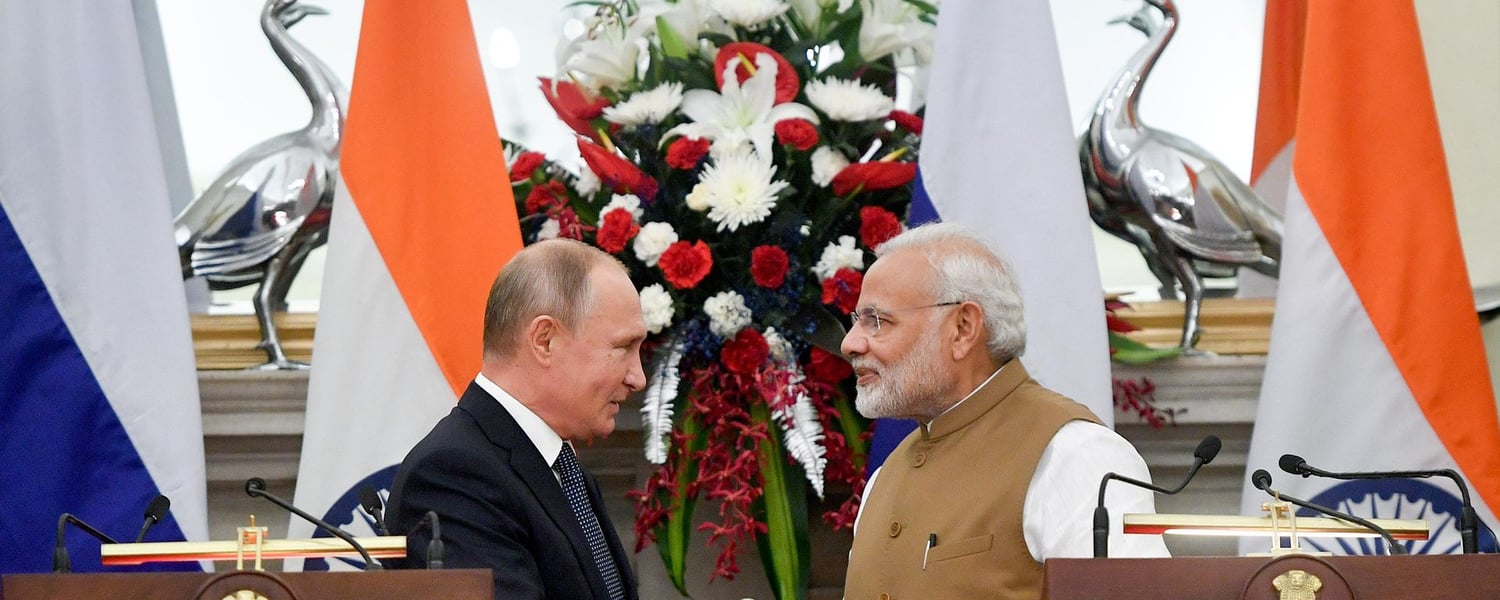
The BRICS dimension may ultimately be what makes this visit matter most. Putin’s direct confirmation to Jaishankar that he will personally attend the BRICS summit in New Delhi on September 12-13 carries weight that goes beyond the bilateral. India’s hosting of the summit positions New Delhi as the convening power of an institution that now includes Egypt, Ethiopia, Iran, Saudi Arabia, and the UAE alongside its founding members. Putin also said he expects to meet PM Modi on the sidelines of the Shanghai Cooperation Organisation summit, adding another diplomatic node to a calendar that is growing increasingly dense between the two capitals.
The Kremlin meeting was Jaishankar’s second direct engagement with Putin in under a year; they previously met in November 2025. Frequency of contact at this level carries its own diplomatic signal. Russia’s relationship with most G7 economies remains severed; while US economic pressure intensifies on other capitals, Moscow’s pivot toward South and Southeast Asia is accelerating. India sits at the center of that pivot.
What the visit did not resolve, and what Jaishankar acknowledged openly, is the currency and settlement question that underlies the trade imbalance. With Russia effectively locked out of dollar and euro systems, bilateral trade increasingly flows through rubles and rupees. The exchange dynamics and accumulation of rupee balances in Russian accounts have created friction that both governments want to address but have not publicly committed to a mechanism for fixing.
Whether $100 billion in bilateral trade by 2030 is a target or a forecast depends on answers that neither government provided in Moscow this week. The architecture is there. The political will, from both sides, was confirmed at the Kremlin. The operational path through settlement systems, tariff structures, and a structural trade gap that both sides publicly acknowledge: that remains, as Jaishankar might put it, one of the key tasks before us.