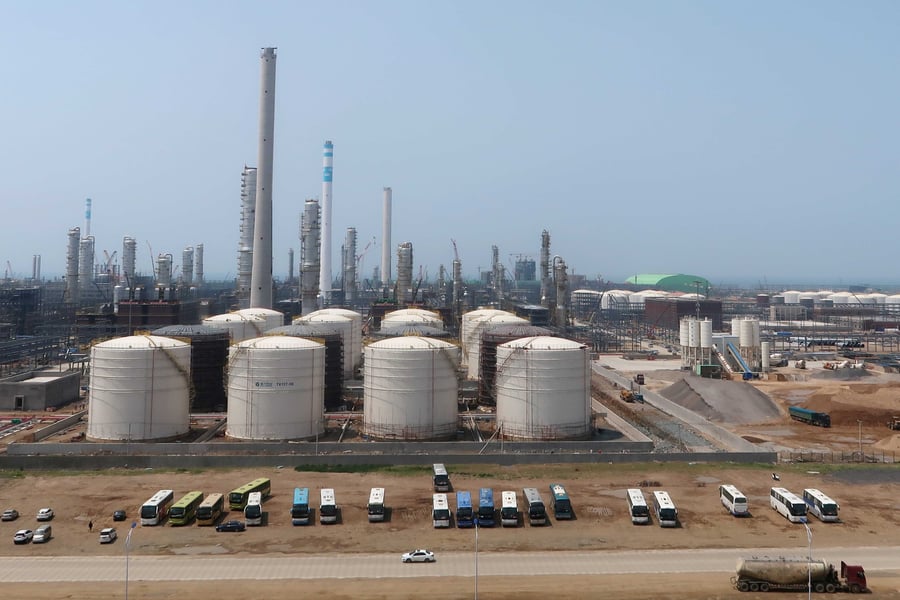

BEIRUT — At the Hengli Petrochemical refinery in Dalian, roughly 200,000 barrels of Iranian crude oil arrive each day, enough to keep one of China’s most modern processing facilities running at full capacity. It is a supply chain that Scott Bessent, the United States Treasury Secretary, appeared to have in mind this week when he threatened to cut “every” economic lifeline sustaining Tehran.
The threat carries a structural problem. China absorbs approximately 90 percent of Iran’s oil exports, representing roughly $31.2 billion in crude shipments in 2025 alone, according to the US-China Economic and Security Review Commission. Two-way trade between China and Iran added another $9.96 billion to that figure. If Bessent’s vow means anything, it means forcing Beijing to choose between its Iranian energy supply and its trade relationship with Washington, a choice that cuts directly against the China détente the Trump administration spent months building.
Writing in the Financial Times, Bessent described the administration’s approach as deploying “numerous authorities” previously considered too extreme to use against any country. Iranian officials have since called what they describe as Washington’s escalating Iran war economic offensive a backhanded admission of US failure, but Washington has shown no sign of moderating its rhetoric. Nations doing business with Iran, Bessent wrote, should “not discount the cost of testing” its resolve. The op-ed landed alongside a fresh round of secondary sanctions listings, measures that allow the United States to penalise foreign companies, including Chinese ones, for trading with Tehran.
The contradiction is not incidental. In the same period that the Trump administration has escalated its Iran war economic campaign, it reached an accommodation with Beijing on trade that both sides had publicly characterised as stabilising. That understanding was built on the premise that the two governments could keep their disputes compartmentalised. The Iran sanctions campaign is testing whether that compartmentalisation holds.
Jennifer Kavanagh, a senior fellow at Defense Priorities, put the structural dilemma plainly. “Cutting off Chinese economic ties will be key to the success of any attempt to increase pressure on Iran,” she told Al Jazeera. “Without Chinese participation, or at minimum Chinese acquiescence, the sanctions architecture will have critical gaps that Tehran can exploit indefinitely.” Brett Erickson, a sanctions specialist at Obsidian Risk Advisors, framed the moment as a test of Washington’s actual priorities. “If the United States decides to really bring China into the ring,” Erickson said, “it will be a serious indication of where Washington’s focus truly lies.”
Beijing has shown little inclination to abandon what it regards as a legitimate energy supply relationship. Wang Wen, dean of the Chongyang Institute for Financial Studies at Renmin University of China, struck a tone that combined restraint with a barely disguised threshold. “China maintains its desire to avoid conflict,” he said, “but its bottom line cannot be crossed.” Zichen Wang, deputy secretary-general of the Center for China and Globalization, offered a narrower read of the exposure: unless US measures “become very broad or directly target major Chinese interests,” Beijing might calculate the risk as manageable for the near term.
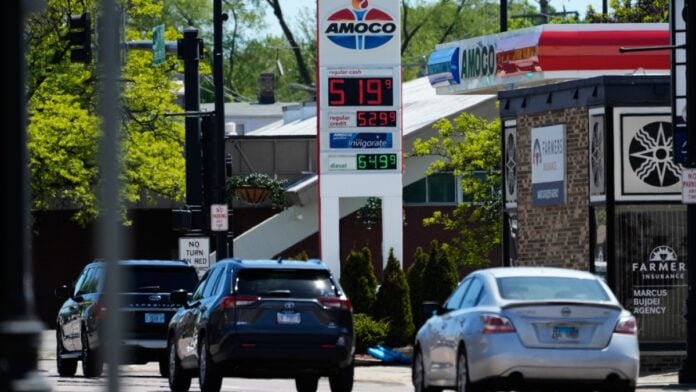
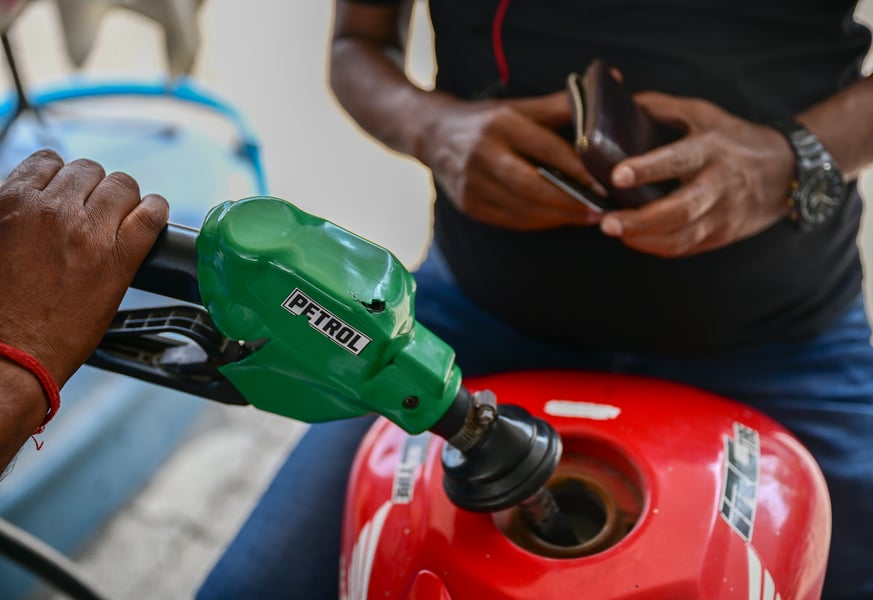
The economic disruption from the Iran war has already been significant. Since the United States and Israel launched the conflict in February, petrol prices have risen in at least 145 countries, according to tracking data from GlobalPetrolPrices. In the United States, the national average for a gallon of regular gasoline has climbed from $2.94 to $4.09, a 39 percent increase. A successful sanctions squeeze on China’s Iranian oil imports would tighten that market further.
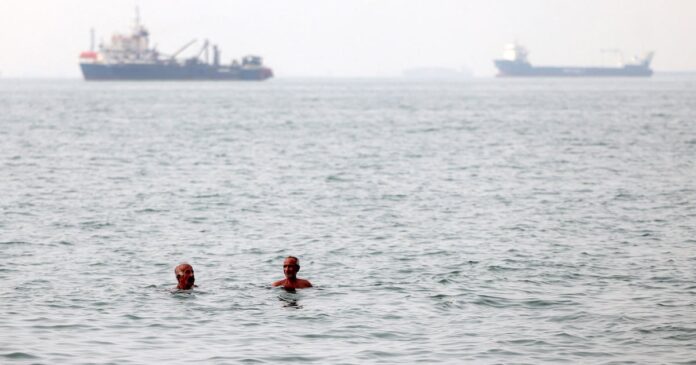
Tehran has made clear it will not absorb the pressure without response. Mohsen Rezaei, secretary of Iran’s Supreme National Security Council, warned that nations cooperating with the US sanctions effort would be treated as enemies of the Islamic Republic. He added a specific threat: Gulf oil exports would be blocked if Tehran’s regional neighbours joined the coalition against it. The warning carries real weight. Iran’s ability to disrupt the Strait of Hormuz, through which roughly 17 percent of global oil flows, has been a persistent market concern since the conflict began. Earlier this week, Tehran formalised its Hormuz enforcement posture as part of a widening Iran war Hormuz sanctions effort, blacklisting vessels it accused of violating its rules in the waterway.
The costs of the conflict are being felt beyond the Middle East. Washington this week cancelled its Ssangyong military exercises with South Korea, a decision the Pentagon attributed directly to the demands of Iran war US military overstretch, underscoring that the conflict has already constrained American power projection in the Indo-Pacific.
What neither government has answered publicly is whether the two sides have reached an informal understanding. Washington announces maximum pressure; China continues to buy Iranian oil through channels designed to avoid the most visible sanctions tripwires. Analysts describe this as the most likely near-term outcome, a managed arrangement in which the Hengli refinery keeps running and both governments retain the plausibility of pursuing their stated objectives.
Whether that arrangement survives depends on how far Washington is prepared to push. Erickson and Kavanagh each pointed to the same threshold: if the United States moves to sanction Chinese state-owned oil majors rather than private refineries, the calculation changes entirely. That step would test both the China détente and the Iran war economic campaign in ways neither has yet been tested. Washington has not taken it. Whether it does remains the most consequential open question in the Iran war’s economic theatre.