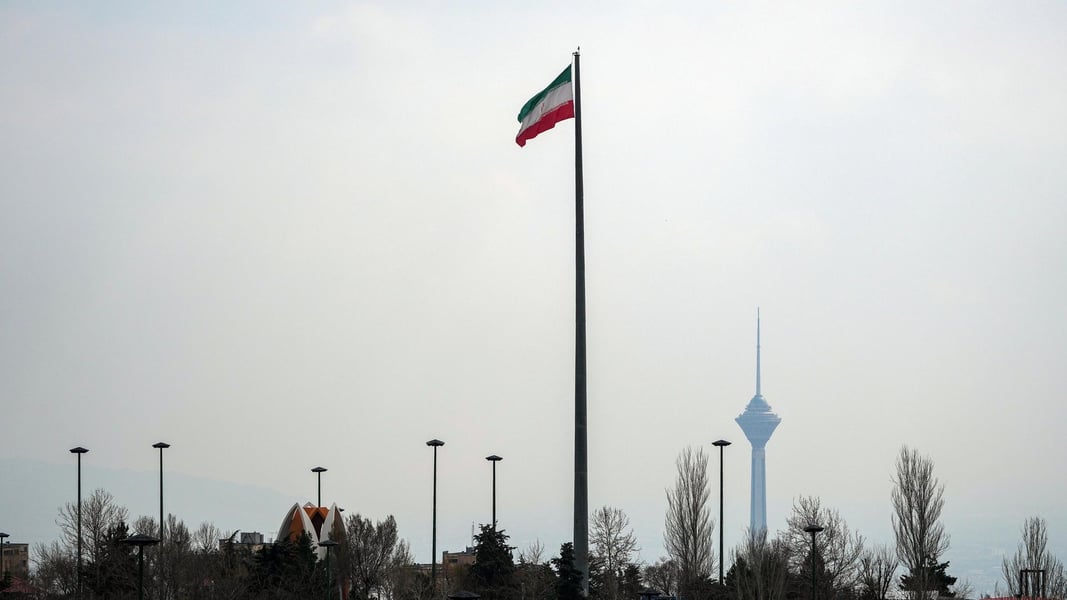

TEHRAN — The op-ed was intended as a statement of American strength. For Kazem Gharibabadi, Iran’s Deputy Foreign Minister for Legal and International Affairs, it read as something else entirely.
Writing in an American publication last week, US Treasury Secretary Scott Bessent declared that Iran’s military capabilities had been rendered inoperative, its nuclear programme buried, and the country’s military factories destroyed — framing it as the prelude to what he called “the final stage” of Washington’s campaign. He then announced that the United States would simultaneously launch what he described as “the single greatest financial offensive in history” against Tehran.
Gharibabadi did not need long to identify the contradiction. “Something doesn’t add up in your stories,” the Iranian diplomat said in a public statement on Sunday. “You say that Iran’s military potential has been ‘dismantled’ 100%, military factories have been ‘destroyed,’ and the nuclear program has been ‘buried.’ And then you announce the single greatest financial offensive in history. Is this a victory or a bitter admission of defeat?”
The argument is a simple one, but its simplicity is the point. Military campaigns that achieve their stated objectives do not typically require a simultaneous escalation of the economic war. The scale of the financial pressure Bessent described — sweeping sanctions, secondary measures targeting Iran’s trade partners, restrictions on Iranian-linked financial institutions across Asia and Europe — signals not the confident posture of a victorious power consolidating gains but the sustained effort of one that has not yet resolved the underlying conflict.
Bessent’s op-ed appeared in the wake of President Donald Trump’s August 20 announcement of what he called “isolation on an unprecedented scale” for Iran. The Treasury Secretary framed the economic operation as complementary to the military campaign that began on February 28 — Operation Epic Fury. The narrative arc he offered was linear: military success followed by financial pressure to lock in the outcome.
Tehran’s counter-narrative disputes the premise. Iran has consistently refused to characterize its position as one of defeat, and Gharibabadi’s intervention was designed to make the logical problem in Bessent’s account visible to an international audience that includes Iran’s partners in Russia and China, its trading relationships across Asia, and the neutral parties in the Global South watching the conflict’s economic implications with growing unease.
As the diplomatic rebuttal landed, the Iran war Hormuz sanctions campaign was already reshaping commercial shipping across the Gulf, with Tehran blacklisting vessels deemed in violation of its own rules — a counter-pressure strategy running parallel to the Iranian diplomatic offensive.
Russia offered its own signal on Sunday. Alexander Alimov, Director of the Department for Non-Proliferation and Arms Control at Moscow’s Foreign Ministry, said Russia was prepared to support mediation efforts “to end the aggression against Iran and more broadly to maintain stability in the Middle East” — contingent on a formal request. The offer was carefully worded: Moscow framed the conflict as “aggression against Iran,” not as a mutual confrontation. The language itself is a political position.
Moscow’s interest in a mediated resolution is structural. The Iran war has reshaped energy pricing, disrupted Gulf shipping routes, and placed additional strain on the international financial mechanisms that Russia itself navigates under long-standing Western sanctions. A prolonged financial offensive against Tehran creates collateral effects in global oil markets, secondary sanctions risks for Russian entities that maintain relationships with Iranian counterparts, and pressure on the non-Western financial infrastructure both countries have worked to build as an alternative to the dollar-dominated system.
The economic measures Bessent described target precisely the architecture that Iran has used to maintain trade flows despite years of existing sanctions: shipping intermediaries, Asian financial clearing channels, third-country re-exporters. Many of these same networks serve Russian exporters. The “greatest financial offensive in history” is aimed at Iran, but its blast radius extends considerably beyond Tehran’s borders.
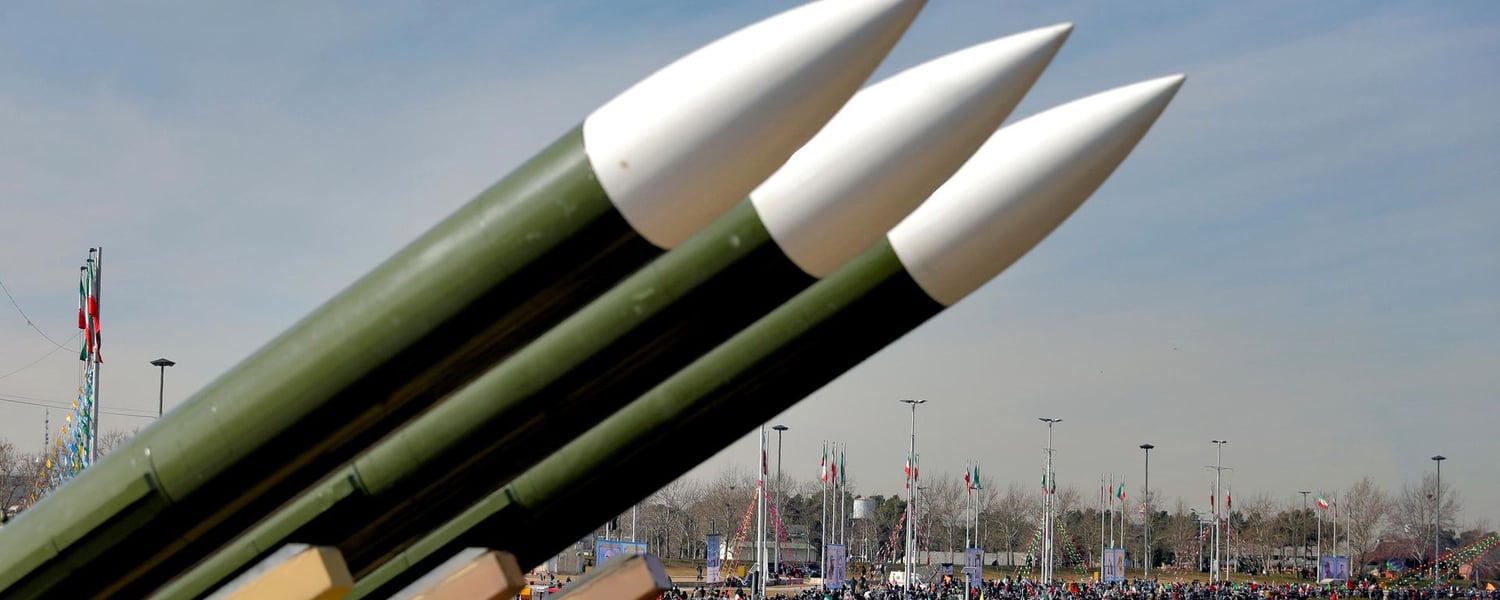
The wider impact was already visible in the Iran war US military overstretch that led Washington to cancel joint exercises with South Korea — a decision that revealed the limits of American military bandwidth as the Iran campaign simultaneously demanded resources across multiple theatres.
For Gharibabadi, the more revealing element of Bessent’s op-ed was what it did not say. There was no articulation of the terms on which the financial campaign would end — no conditions Iran could meet to bring the offensive to a close, no diplomatic framework through which Tehran might negotiate relief. Sanctions without an endpoint are not leverage but punishment, and punishment without conditions does not produce agreements.
Sputnik reported that Gharibabadi’s statement was received in Washington without official comment. The silence follows a pattern: throughout this phase of the conflict, the United States has addressed Iranian diplomatic statements through op-eds and press releases aimed at domestic audiences rather than through direct engagement.
What the exchange leaves open is the question Gharibabadi posed: what does victory actually look like for the United States in this conflict, and how would either side know when it had been achieved? Bessent’s op-ed framed the financial offensive as the final chapter. Tehran’s response suggests the chapter headings are still being written.