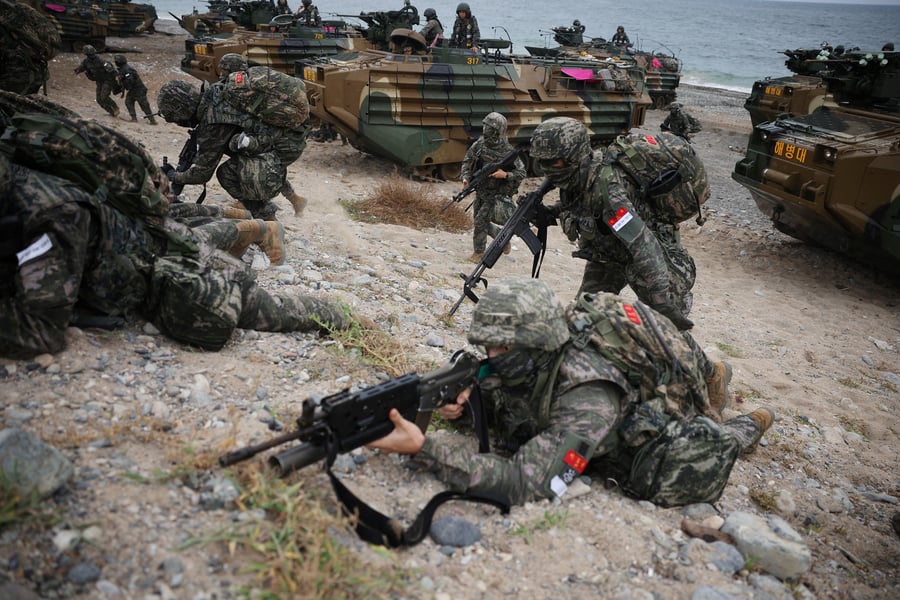

SEOUL — The South Korean Marine Corps had been planning the Ssangyong exercise for months. The landing craft formations, the combined amphibious assault drills, the command and control rehearsals that define what two nations can actually do together when they need to put soldiers on a beach — all of it built around the assumption that American Marine forces would show up. They will not. Washington has informed Seoul that the Iran war has consumed the deployment capacity the exercise requires.
The cancellation of Ssangyong — the biennial flagship combined amphibious landing drill that has anchored US-South Korea military readiness — was formally communicated to the South Korean military in June, Al Jazeera reported Monday. Han Seung-jeon, spokesman for the South Korean Marine Corps, confirmed the notification: “The US Marine Corps formally notified our forces in June that its ability to deploy forces during this year’s Ssangyong exercise would be constrained due to the situation in the Middle East.”
The Pentagon provided no immediate response to requests for comment.
It is not the only cut. President Donald Trump has separately ordered Ulchi Freedom Shield — the annual command post exercise that tests the combined wartime leadership of the US-South Korea alliance — reduced from eleven days to five. Trump justified the move by citing costs and, in language that revealed the real calculation behind both decisions, what he described as Seoul’s refusal to stand alongside the United States in the war against Iran.
Ssangyong is the exercise that converts the alliance’s paper commitments into physical capability. It involves warships, Marine assault units, aircraft, and landing operations conducted under live-fire conditions. It runs every two years precisely because the complexity of a combined amphibious operation requires sustained rehearsal. Missing one edition is not catastrophic on its own. What it signals — that the US Marine Corps cannot spare the forces because they are committed to the Middle East — is.
The exercise serves a purpose that command post drills cannot replicate. Ulchi Freedom Shield tests whether generals and their staffs can coordinate. Ssangyong tests whether actual fighting units can execute. The cancellation tells the South Korean Marine Corps that its primary wartime coalition partner is, this year, deployed elsewhere.
Elsewhere is the Strait of Hormuz and the Persian Gulf, where the US military is sustaining its campaign against Iran. The US-Israel war on Iran has drawn American naval and ground forces into the kind of sustained Middle East commitment that has historically — after Iraq, after Afghanistan — strained US military posture in Asia. Treasury Secretary Scott Bessent’s warning to every country still doing business with Tehran — “you’re either with us or against us” — has set up a loyalty test that Seoul has quietly declined. South Korea needs Iranian oil. South Korea needs trade routes through Hormuz. And it has its own threat environment to manage, one that does not pause for Washington’s Middle East priorities.
Trump’s framing of the Ulchi Freedom Shield reduction is revealing. He did not say only that the exercise was expensive. He also said South Korea had refused to participate in the Iran conflict. The linkage makes explicit what the alliance’s fine print has always implied: American security commitments are not unconditional. They are transactional. And the terms of the transaction are set in Washington, not Seoul.
The complications do not end there. Trump has simultaneously pursued outreach to North Korea, with aides describing ongoing back-channel contacts as a potential diplomatic opening. That dual posture — relaxing military pressure against Pyongyang while cutting the exercises that prepare for a North Korean contingency — creates a strategic contradiction that South Korean military planners cannot afford to ignore. Seoul’s security architecture is built around the assumption that if North Korea moves, American forces arrive knowing what to do because they have practiced it together. The Ssangyong cancellation and the Ulchi Freedom Shield cuts chip at that assumption from two directions at once.
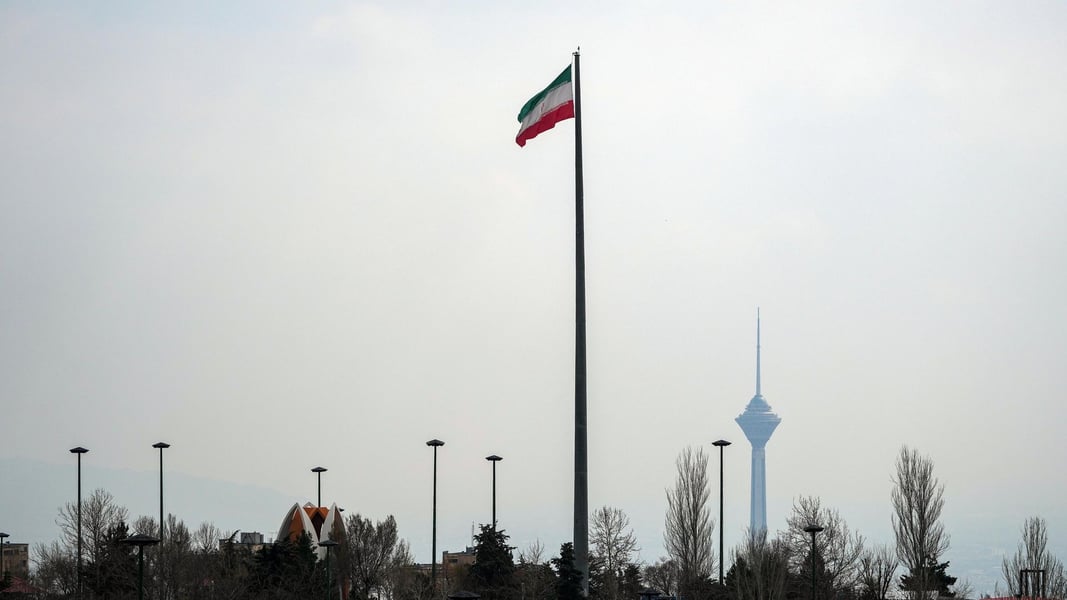
The Iran war oil sanctions campaign Washington is prosecuting is designed to isolate Tehran economically. Its secondary effect — visible now in Seoul, visible in the reduced Pacific posture, visible in the pressure on non-Western countries to sever Iranian ties — is a different kind of isolation: the United States isolating itself from the reliability its Asian alliances depend on.
South Korea and the United States are consulting on whether Ssangyong can be rescheduled. The language of consultation is diplomatic cover for a situation that has no clean solution. The forces are in the Middle East. The forces cannot simultaneously be rehearsing amphibious operations on South Korean beaches.
What has not been addressed publicly is the question the Ssangyong cancellation forces onto the table: if a genuine North Korean provocation coincided with the current US military posture in the Middle East, what exactly arrives in South Korea, and when? That question is not new. The answer, right now, is less clear than it has been in years.