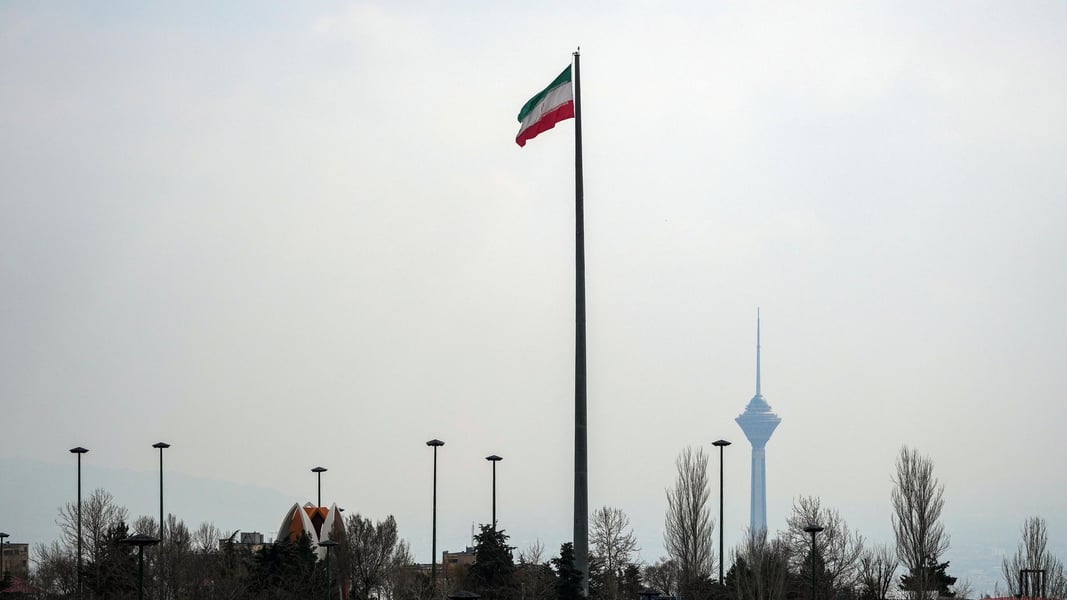

DUBAI — For the tanker crews navigating the Persian Gulf with their automatic identification systems disabled, Monday’s declaration from Tehran arrived as confirmation of what the shipping lanes had been signaling for months: the rules governing this waterway are being written in Tehran, not Washington.
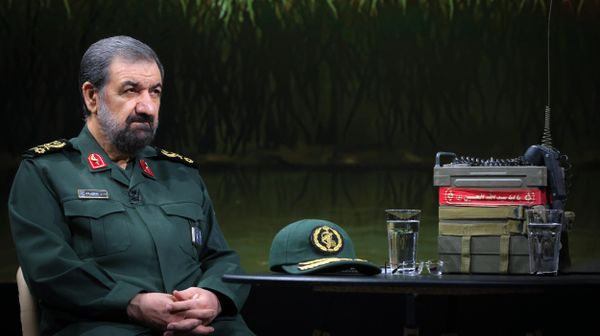
Mohsen Rezaei, head of Iran’s Supreme National Security Council, issued the warning with characteristic directness. “If the countries surrounding Iran join the Americans in the economic war, not a single drop of oil will leave the Persian Gulf and the Strait of Hormuz,” he said, according to RT.
The statement arrived as the 60-day negotiation window that US President Trump had granted Iran to reach a new nuclear and regional security agreement expired Monday without a breakthrough. US Treasury Secretary Scott Bessent has described Washington’s pressure campaign as “the greatest coordinated economic isolation in the history of the world,” and Trump called the deadline “Economic D-Day.” Eastern Herald’s earlier reporting on the US Iran sanctions campaign detailed how Washington timed the pressure to coincide with Beijing’s diplomatic calendar.
That framing has not gone unchallenged. Iran’s response was to reframe the question entirely: not whether the sanctions pressure is historically unprecedented, but whether the United States and its regional partners are prepared to absorb what an actual closure of the Strait of Hormuz would mean for global energy markets.
The Strait — a passage barely 34 kilometers wide at its narrowest point — controls movement of roughly a quarter of the world’s seaborne oil and liquefied natural gas. Before the Iran war began in earnest, an average of around 20 million barrels passed through daily. Since joint US-Israeli bombing operations against Iranian naval installations launched on February 28, vessel traffic has fallen to approximately 20 percent of pre-war levels. Almost 200 ships navigated the waterway last week, most sailing with their tracking transponders disabled or taking disputed US-backed alternate routes.
Rezaei’s statement on Sunday did not announce a new closure — the Strait is already operating far below capacity. What it signaled instead was an escalation of a different character: that Gulf states continuing to export through alternative channels, effectively complying with Washington’s isolation campaign by routing around Iranian-controlled waters, would find those routes targeted as well. Tehran would respond to further escalation “in a seismic manner,” Rezaei added.
The regional diplomatic landscape shifted sharply in the days before Monday’s deadline. The UAE suspended formal ties with Iran after two ballistic missiles struck Emirati territory. Tehran denied responsibility, with Iranian officials describing the incident as an Israeli false-flag operation calibrated to fracture Gulf solidarity at the precise moment Washington needed regional cooperation to complete its sanctions architecture. Riyadh has maintained public silence on whether Saudi Arabia will comply with Bessent’s call to halt all commercial activity with Tehran.
India’s exposure to each escalation in this conflict is immediate and structural. New Delhi imports approximately 85 percent of its crude oil, and a significant share of that supply, or the pricing benchmarks against which it is purchased, runs through Hormuz-affected channels. External Affairs Minister S. Jaishankar’s recent visit to Moscow — where he met President Putin amid India-Russia energy talks on diversifying supply through BRICS arrangements — suggests New Delhi is already hedging the energy exposure a complete Hormuz closure would create. India-Russia oil trade has accelerated as an alternative to Gulf-dependent chains, but it covers only a fraction of India’s total import requirement.
China faces a parallel but more insulated calculation. Beijing has maintained commercial ties with Tehran throughout the Iran war, purchasing Iranian crude through mechanisms that sidestep the US financial system. Rezaei’s threat targets not those direct arrangements, but the Gulf state intermediaries through which Chinese refineries have diversified supply. If the UAE, Kuwait, or Qatar reduce sales to Chinese buyers under American pressure, the compression falls on refineries already managing a restructured supply chain.
The US military’s own posture in the region tells a version of that story through a different lens. This week’s cancellation of a scheduled Marine exercise with South Korea — attributed by military sources to demands generated by the Iran war — illustrated the operational strain of sustaining a major Gulf commitment while maintaining deterrence postures in the Pacific. Resources committed to the Persian Gulf are, by definition, not available elsewhere.
Whether Tehran’s warning constitutes an operational plan or a negotiating posture designed to split Gulf states from Washington’s coalition is a question neither party has answered directly. The White House did not offer a formal response to the Hormuz warning on Monday. Bessent’s office referred questions to the State Department, which noted only the US Navy’s “significant operational presence in the region.”
The 60-day window has closed. The next chapter has no agreed-upon terms.