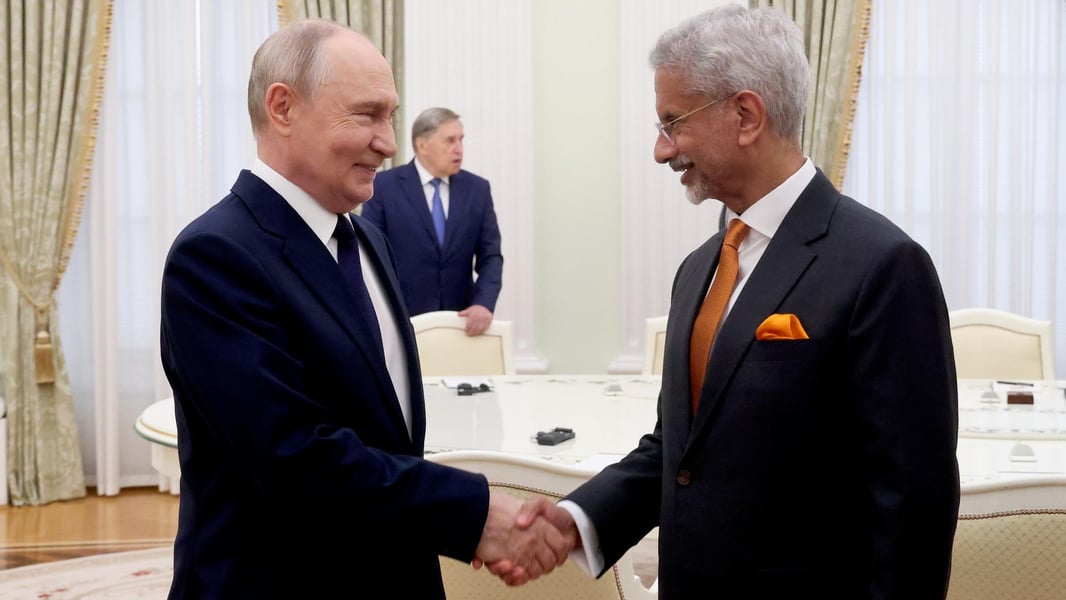

MOSCOW — For the Indian farming lobby, the news from the Kremlin on Monday carried practical weight beyond the usual diplomatic language. Vladimir Putin told India’s foreign minister that Russia was increasing fertilizer shipments to address a supply gap, and committed personally to resolving the issue. At stake is one of the most sensitive dependencies in India’s agricultural economy: Russian nitrogen and phosphate fertilizers that flow into paddy fields and wheat farms across the subcontinent.
The commitment came as External Affairs Minister S. Jaishankar sat across from Putin in Moscow on August 24, completing a two-day official visit to the Russian capital that covered far more ground than any single commodity. The two sides reviewed a relationship deepening at a pace that has unsettled several Western capitals: bilateral trade is growing in 2026, with India now the second-largest buyer of Russian crude oil, and a joint target of $100 billion in annual trade by 2030 is being built toward across energy, technology, and defense.
“Your visit highlights the level of relations that have developed between Russia and India for decades,” Putin said, setting a tone more expansive than standard diplomatic pleasantries. He described cooperation as “expanding across nearly all areas” — governmental, parliamentary, and economic.
Jaishankar arrived in Moscow at the invitation of First Deputy Prime Minister Denis Manturov to co-chair the 27th Session of the India-Russia Inter-Governmental Commission on Trade, Economic, Scientific, Technological and Cultural Cooperation, known as IRIGC-TEC. The commission is the working engine beneath the two countries’ political summitry — where the commitments about energy security, technology transfer, and connectivity turn into specific line items. The Kremlin meeting with Putin was the capstone of that visit, not a substitute for it.
India’s Russian oil imports at a record high have made the trade relationship both valuable and politically sensitive. India has absorbed discounted Russian crude since 2022, refining it domestically and, in some cases, exporting refined products to markets that once sanctioned Russia directly. That arrangement continues to function because New Delhi has maintained what its diplomats call “strategic autonomy” — a refusal to align with Western sanctions regimes on Russia. Monday’s meeting reaffirmed that posture without advertising it.
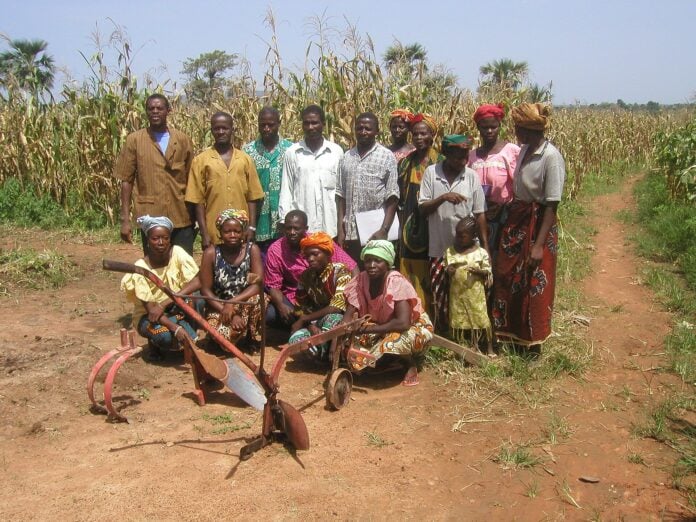
On the fertilizer front, Putin’s language was unusually direct. “We are doing everything to close this issue for Indian farmers and agriculture, we are increasing these supplies,” he said, as Sputnik reported. Russian nitrogen, potash, and phosphate fertilizers have become a significant supply chain concern for India’s agricultural planning ministries — particularly as global prices remain volatile and Western suppliers have faced their own logistical and pricing pressures.
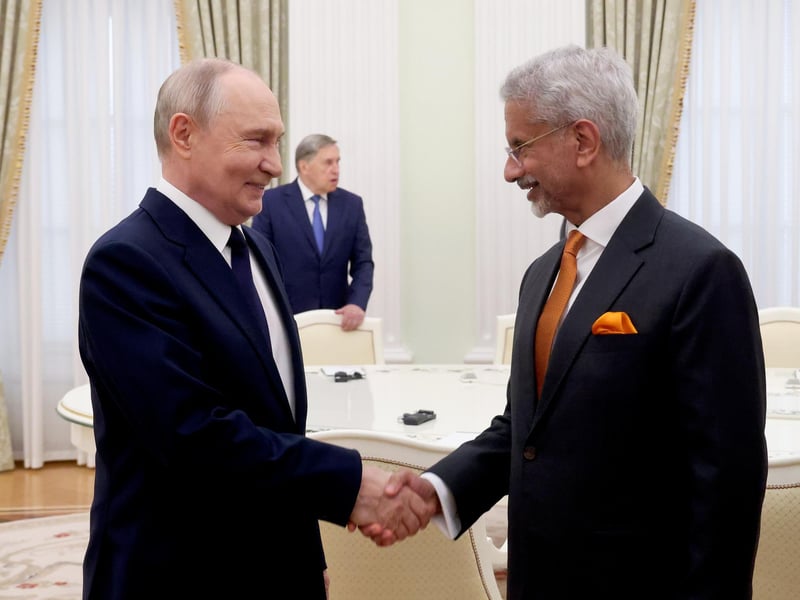
The meeting carried clear agenda-setting value ahead of an event of significant geopolitical importance: the BRICS leaders’ summit in New Delhi, scheduled for September 12 and 13. Kremlin spokesman Dmitry Peskov confirmed that Putin would attend in person and described India as “a special and privileged partner of Russia.” Putin told Jaishankar he was looking forward to meeting Prime Minister Narendra Modi shortly.
The BRICS summit will be Modi’s first major multilateral hosting since the bloc’s membership expanded. Russia-India strategic partnership carries visible weight in the summit’s architecture: Putin’s attendance — not a certainty for every foreign leader given Russia’s current international legal exposure — signals both the relationship’s durability and India’s ability to function as a neutral convening space.
On defense, there was movement on a topic with significant procurement implications. Talks included the Su-57 fifth-generation fighter aircraft, Russia’s most advanced combat plane. A transfer to India would rank among the largest defense deals in recent memory, RT reported. Putin’s statement was direct: “We are ready to supply India with this aircraft, to keep developing it. We don’t have any issues or limitations.” Whether India’s defense ministry will ultimately move on the offer — which has been discussed before without culminating in a signed agreement — is a question Monday’s meeting left open.
The IRIGC-TEC session under Manturov and Jaishankar also covered Arctic shipping routes, which Russia sees as strategically vital and wants Indian logistics players to engage with as Chinese competition intensifies. Rail connectivity projects linking Central Asia to Indian ports via Russia were discussed as well — longer-term infrastructure ambitions that depend on the geopolitical stability Moscow is determined to project.
Jaishankar conveyed formal greetings from President Droupadi Murmu and Prime Minister Modi. It was the second time the two senior officials had sat across from each other in recent months, after a meeting in November 2025 — underscoring the frequency with which senior Indian diplomats now move through Moscow for substantive working sessions.
The meeting left one major uncertainty unresolved: whether bilateral trade can continue growing at its current pace as Russian oil pricing dynamics shift and India navigates competing pressure from Washington. India-US relations have featured sustained attempts to bring New Delhi into tighter alignment on China and on the transatlantic sanctions architecture around Russia. Monday’s session at the Kremlin sent an unmistakable signal that those efforts have not yet moved India’s strategic calculus.
What September’s BRICS summit in New Delhi produces — joint statements, infrastructure commitments, or new framework agreements — will depend partly on how Monday’s groundwork develops in the weeks ahead. Russia frames the summit as an opportunity to project a functioning international order outside Western institutions. India frames it as a demonstration of the non-aligned posture it has cultivated since 2022. Whether those two narratives about the same event are fully compatible is a question Monday’s Kremlin meeting could begin, but not settle.