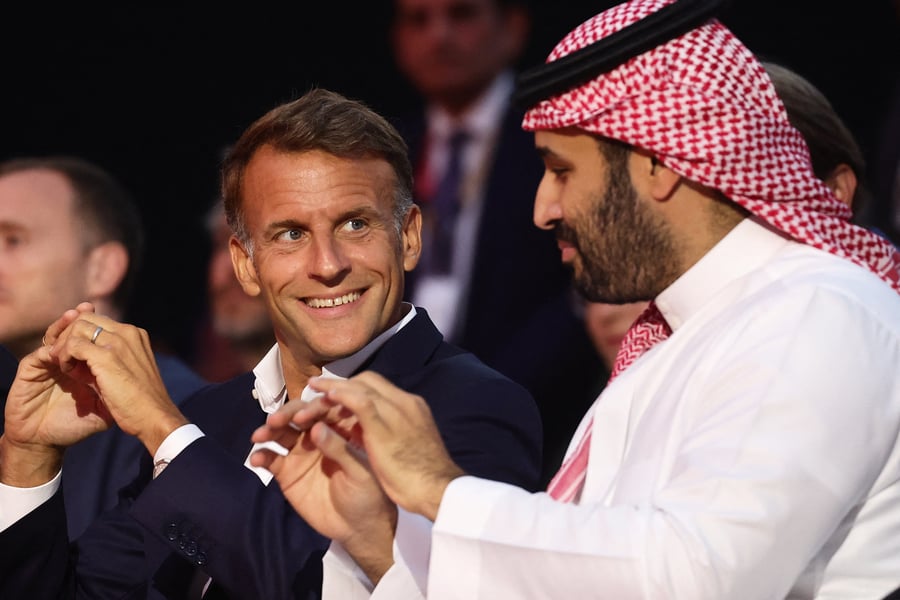

PARIS — The French capital greeted a Saudi crown prince Sunday with the kind of spectacle that signals intent. Mohammed bin Salman’s two-day state visit to France began not in an official residence but at the Grand Palais, where Saudi Arabia’s Esports World Cup was closing its final session — a staged debut designed to show Europe what Riyadh can deliver before the formal negotiations had even opened.
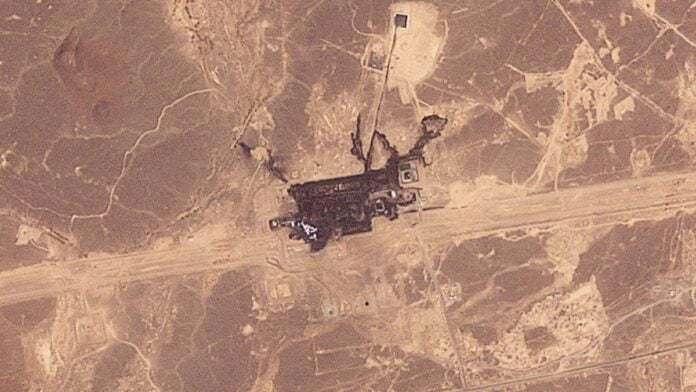
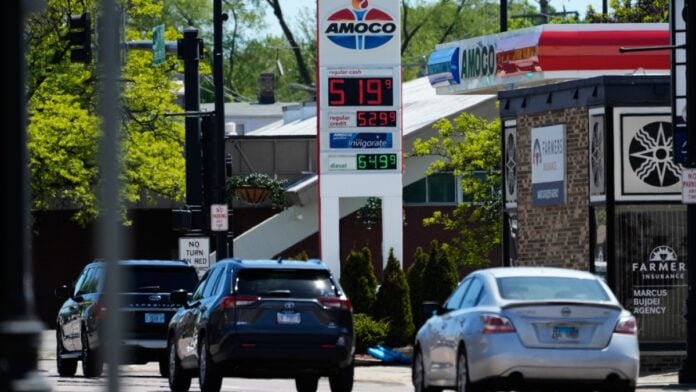
The visit lands at a moment Europe cannot afford to treat as ceremonial. Oil prices have held above $100 per barrel for six months, since US and Israeli operations against Iran on February 28 disrupted shipping through the Strait of Hormuz and the Strait of Hormuz sanctions regime that followed. Twenty percent of the world’s oil and natural gas typically transits that chokepoint during peacetime. It is not peacetime.
What MBS carries to the Élysée Palace on Monday is not a bilateral meeting — it is the geography of an alternative. Saudi Arabia has the reserves, the pipeline infrastructure, and now a widening set of regional security agreements to argue it can route energy to Europe without touching Iranian waters. Whether that offer can be operationalized at the speed Europe needs is the question the engineers will eventually answer. The political conversation in Paris is getting there first.
France imported $4.6 billion in Saudi goods last year, 72 percent of it petroleum. It exported $4.5 billion in return — arms, aerospace components, luxury goods. Those numbers describe a relationship of mutual exposure that both sides have preferred to call a partnership and have recently been forced to call a dependency.
Valerie Pecresse, president of the Île-de-France region, was already discussing a Dragon Ball-themed amusement park deal with Saudi partners before MBS cleared the airport. “There is a very important meeting at the Elysée today that may result in the signing of this agreement,” Pecresse said, calling the prospective park “on the scale of Disneyland.” Health accords, transport agreements, and energy frameworks are the declared agenda. The Dragon Ball park is a signal that Saudi soft power and French territorial investment ambitions have found traction well below the diplomatic register.
This is MBS’s third visit to France. He came in 2022, when European governments were scrambling to reprice their dependence on Russian gas following the beginning of the Russian operation in Ukraine. He returned in 2023. The Saudi-French Strategic Partnership Council, formalized in December 2024, gave the relationship an institutional spine. The 2026 visit, as Al Jazeera reported, comes with a specific energy agenda driven by a specific emergency.
The discussions on alternative routes are the most consequential portion of the agenda and the part that will receive the least public detail. Saudi Aramco has been engaged with European partners on pipeline and sea-route capacity that bypasses Hormuz transit — overland corridors through Jordan, enhanced Red Sea throughput, potential Mediterranean LNG infrastructure. France, with its terminal capacity and EU membership, is a natural anchor for that architecture. The timeline for any of it to matter remains unclear.

The geopolitical backdrop gives the energy talks their weight. The broader Iran war economic sanctions reshaping global oil markets have simultaneously handed MBS more leverage in every Western capital he visits and narrowed the space in which any government can publicly explain why it is hosting him. MBS signed the Mecca mutual defense pact with Turkey and Pakistan on August 7 — a security alignment among three major Muslim states that does not name an adversary but does not need to. The context does the naming.
That pact has changed the geometry of Monday’s meeting at the Élysée. France holds a permanent seat on the UN Security Council, deploys military assets across West Africa and the Gulf, and has consistently called for a ceasefire in the Gaza genocide. Saudi Arabia’s trajectory since October 2023 — when its normalization discussions with Israel collapsed — has moved it closer to a posture France can accommodate more openly. The harder question, which will not surface in any joint communiqué, is whether deepening ties with Riyadh eventually requires Paris to sharpen its positions on the West Bank.
Expo 2030 in Riyadh and the 2034 FIFA World Cup are the events Saudi Arabia is using to build its international calendar. Both require French participation — architects, cultural institutions, infrastructure firms, and diplomatic goodwill. Macron’s government has been consistent in supplying it. That consistency is part of what MBS has come to Paris to confirm, and part of what makes the energy discussion more than a technical exchange.
What this visit will not settle is what France’s diplomatic community is quietly debating: not whether to engage with Saudi Arabia, but what the full cost of that engagement looks like once the agreements are signed and the cameras are off.