

DUBAI — For eighteen months, the Houthi movement has been attacking ships in the Red Sea and the Gulf of Aden, and for most of that time, Saudi Arabia watched from the margins. That changed Sunday when Houthi forces fired a ballistic missile at a Saudi-flagged tanker navigating the kingdom’s own coastal waters, then announced that Saudi ships are no longer safe to sail at all.
The missile struck the tanker approximately 63 nautical miles west of Yanbu, igniting a fire on the vessel’s main deck. The UK Maritime Trade Operations authority, which monitors maritime security across the Indian Ocean and Red Sea, confirmed the incident and said all crew members were safe and no environmental damage had been reported. The vessel’s identity and operator were not disclosed.
The claim of responsibility came alongside what the Houthis described as a formal ban on Saudi maritime navigation, language that escalated the framing well beyond the group’s earlier declarations. Since launching their Red Sea campaign in October 2023, the Houthis have framed their attacks as solidarity with Gaza, targeting vessels linked to Israel, American interests, or Western governments supporting Israel’s military campaign. Declaring a ban on Saudi maritime navigation is different in kind. It is a claim of authority over Saudi waters, directed at the government in Riyadh.
The geographic significance is hard to overstate. Yanbu is Saudi Arabia’s primary Red Sea port for crude oil exports, fed by the Trans-Arabian Pipeline from the kingdom’s oil fields and the Abqaiq processing complex in the east. Supertankers loading at Yanbu carry crude to Europe and Asia through the Bab al-Mandeb strait at the Red Sea’s southern end, the same chokepoint the Houthis have repeatedly targeted in the past year. A credible threat to Saudi-flagged shipping in waters directly off Yanbu means a credible threat to a significant share of Saudi oil export capacity.
The Houthi campaign in the Red Sea began in October 2023, framed by the group as direct action against the Gaza genocide. It has evolved considerably since then, starting with vessels carrying Israeli connections, then broadening to ships from countries deemed complicit in Israel’s campaign. A Houthi ballistic missile strike at Bab al-Mandeb earlier this year killed crew members aboard a commercial vessel and briefly paralyzed traffic through the strait. A separate Houthi drone strike on Saudi Aramco infrastructure targeted the kingdom’s Red Sea energy operations directly.
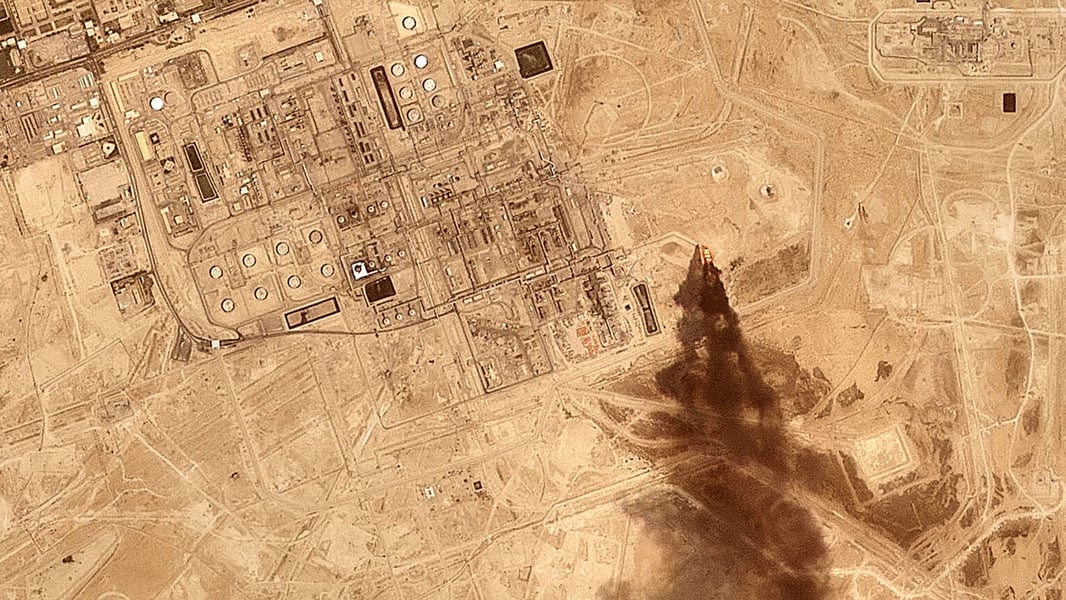
The United States-led Operation Prosperity Guardian, assembled in late 2023, has intercepted dozens of Houthi projectiles but has not degraded the group’s capacity for sustained attacks. Repeated American and British naval strikes on Houthi missile infrastructure inside Yemen have similarly failed to halt the campaign. The Saudi-led maritime coalition in the Red Sea operating separately has provided some escort coverage but was unable to prevent Sunday’s strike within 63 miles of one of Riyadh’s own major ports.
UKMTO, which issued the incident alert, characterized the projectile as “unknown” in its initial report and advised vessels in the area to exercise heightened caution. Anadolu Agency, citing the UKMTO alert, confirmed the fire aboard the vessel’s main deck and noted that all crew were accounted for. The Houthis, in their own statement, described the weapon as a ballistic missile and framed the strike as the opening of their declared ban on Saudi maritime navigation.
Saudi Arabia had not issued a public statement by Sunday evening. The kingdom has generally avoided direct military retaliation against individual Houthi maritime strikes, relying instead on the US-led coalition’s counter-operations in Yemeni territory. Whether the explicit declaration of a ban on Saudi shipping changes Riyadh’s calculation is the central question the attack has raised.
What is not yet known is whether the tanker was carrying crude, what its precise route was, and whether Houthi forces had tracked it specifically or struck opportunistically. The declared ban on Saudi maritime navigation implies intent beyond this single vessel. Whether that declaration translates into a sustained campaign against Saudi shipping, or whether it is brinkmanship aimed at extracting concessions in the stalled Yemen peace process, is a question the coming days will begin to answer.