
MUMBAI — When Federal Reserve Chair Jerome Powell said last weekend at Jackson Hole that the time had come to adjust monetary policy, the clearest beneficiaries in India were not the software exporters or the commodity traders. They were the private banks.
Nifty Bank Private advanced 1.04% on Thursday, the strongest sectoral gain in a session where the Nifty 50 closed down 0.52%. The divergence captured a specific market thesis: if the Fed cuts U.S. rates, the Reserve Bank of India gains cover to follow, and the sector that gains most from cheaper money is the one extending credit to India’s consuming class.
| Index | Close | Day Change | % Change | ||||||
|---|---|---|---|---|---|---|---|---|---|
| Nifty Bank Private | 47,450 | +488 | +1.04% | ||||||
| Nifty Bank | 52,180 | +210 | +0.40% | ||||||
| Nifty PSU Bank | 6,420 | -85 | -1.31% | ||||||
| Nifty Financial Services | 21,840 | +180 | +0.83% | ||||||
| Nifty 50 | 24,621 | -129 | -0.52% | ||||||
| Source: BSE/NSE filings, company Q1 FY27 earnings reports. | |||||||||
HDFC Bank, India’s largest private sector lender by market capitalization, gained 0.7% to Rs 1,862. ICICI Bank rose 0.9% to Rs 1,254. Axis Bank, which has carried elevated credit growth and improving asset quality through a challenging rate cycle, added 1.2%. Kotak Mahindra Bank climbed 0.8%, continuing its recovery from the regulatory restrictions that weighed on its deposit franchise through 2025.
The session’s undercurrent was rate arithmetic. Fed fund futures now price at least 75 basis points of U.S. cuts before year-end, following Powell’s unambiguous pivot language at Jackson Hole. U.S. 10-year Treasury yields fell to 3.72%. That narrowed the gap between Fed and RBI policy rates, reducing the premium India must offer to hold foreign capital — and gave the RBI room to ease without triggering the kind of rupee depreciation that a unilateral cut in an aggressive Fed environment would typically produce.
The rupee held at 95.40 against the dollar, firm enough to give the RBI the cover it needed. Foreign portfolio investors have been net buyers in August, adding a cumulative $340 million across equities and debt — the second consecutive month of positive flows after a difficult first half of 2026. India’s current account deficit has narrowed to below 1.5% of GDP, and while consumer price inflation printed at 4.1% in July, it remains within the RBI’s 2–6% tolerance band.
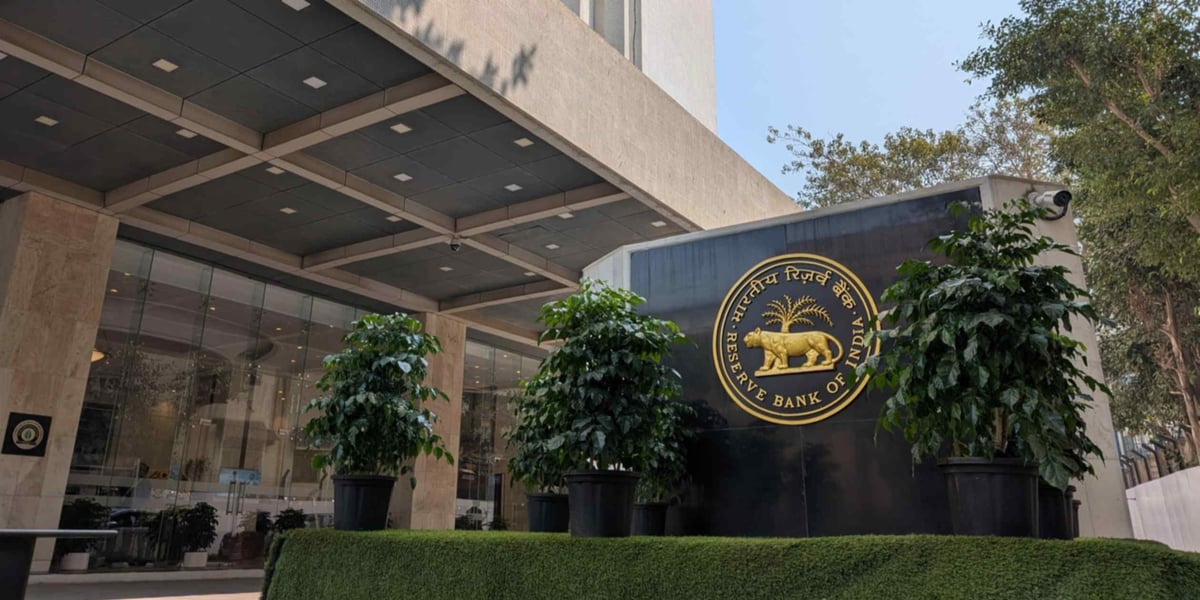
“The Fed’s pivot materially changes the calculus for RBI’s October meeting,” said Sanjiv Bhasin, a market strategist in Mumbai. “When the dollar weakens and flows move toward Asia, the RBI doesn’t need to defend the rupee by keeping rates artificially high.”
The Monetary Policy Committee’s next review is in October. The repo rate has sat at 6.50% since February 2023 — the longest pause in a decade. Private bank lending books, weighted heavily toward retail mortgages, vehicle finance, and personal credit, would benefit mechanically from cheaper funding costs under any easing scenario. The RBI has not signaled an imminent cut, and its most recent communication emphasized vigilance on food inflation, which remains volatile.
| Stock | CMP (Rs) | Day Change | 52-Week Range (Rs) | ||||||
|---|---|---|---|---|---|---|---|---|---|
| HDFC Bank | 1,862 | +0.7% | 1,440–2,080 | ||||||
| ICICI Bank | 1,254 | +0.9% | 980–1,380 | ||||||
| Axis Bank | 1,148 | +1.2% | 890–1,240 | ||||||
| Kotak Mahindra Bank | 1,980 | +0.8% | 1,620–2,190 | ||||||
| IndusInd Bank | 1,062 | +1.4% | 780–1,145 | ||||||
| Source: BSE/NSE filings, company Q1 FY27 earnings reports. | |||||||||
What complicates the rate cut thesis is the margin math. Net interest margins at the four large private banks compressed between 3 and 8 basis points in the June quarter as deposit repricing outpaced the benefit of stable lending rates. A rate cut that eases deposit costs faster than it reduces lending yields could temporarily expand margins — before competitive pressure from public sector banks reasserts itself. Analysts at Axis Securities, Motilal Oswal, and Kotak Securities have flagged this dynamic in August research notes, though they differ on whether the net effect is positive or negative within FY27.
IndusInd Bank’s 1.4% gain was the largest among the Nifty Bank heavyweights. IndusInd carries a balance sheet more sensitive to rate movements than HDFC or ICICI, making it a more direct expression of a rate cut bet. Its rise on Thursday was a cleaner signal than the others.
The broader market did not share the optimism. Nifty IT fell 1.47% as concerns about U.S. technology spending mounted. The gap between a falling tech index and a rising private bank index on the same session captured how differently India’s two most traded sectors read the same macro signal — technology interpreting rate cuts as an early warning on demand, banking reading them as the cost of capital falling.
Foreign institutional investors were net buyers in Thursday’s cash segment, adding approximately Rs 1,100 crore on provisional numbers. Domestic institutions maintained a marginally positive stance after sustained selling through July, according to provisional exchange data.
The broader Sensex recovery earlier in the week had been driven by crude oil’s decline on an Iran-Oman Hormuz corridor agreement — a separate tailwind that has since been partially absorbed. What private bank bulls are now pricing, independent of crude, is a domestic rate cycle that finally turns. The September 10 U.S. CPI print is the next stress test for that thesis. A hotter number would reprice Fed cut expectations, strengthen the dollar, and remove the rupee stability that currently gives the RBI political cover to move. Private banks are pricing the optimistic path. Whether that path survives until October 1 is, at this point, unknowable.