
LONDON — The missiles that struck a shopping centre in Donetsk on Wednesday were British. That single fact has now drawn Russia’s clearest threat yet against the United Kingdom itself.
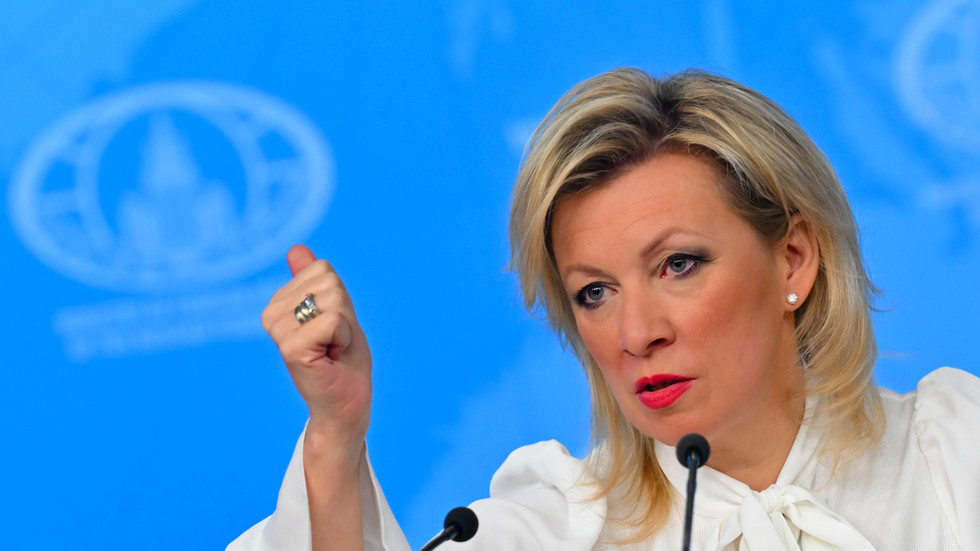
Maria Zakharova, the Russian Foreign Ministry’s spokeswoman, warned Thursday that British military installations and equipment, including those “in Ukraine and beyond its borders,” could become targets of Russia’s military response. The warning came after Ukrainian forces used British-French Storm Shadow cruise missiles to attack the shopping centre, wounding at least eight people including two children, according to Russian officials.
“We have repeatedly warned that the response to Ukrainian strikes using British weapons against Russian territory could be directed against any British military facilities and equipment in Ukraine and beyond,” Zakharova said at a briefing Thursday, calling on British leadership to “immediately, in the most resolute and unequivocal manner, abandon the hostile, aggressive line,” Al Jazeera reported.
The statement marks a sharpening of Russia’s rhetoric against a NATO member state. While Moscow has long warned Western governments against supplying Ukraine with advanced weaponry, Zakharova’s framing, which explicitly names British territory as a potential target and not only British-supplied equipment inside Ukraine, pushes that threat into territory that NATO’s collective defence clause was designed to deter.
Britain has declined to publicly respond to the warning. London approved the transfer of classified manufacturing technology to Kyiv earlier this year, allowing Ukraine to produce Storm Shadow missiles domestically. France made a parallel decision over its SCALP variant of the same weapon, a move that has doubled Kyiv’s effective supply of the long-range cruise missiles without requiring additional direct transfers from British stockpiles.
Sergey Lavrov, Russia’s foreign minister, said Moscow “has every right to regard the proudly proclaimed direct involvement of British missile forces in strikes against Russia as participation in the war,” RT reported. Kremlin spokesman Dmitry Peskov accused Britain of “participating in this war on the side of the Kiev regime,” a formulation that stops short of declaring war but signals how Moscow is internally categorising British actions.
The domestic manufacturing arrangement is what appears to have sharpened Russia’s response this week. Supplying missiles is one threshold; helping Ukraine build an indigenous production line for the same munitions is another. The distinction matters because Russian air defences can deplete a fixed stockpile, but they cannot easily exhaust a domestic factory.
Storm Shadow is a subsonic, terrain-hugging cruise missile with a range of roughly 250 kilometres, enough from Ukrainian-held territory to reach deep into Russian-controlled Donbas and into areas of Russia proper that Moscow regards as sovereign. Ukraine has used the missiles to strike Russian logistics, command infrastructure, and now, in Moscow’s account, civilian spaces in Donetsk.
Russia’s overnight strikes on Ukrainian cities were extensive. Ukrainian Foreign Minister Andrii Sybiha confirmed Russia carried out what he called “a massive strike against Ukraine, targeting ports, grain storage, energy, industry and other infrastructure with ballistic and hypersonic missiles and combat drones.” One person was killed in Kharkiv, two wounded in Kyiv after a school was damaged, and energy facilities in Poltava disrupted power to seven settlements. Zaporizhzhia and Kryvyi Rih each recorded six wounded from strikes on industrial sites. Odesa’s port infrastructure was among the targets, with three injured there.
The pattern of Russian strikes on Ukrainian civilian infrastructure answered by Ukrainian long-range strikes on Russian-controlled territory using Western weapons has defined the war’s escalation cycle for more than a year. What has changed is Britain’s position in that cycle. The technology transfer decision has moved London from supplier to something closer to strategic partner in weapons production, a distinction Russia is now publicly pressing.
Zakharova described Britain as “one step away” from becoming legally complicit in what she characterised as terrorism against Russian civilians. The legal framing is Russian domestic politics as much as international law; Russia has designated Ukraine’s government a terrorist organisation under its own statutes, a designation no other major government recognises.
What Moscow will do if the next Storm Shadow attack follows is the question the statement leaves unanswered, whether Zakharova’s warning was a genuine operational decision or a rhetorical escalation designed to pressure Downing Street. Russia’s record is to calibrate military responses to political effects. Britain has thus far shown no indication it intends to reverse the manufacturing transfer decision.
The CIA director’s secret Moscow trip last week, in which NATO alliance cohesion featured prominently, takes on additional context against Zakharova’s warning: Western intelligence was already computing Russian escalation risk before London’s Storm Shadow factory decision became public knowledge. Meanwhile, US Patriot missile stocks in Europe have fallen to what Pentagon officials privately describe as “beyond critical” levels, a structural constraint on NATO’s ability to absorb a Russian strike on a member-state facility without a substantial reconfiguration of its own air defences.
The shopping centre in Donetsk will be repaired or it will not. The Storm Shadow production line in Ukraine will continue or it will be destroyed in a future Russian strike. Whether Russia’s warning against British targets is the line before an action or merely the loudest in a series of warnings no one has yet been made to take literally is a gap this story cannot close.