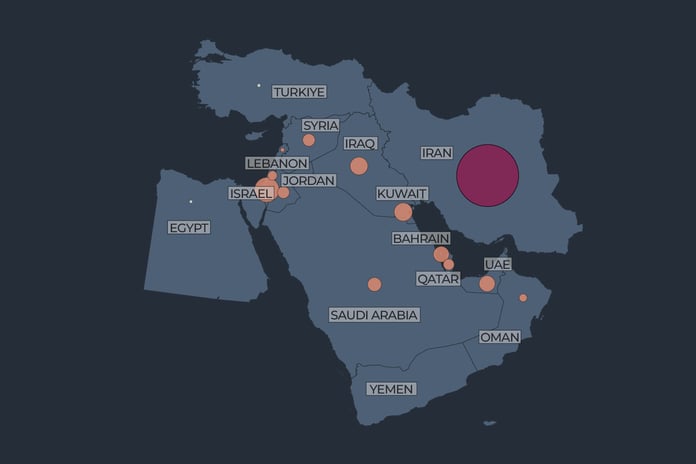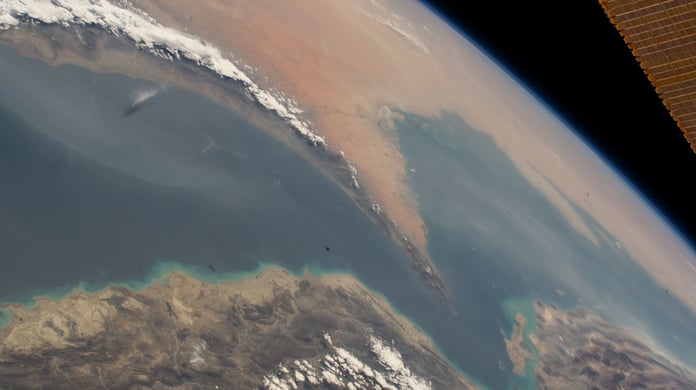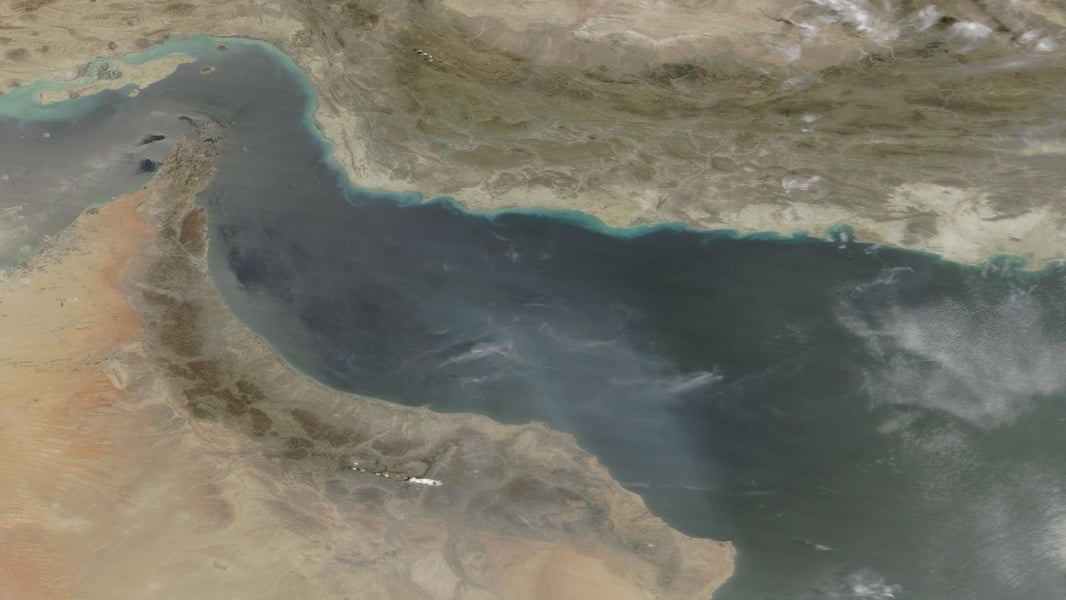

LONDON — Brent crude fell toward $88 a barrel on Thursday, capping a week in which the Iran risk premium that had kept oil elevated through much of August quietly drained out of the market. The week’s roughly 5% slide came not from a demand shock or production surge, but from a growing conviction that the Strait of Hormuz, the chokepoint that carries a fifth of the world’s oil, was no longer the powder keg it was in March.
The front-month Brent contract settled at $88.22 a barrel, down 34 cents from Wednesday’s close. West Texas Intermediate, the American benchmark, fell further, dropping 71 cents to $82.82 a barrel. Both benchmarks have now given back most of the conflict premium that accumulated when Iranian strikes on Gulf shipping infrastructure pushed Brent above $102 in early March and cut Persian Gulf exports to a trickle of 5 to 6 million barrels per day.
The catalyst for this week’s move was the Iran-Oman revenue-sharing framework signed over the weekend, a quietly negotiated arrangement that formalized Oman’s role as guarantor of transit through the Hormuz passage. Traders had been pricing in a meaningful probability of renewed disruption; the agreement, by reducing that tail risk, knocked an estimated $4 to $5 off the geopolitical premium embedded in Brent.
“The market was essentially paying an insurance premium against a Hormuz flare-up,” one oil analyst at a major European trading house told clients this week. “When the policy backstop becomes credible, you give that premium back fast.”
Persian Gulf crude exports have recovered substantially since March’s crisis lows. The corridor now moves an estimated 15 to 16 million barrels per day. Before the conflict, the strait handled 22 to 24 million. That gap, still roughly a third below historical norms, is one reason prices remain well above their pre-2026 range even after this week’s selling. Full normalization, if it comes, would be a multi-quarter process rather than a market event.
One thing the framework does not change is the Trump administration’s sanctions posture on Iranian crude. Washington confirmed this week it is not reviving the June detente discussions, which had briefly raised expectations of a formal return of Iranian barrels to the market. Iranian oil circulates through shadow tanker networks regardless, but an official lifting of sanctions would add an estimated 1 to 1.5 million barrels per day to supply with minimal lag. That door stays closed, at least for now.
The Russia-Ukraine conflict has provided a partial floor under prices. An escalation along the Kharkiv front earlier in the week briefly pushed Brent above $89 before fading. Russian pipeline flows to European buyers have remained near the floor set by successive sanction packages since 2022, but renewed battlefield pressure has kept some traders long on geopolitical risk. The net effect is a market that wanted to sell but kept hesitating.
The demand side of the ledger offers little comfort for bulls. China’s crude imports for July came in slightly below year-ago levels as refinery margins compressed and independent teapot refiners cut run rates. European industrial demand, still burdened by elevated energy costs, has not recovered to levels that would easily absorb additional supply. The market’s ability to hold current prices depends partly on demand softness failing to accelerate into the fourth quarter, which is far from certain.
For OPEC+, the calculus is increasingly uncomfortable. The cartel’s production restraint, still nominally intact despite compliance questions from several members, was calibrated for a more volatile supply environment than the one taking shape in late August. An Iran-Oman framework that stabilizes Hormuz transit removes part of the rationale for keeping output constrained. Whether the group adjusts quotas at its next formal review is the question traders are beginning to price into the forward curve.
Indian markets added another dimension. Pump prices in Delhi have held at Rs 102.12 per litre for petrol, per Petroleum Planning and Analysis Cell data, as state-owned refiners absorb global volatility rather than pass it to consumers ahead of the festival season. That political calculus limits India’s sensitivity to short-term Brent moves but creates a balance sheet question for downstream companies if prices stay elevated into the fourth quarter.
What the market does not yet know is whether the Iran-Oman arrangement will hold under pressure. Oman’s role depends on its ability to enforce informal guarantees no party has formally committed to. A single serious incident in the strait, a seized tanker or a struck platform, would reprice risk faster than the framework removed it. Thursday’s relative calm should not be confused with resolution.
Brent’s next test is the psychological $85 level, which several technical analysts identify as the threshold at which OPEC+ would likely respond publicly. WTI’s equivalent is somewhere south of $80. Neither is imminent. The direction of travel is south.
Related Posts