
WASHINGTON — A bank does not need to be sanctioned to be finished. It only needs to lose the account that lets it touch dollars.
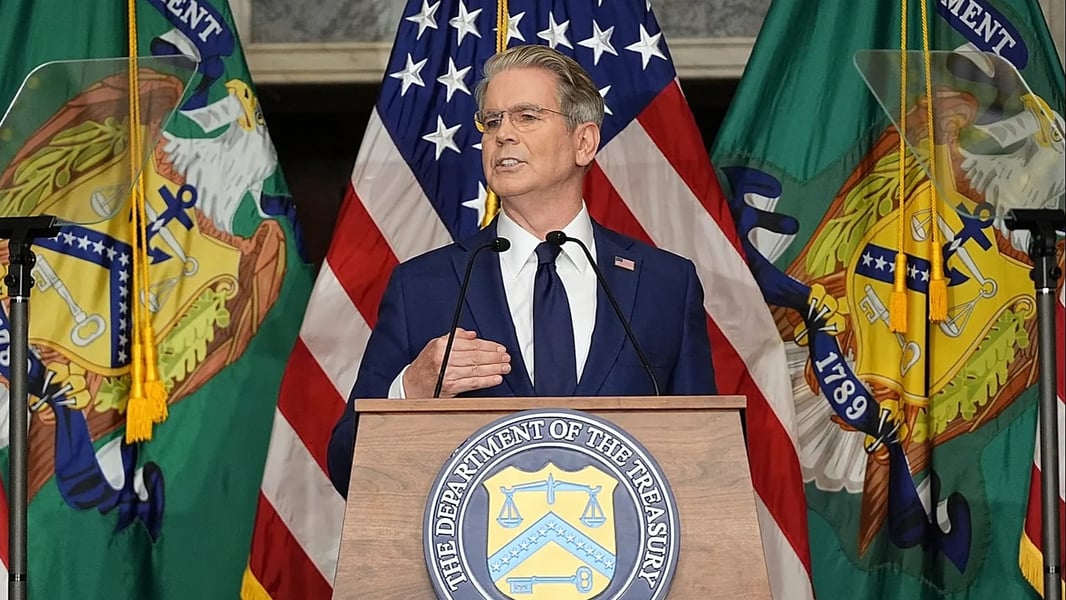
The Treasury said on Friday that its Financial Crimes Enforcement Network had proposed a rule revoking the correspondent banking access of Banque Misr’s branch in the United Arab Emirates, cutting the Egyptian state lender’s Dubai operation out of the American financial system. The stated reason is that its customers include what the Treasury described as apparent front companies used by Iran’s Ministry of Defence and the Islamic Revolutionary Guard Corps to evade sanctions, and used for laundering on behalf of Iran’s supreme leader, whom the release names as Mojtaba Khamenei.
The Treasury also put a number on it. Banque Misr’s Emirati branches processed roughly 1.8 billion dollars between January 2024 and June 2026 for more than a hundred companies that, as Al-Monitor reported, it calls potentially part of Iranian shadow-banking networks. The word doing the work in that sentence is potentially.
Correspondent banking is the least glamorous thing in finance and the most consequential. A bank outside the United States cannot clear dollar payments on its own. It does so through an account at an American institution, and if no American institution will hold that account, the bank is effectively barred from the currency that most of world trade is still priced in. This is not a penalty a bank pays and moves on from. It is a door closing.
The Office of Foreign Assets Control moved on two smaller targets the same day, sanctioning Reza Mohammad Taeedi, who manages Bank Melli’s Dubai branch, and Kameng Trading Limited, registered in Hong Kong, both for allegedly assisting sanctioned Iranians.
What makes Friday’s action worth attention is not its size but its address. Banque Misr is not Iranian. It is one of Egypt’s two large state banks, majority owned by the Egyptian government, and the branch in question sits in the Emirates. Washington reached past Tehran entirely and took hold of an institution belonging to a country that receives American military aid and has a peace treaty with Israel.
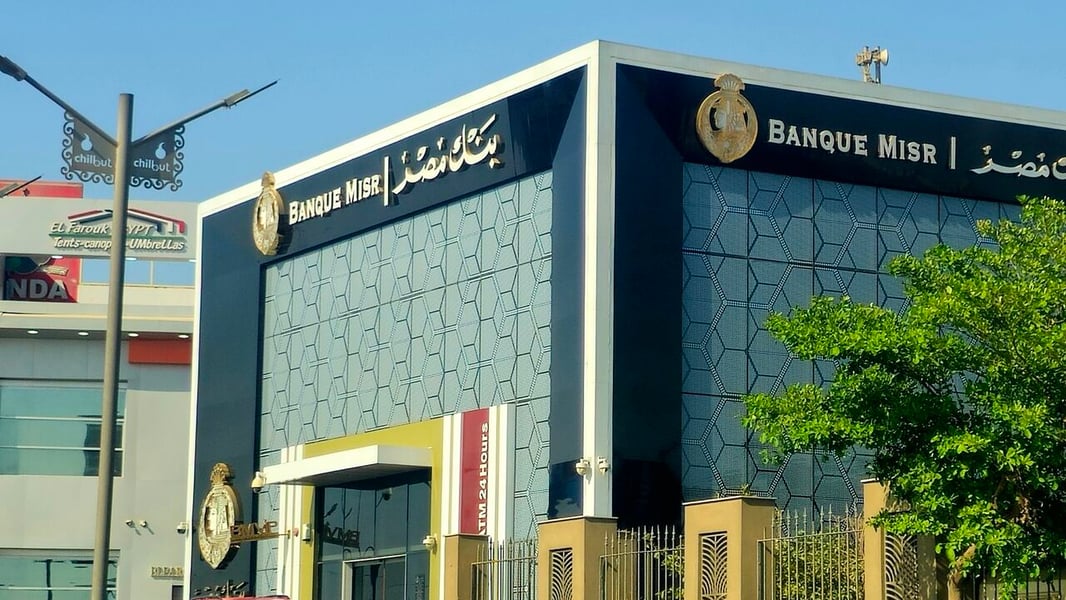
Banque Misr UAE is the demonstration. The cost falls on Cairo, and the message is addressed to every mid-sized bank in the Gulf that has been quietly processing payments it did not look at too closely.
Whether that produces the intended result is a separate question, and the evidence so far runs both ways. The military side of the campaign has been effective in a narrow sense: CENTCOM has turned back more than seventy commercial vessels bound for Iranian ports while disabling only three, because masters comply rather than test it. The economic side is the one Washington has been leaning on since, with the Treasury moving to secondary sanctions as its principal instrument and officials signalling the approach will hold at least until after the midterm elections.
Against that, Iran keeps finding routes that do not require American consent. It has agreed a partial shipping corridor through the Strait of Hormuz with Oman, without Washington in the room, and Qatar has been shuttling proposals to Tehran. Abbas Araghchi said this week that returning to diplomacy is not impossible if the United States accepts that pressure does not work, and on Wednesday he wrote to the United Nations leadership and member states asking them to condemn the campaign as economic coercion.
That letter will not change American policy. It is aimed at the same audience the Treasury is aiming at, which is the governments and banks in the middle, and it makes the shape of the contest clear enough. Both sides are competing for the compliance of third parties, and Egypt has just been shown the price of being on the wrong side of that.
There is a cost to the instrument itself that Washington tends not to discuss. Every time correspondent access is used as a weapon, the incentive to build payment systems that do not touch dollars gets stronger, and the countries with the most reason to build them are large ones. That process is slow, unglamorous and mostly invisible until it is not.
What has not been established is how much of that 1.8 billion dollars was actually Iranian. The Treasury has not published the list of companies, the methodology behind the figure, or what share of the branch’s business it represents, and potentially part of a shadow-banking network is a description that covers a wide range of certainty. The proposed rule is not final, neither the bank nor the Egyptian government had responded publicly when the announcement went out, and FinCEN rules of this kind carry a comment period. The branch is not shut yet, and the gap between a proposal and a final rule is where lobbying happens.