DOHA — Six thousand sailors on four hundred ships are waiting.
That count, released by the UN’s International Maritime Organization this week, captures what six months of the US-Iran war has produced in the Strait of Hormuz: not a military victory, not a ceasefire, not even a functioning shipping lane, but a humanitarian limbo in which thousands of seafarers remain stranded on vessels that cannot safely move in either direction.
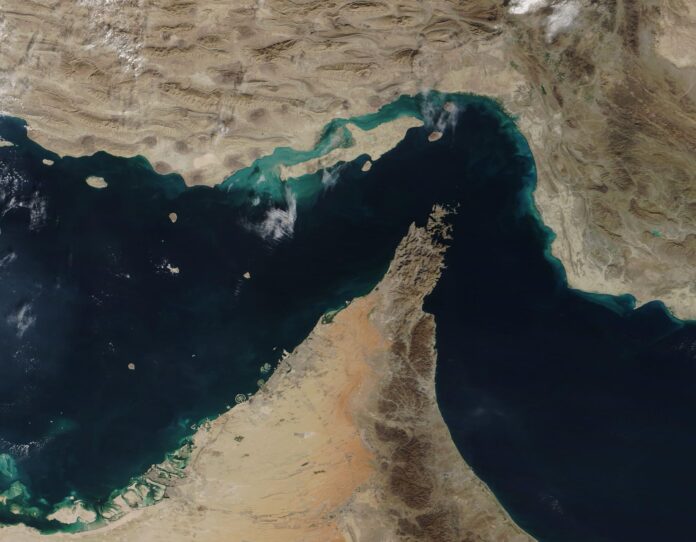
The war itself was launched on February 28, when US and Israeli forces killed Supreme Leader Ali Khamenei in a strike on Tehran and hit nuclear installations across the country. President Donald Trump had promised it would last four to five weeks. On Friday, as the six-month mark passed, the sole verifiable outcome was a waterway through which more than a fifth of the world’s oil once flowed that now sees traffic in the “low double digits,” compared with roughly 130 ships daily before the conflict began.
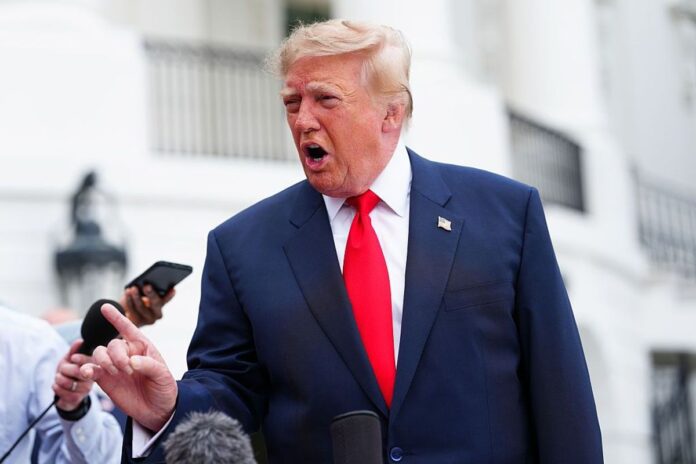
Trump offered a different read of events. His Truth Social account recently posted an image titled “US Territories” listing the Strait of Hormuz among the newest additions, alongside a declaration that the United States “has total control” of the waterway and will “KEEP IT.” Iranian Deputy Foreign Minister Kazem Gharibabadi, responding on X, wrote that “Schizophrenia is a complex and acute psychotic disorder that manifests with disturbances in thinking and a distorted perception of reality. Its most common symptoms are hallucinations and delusions.” Psychologists, he added, “recommend that such patients be kept under 24-hour supervision.”
Iran’s position is more than rhetoric. Tehran and Oman announced Friday they have agreed on a framework for a temporary shipping corridor, Anadolu Agency reported; the two-way lanes would run roughly seven nautical miles wide, passing partly through Iranian territorial waters, with route coordinates jointly managed between Iranian and Omani officials. The technical consultations that produced this framework have been running for weeks. Iran’s Islamic Revolutionary Guard Corps, citing the agreement, made clear the terms under which the corridor might actually open: the United States must lift its naval blockade on Iranian ports, return to the terms of the June memorandum of understanding, end military operations in Lebanon, release frozen Iranian state funds, and refrain from imposing new sanctions.
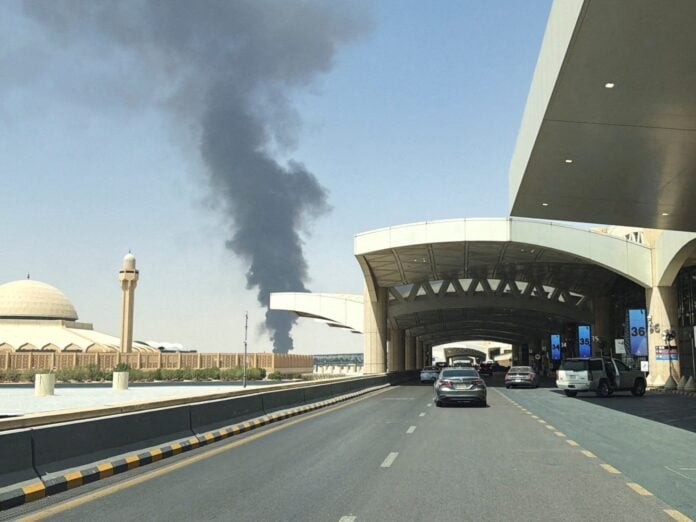
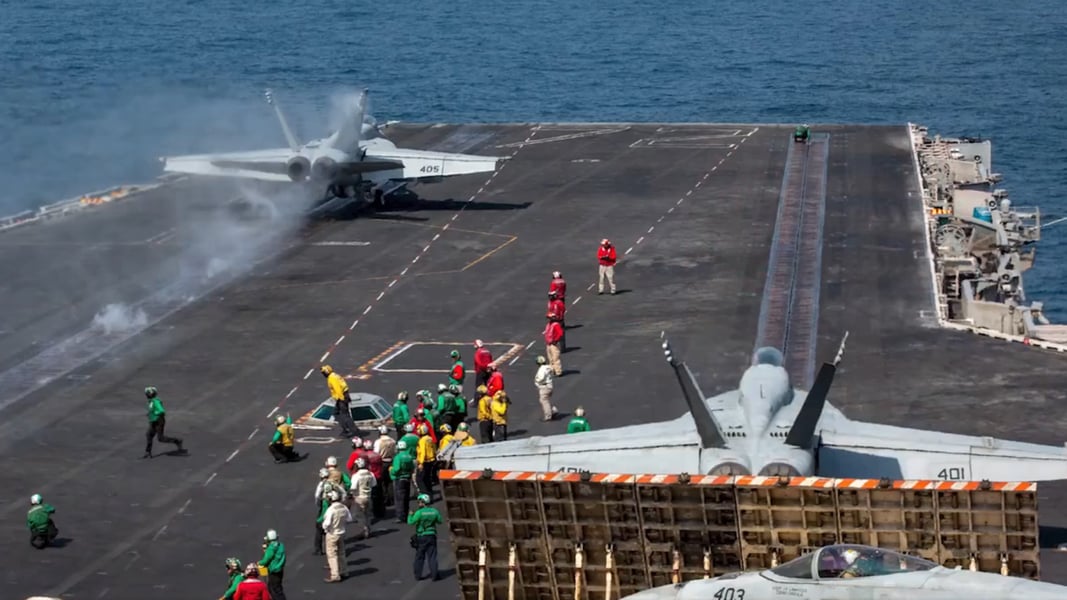
None of those conditions has been met. The US maintains 75 warships in the region and approximately 50,000 troops across the broader Middle East, according to US Central Command Commander Adm. Brad Cooper. An unidentified projectile struck a tanker on Thursday, sparking a fire before being extinguished. US Central Command announced Friday that its naval units had cleared the Strait of Iranian sea mines, according to Anadolu Agency. Gharibabadi disputed the claim, saying only Iran knows where the mines are, and that their removal forms part of the Oman corridor agreement, not a separate US action.
Iranian Foreign Minister Abbas Araghchi, speaking to media on the six-month mark, said a diplomatic route out of the conflict remained theoretically available. “Putting diplomacy back on track isn’t impossible,” he said. “It hinges on U.S. understanding of one simple fact: pressure doesn’t work.” On Capitol Hill, Senator Jack Reed of Rhode Island, the senior Democrat on the Armed Services Committee, offered a terse summary of the campaign’s results. “Six months later,” Reed said, “not a single objective has been achieved.”
The assessment fits the trajectory. The war that Trump branded Operation Epic Fury was designed around the collapse or transformation of the Iranian state. It has not achieved either. Iran has absorbed the killing of its supreme leader, strikes on its nuclear infrastructure, and a sustained naval blockade of its main oil export routes. Meanwhile, US energy companies are racing to seal alternative oil investment deals as Washington searches for ways to offset the pressure on global crude markets. Russia and Iran, in a development that has attracted little attention in Washington, advanced talks this week on a pipeline to transfer Russian natural gas through Azerbaijan, a commercial arrangement that the blockade has accelerated rather than prevented.
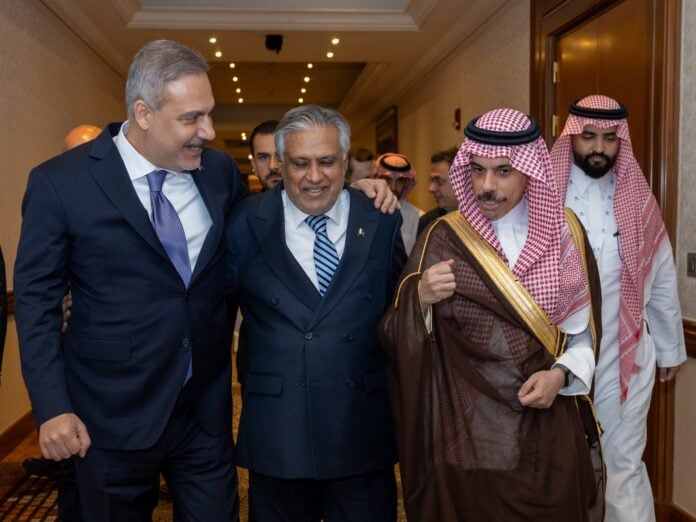
Pakistan and Qatar are both pushing the US and Iran toward direct talks. Qatar’s foreign minister was in Tehran on Thursday for diplomatic consultations. Pakistani mediators, who brokered the only pause in fighting (a two-week ceasefire in April), are expected to present a revised framework for negotiations in the coming days. The United Nations Secretary-General is attending next week’s SCO summit in Kyrgyzstan, where the war’s trajectory is expected to feature in bilateral discussions on the margins.
Oman occupies the most exposed position of any actor. The sultanate, which shares a coast with the Strait, has acted as Tehran’s preferred channel for maritime negotiations. In mid-August, Trump threatened on television that the United States would bomb Oman if it “gets in the way.” Oman has continued the talks regardless, a decision that says as much about regional priorities as it does about the reliability of American threats. As Iranian Security Chief Mohsen Rezaei noted this week, the gap between Washington’s claims and the situation on the water now exceeds, as he put it, “the roughly 7,000 miles separating” the two.
What the US does with that gap in the weeks ahead is the only open question that matters. Trump has said there are no direct negotiations scheduled. Iran has said it will not negotiate under pressure. The 6,000 sailors in the Strait are still waiting for someone to answer it.