
GAZA CITY — The white van had been in position since before dawn. By the time Muein al-Arabid walked toward his home in a Gaza City neighborhood on the morning of September 1, Shin Bet operatives had spent months tracing his movements: his routes, his schedule, the small rhythms of a man who believed himself protected. He was not.
Al-Arabid, Hamas’s internal security chief for the entire Gaza Strip, was captured in the operation that followed, wounded in the extraction and evacuated to Israel for interrogation. His wife was killed in the raid. His children were wounded. His bodyguards did not survive. Israeli forces came home without casualties.
The loss matters for reasons beyond the man himself. Hamas’s capacity to survive as a functioning organization (shielding its remaining political leadership, identifying and neutralizing Palestinian informants, coordinating anything resembling governance) has rested in significant part on the internal security apparatus al-Arabid ran. Israel did not just remove a senior official from the field. It removed the official responsible for protecting what Hamas still has.
Prime Minister Benjamin Netanyahu described al-Arabid as “one of Hamas’s most senior leaders,” crediting him with having previously hidden and moved hostages taken during the October 7, 2023 attack, a role that ended when all 251 hostages were accounted for by January 26, 2026. What Netanyahu pointed to as the more pressing concern was al-Arabid’s ongoing effort to restore Hamas’s capabilities in northern Gaza, where the organization had been working to re-establish governance structures in recent months.
Defense Minister Israel Katz placed al-Arabid at the center of Hamas’s counterintelligence infrastructure, overseeing the effort to identify and eliminate Palestinian collaborators working with Israeli intelligence. In an organization that has sustained itself through two and a half years of military pressure partly by identifying those feeding information to the other side, that function is foundational. Al-Arabid was the man responsible for protecting the intelligence perimeter that keeps Hamas’s remaining leadership alive.
Hamas’s Interior Ministry disputed the characterization, saying his role was limited to “overseeing efforts to combat collaborators” and did not extend to the military operations Netanyahu described. The Ministry did not deny the capture.
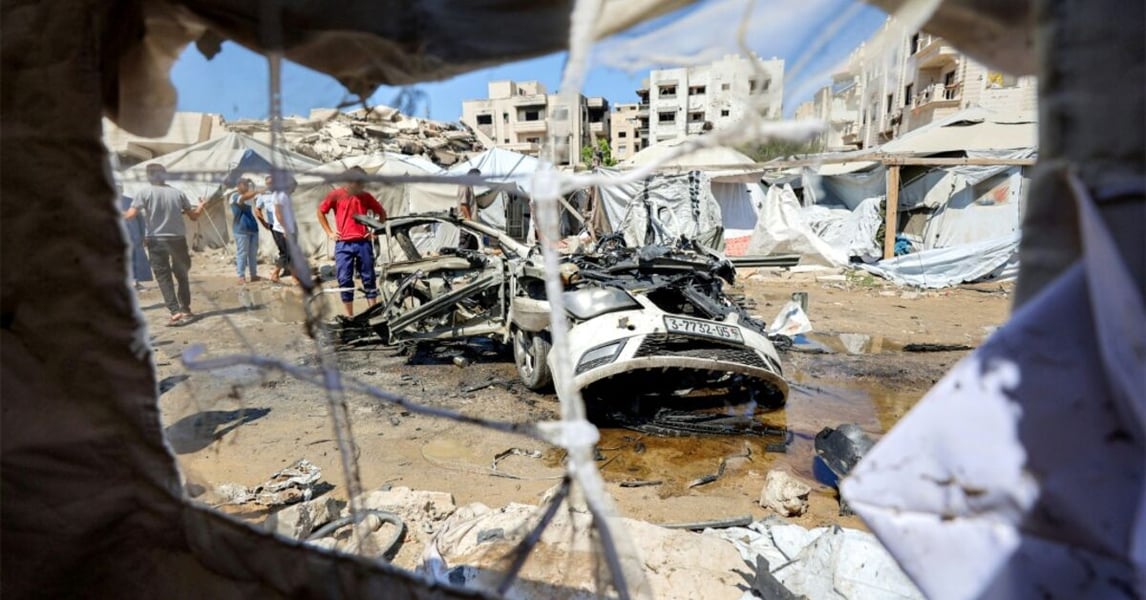
The operation unfolded under IDF Southern Command. Shin Bet had tracked al-Arabid over an extended period, mapping his daily routine until the window opened. As he neared his home, the white van moved in. IDF Zik unmanned aerial vehicles struck surrounding targets simultaneously, suppressive cover designed to prevent any organized response, and the extraction proceeded over several hours before Israeli forces withdrew. Al-Arabid, wounded, was evacuated to Israel for debriefing.
Times of Israel reported the operation as among the most significant captures of a senior Hamas figure in months, noting that al-Arabid’s counterintelligence role had made him a specific and sustained target for Israeli intelligence. AL-Monitor described the internal-security directorate as structurally distinct from Hamas’s military wing but essential to the political leadership’s survival, serving as the apparatus that maintains internal coherence and hunts out those who would expose it.
The civilian cost of the operation was immediate and personal. Al-Arabid’s wife was killed. His children were injured. Israeli officials did not dispute the account of family casualties, confirmed by regional reporting. In a conflict where Hamas has embedded command structures within residential neighborhoods, operations like this one produce both the intelligence Israel seeks and the civilian toll that shapes international perception of the war.
The timing carries its own significance. Al-Arabid had been active in Hamas’s effort to reconstitute its administrative presence in northern Gaza, the same phase of the conflict unfolding alongside Trump’s Iran strikes targeting Hormuz mining operations that have deepened the regional crisis. The capture disrupts that reconstitution at exactly the moment the organization was attempting it, and signals that Israel’s intelligence penetration of Hamas’s Gaza City networks has not degraded despite the cost and length of the campaign.
As the broader regional order shifts, with China advancing its diplomatic reach from Egypt toward the Gulf as Washington’s attention stretches thin, the capture will be read in several capitals as evidence that Israel’s operational intelligence capacity remains formidable. But its lasting impact depends on what al-Arabid actually holds, and whether Israeli interrogators can act on it before Hamas restructures around his absence.
Middle East Eye noted the speed of the extraction as consistent with a pre-planned operation that had been waiting for a defined window, a raid not opportunistic but systematic, months of intelligence work collapsing into a few hours of action.
Who replaces al-Arabid is a question Hamas is answering in private. The organization has shown structural resilience throughout the campaign, reconstituting command in areas cleared of previous leadership. But a counterintelligence chief captured alive is a qualitatively different problem from a military commander killed in a strike. The dead do not talk. Al-Arabid is in Israeli custody, and he does.