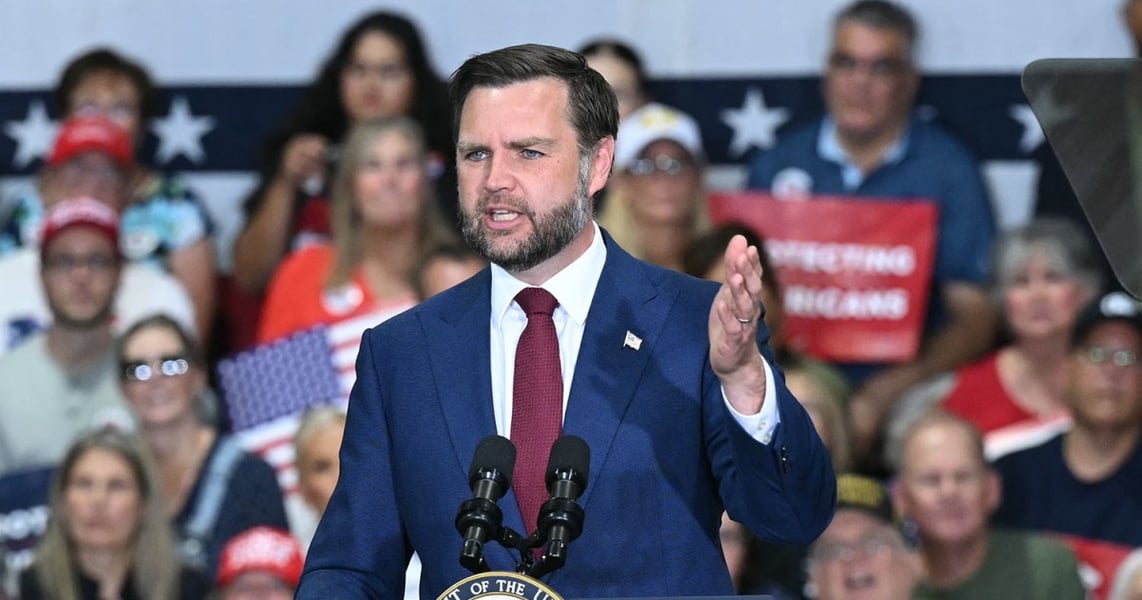

STERLING HEIGHTS, Michigan — JD Vance did not come to Michigan on Monday to talk about steel tariffs or the auto industry. He came to call Abdul El-Sayed evil.
“I realize that there’s something about Abdul El-Sayed that is very, very evil and on the rise in the United States of America today,” the vice president told several hundred supporters at a MAGA Inc. rally in this Detroit suburb, delivering the line with the deliberate cadence of someone who had settled on it in advance. He was campaigning for former Republican congressman Mike Rogers, El-Sayed’s general election opponent in a Senate race that could determine which party controls the chamber this fall. The word he chose was not incidental. It arrived three weeks after Trump called Democrats ‘jihadists’ following El-Sayed’s primary win, an escalation in a campaign against a candidate the administration has never attempted to engage on the merits.
El-Sayed, Michigan’s Democratic Senate nominee and the first Muslim to receive a major-party Senate nomination for this seat, was elsewhere. Speaking with CNN on Monday, he offered a definition of his own. “Evil is ripping healthcare away from working people in exchange for tax breaks for billionaires,” he said. “Evil is making people pay more for groceries and gas while pushing for trade wars and actual war. Evil is dividing people for your own gain.” He called Vance “a sock puppet” and asked, flatly, why a sitting vice president had traveled to Michigan to run a campaign centered on a Senate candidate’s identity rather than his record.
Vance elaborated on what he meant by “evil.” The word, he said, applied to people who see themselves “not as citizens of a common nation fighting for every single person, whether they’re Jewish or Christian, whether they’re white or Black or Brown, but see themselves as fighting for one group at the expense of others.” He did not specify which group he believed El-Sayed was fighting for. He did not need to. El-Sayed is a Muslim. The crowd at the MAGA Inc. rally already knew what group was meant.
The vice president also told El-Sayed, addressing him as though he were present, to “keep my wife’s name the hell out of your mouth.” El-Sayed had invoked Vance’s grandfather in recent remarks about identity and belonging, making an argument about who counts as a full citizen in American public life. Vance’s sharp rebuke suggested the Trump camp found the counter-argument more discomforting than it let on.
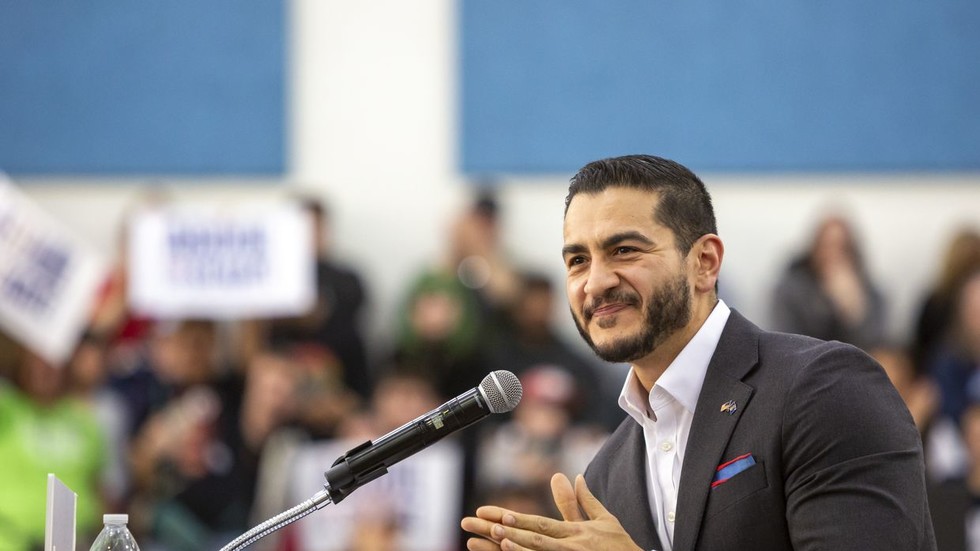
What Vance did not address was the policy record El-Sayed has spent the summer building a campaign around. El-Sayed has proposed expanding Medicare to cover all Michigan residents who lack insurance. He has called for withdrawing American weapons from Israel’s military campaign in Gaza. He has attacked the administration’s trade policy as a driver of the same grocery and gas price increases that have defined the economic conversation in Michigan since 2025. None of those positions appeared in Vance’s remarks. “Very, very evil” was the sum of the argument.
NBC News reported that the vice president’s comments immediately drew condemnation from civil rights organizations who characterized them as faith-coded rhetoric designed to activate anti-Muslim sentiment in the general electorate. Michigan has one of the largest Arab and Muslim American populations of any competitive Senate state, a community that was already a contested political variable before El-Sayed won the Democratic primary in August. In 2024, significant portions of Arab American voters in Dearborn withheld support from Democrats over Gaza policy. El-Sayed’s campaign was built, in part, on winning them back.
Whether Vance’s language consolidates that community around El-Sayed, or produces a more complicated reaction in parts of the electorate less sympathetic to El-Sayed’s Gaza position, is a question the polling does not yet answer.
What is legible is that the Trump administration has settled on delegitimization rather than debate. When Trump labeled Democratic candidates “jihadists” after El-Sayed’s primary win, he named the nominee directly and described him as a “hater of Jews” who would bring “filth, crime, death, destruction” to the United States. Vance’s “very, very evil” is a different word for the same argument: that El-Sayed’s presence in a Senate race represents not a policy disagreement but an existential threat.
El-Sayed won Michigan’s Democratic Senate primary in August by defeating three-term Congresswoman Haley Stevens despite $65 million in outside spending led by AIPAC, becoming the first Muslim to win a major-party Senate nomination in Michigan’s history. He now faces Rogers, a former six-term congressman and withdrawn FBI director nominee, in a race Democrats need to flip to have any chance at reclaiming the Senate majority. Trump has endorsed Rogers directly.
Rogers did not publicly respond to Vance’s remarks on Monday. His campaign did not respond to press requests. The Republican National Committee did not immediately comment.
El-Sayed, for his part, appeared to have decided that the correct response to “evil” was a counter-definition rather than a defense. “What’s evil,” he said on CNN, “is corrupting yourself because you want a little bit more power.” He did not say what he thought Vance was actually afraid of. That was the one thing from Monday neither man named.