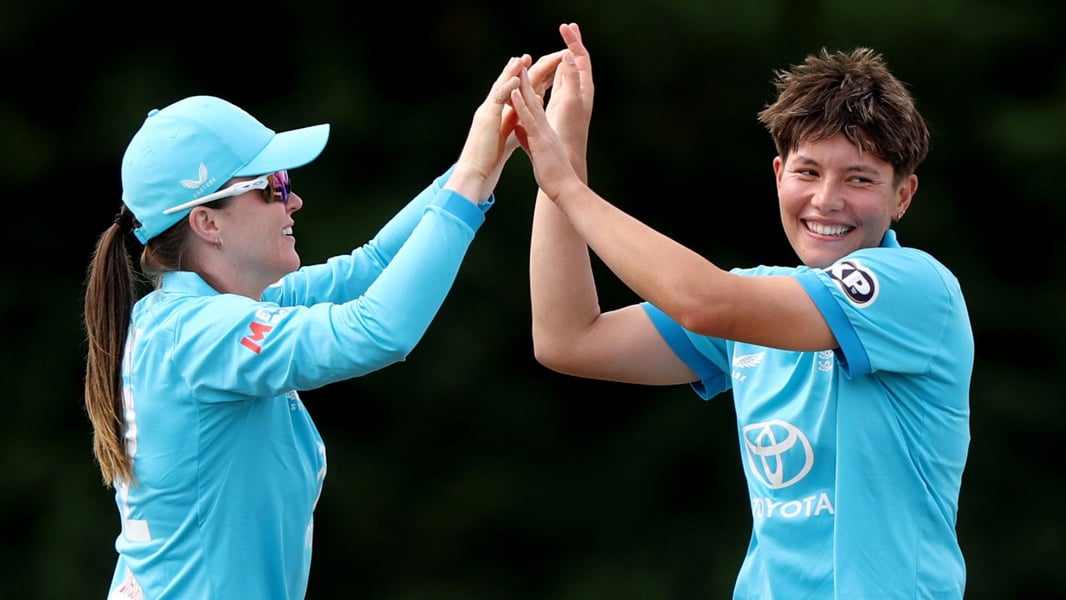

DERBY — The moment that settled the second ODI between England Women and Ireland arrived in the 38th over, when Issy Wong bowled Leah Paul through the gate with a delivery that skidded off the pitch and swung late. Ireland were 130 for six. They had a total that was insufficient. They had a further-depleted tail. And they had Wong with two overs remaining in her spell, still threatening, still varying.
The figures at the end of Ireland’s innings read 165 all out. England’s chase lasted 23 overs. The series is over with one match to play.
Wong’s 5-33 from 10 overs is her maiden international five-wicket haul, a career-best that arrived through a spell of controlled pace bowling and the wobble seam delivery she has refined since her early years at Worcestershire. The wobble seam is not inherently a wicket-taking ball. It becomes one when a batter is already uncertain about what is coming next. Ireland’s middle and lower order were uncertain from the moment Amy Hunter fell for 64. Within 19 balls, Wong had removed Paul, Louise Little, and Cara Murray. She finished the innings with five of Ireland’s ten wickets, and Mady Villiers and Tilly Corteen-Coleman picked up two each.
Ireland had begun their innings in reasonable control. Hunter’s 64 off 96 balls was composed and intelligent, a counterpoint to the chaos that opened the game. Alice Tector was run out in the first over, a miscommunication that set Ireland back before they had scored, and Orla Prendergast and Leah Paul needed to stabilise. Prendergast made 25. Paul made 23. But Ireland never found the batter to capitalise on Hunter’s platform, and their collapse from 99 for three to 165 all out was gradual, then sudden. Wong provided the acceleration.
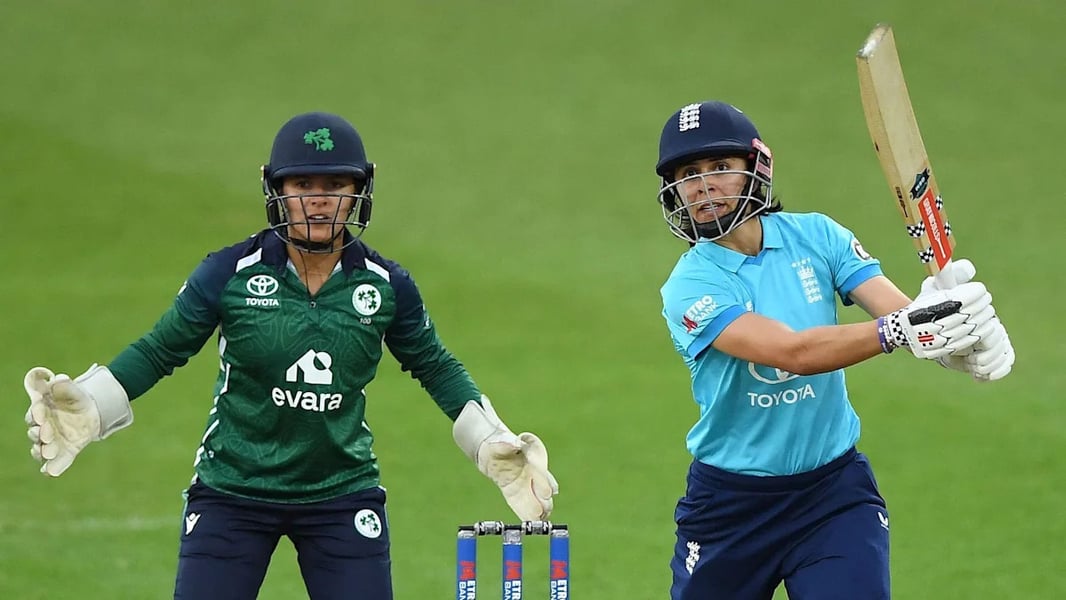
England’s chase did not ask questions. Maia Bouchier, who had led England’s record ODI chase against the same Ireland side in the opening match at Leicester, attacked from the top of the order again: 45 off 31 balls, controlling the powerplay. Jodi Grewcock added 24. Ireland took four wickets through Kai McCarthy and Cara Murray, but none of them slowed a chase that was already academic by the tenth over.
Dani Gibson sealed the match with a six. She came in to finish the job with the series already in England’s keeping, and she finished it emphatically. Charlie Dean, England’s captain, kept her assessment straightforward. “To win the game like that was phenomenal,” Dean said. “It was brilliant.” The brevity matched the performance: England executed, then stopped.
Wong’s account of the innings was more specific. She credited a conversation with the team’s media contact, a mental reset that shifted her focus before her spell. The detail rarely makes a match report but matters for understanding a career. Wong is 23. This is the figure she will carry into whatever follows: county cricket, Test cricket, ICC tournaments, all of it. A maiden international five-wicket haul stays on the record permanently.
Ireland captain Gaby Lewis left the field knowing the gap is real. “England were more accurate and better in the field,” Lewis said. The concession was honest. Ireland have improved significantly as a women’s cricket nation over the past five years, but England at home, in familiar conditions, with their first-choice squad, represent an opposition the Ireland women’s program is not yet able to match across a full match.
The third ODI at Worcester on September 6 will carry different stakes. The series is gone. What remains is the chance for squad players on both sides to register performances. For England, the selectors are already thinking about what comes next. The ICC Women’s Champions Trophy 2027 will be held in India after Sri Lanka lost the hosting rights, and the bilateral series England play through the autumn feed into the squad that plays that tournament. Wong’s bowling here, if it holds through Worcester and beyond, is a statement of availability.
As Sky Sports reported, England’s winning margin of 162 balls remaining made this the most comprehensive win of their women’s ODI series campaign this year. The margin against Ireland at Leicester had already been decisive; this one was more so.
What England showed in Derby is not that they are better than Ireland. That was established in the first match. What they showed is that their bowling can systematically take apart a batting unit through patience and variation, and that the batting unit behind it does not need to be tested. Wong was the instrument. How the selectors use her over the next 13 months before the Women’s Champions Trophy begins is a question this match report cannot answer.