
LONDON — In 150 Tests at Lord’s Cricket Ground, the pitch has never been the story in quite this way. The grass has produced Botham and Lillee, Tendulkar and McGrath, James Anderson across four decades of new-ball craft. It has been worn, abused, praised, and occasionally cursed. On a grey June morning in 2026, it failed in a way it never had before.
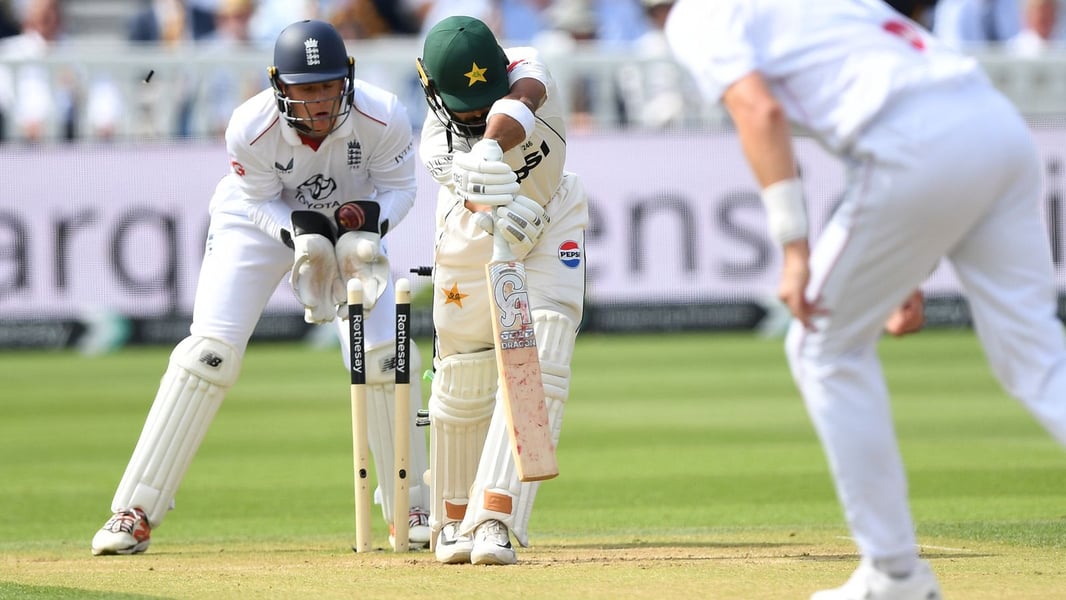
The International Cricket Council awarded Lord’s its first-ever demerit point after England’s Test against New Zealand lasted 165 overs across two and a half days. The data told a story the eye could already read: 0.85 degrees of lateral movement, the highest ever measured on any pitch in the United Kingdom. Twenty-four of the 40 wickets that fell went caught behind or bowled. The ICC’s pitch panel, reviewing the footage and the numbers, decided they had seen enough.
The consequence that a single demerit point cannot fully convey on paper arrived two months later in practical form. The 2027 World Test Championship Final, the most prestigious bilateral Test match the ICC stages, is moving to The Oval. The home of cricket has lost cricket’s showpiece event because its pitch was not fit to host it.
Marylebone Cricket Club responded this week with an action plan. The club will relay the underperforming strips on the Lord’s square, trial drop-in pitches on the Nursery Ground, establish a new groundsmanship partnership with Wormsley, and commit fresh financial investment to what it has now formally acknowledged as a structural problem. The language of the plan is measured. The situation it is responding to is not.
Eoin Morgan, the former England white-ball captain now serving on the MCC committee, did not reach for comfortable language. “The ground has taken a reputational blow when it comes to Test cricket this year,” he said. When the man tasked partly with shaping the club’s public message does not soften it, the message is beyond softening.
The detail that cut through the noise of the English summer was not the 165-over duration, though that number alone is startling for a five-day Test. It was the 0.85 degrees. Pitches produce lateral movement; that is Test cricket’s foundational dynamic. But at 0.85 degrees, measured on a system designed to capture precisely this kind of deviation, the Lord’s surface was doing something the ICC’s own historical data had not seen before in England. The ball was behaving unpredictably enough that batters could not form reliable judgments about line and length. That is not a competitive Test surface. That is a lottery.
Joe Root, England’s most-capped Test batter and a man who has played at Lord’s more times than most cricketers will ever play anywhere, observed during the series that the firmer seam on this season’s Dukes ball may have amplified whatever the pitch was already doing. His reading is credible and worth noting. It also does not change the ruling. The pitch and the ball interacted to produce unacceptable conditions. The ICC held the pitch responsible. The pitch cannot argue back.
England won the series. The cricket, when it could be played, was decisive: Pakistan were dismissed below 200 in all four innings, and England completed a 2-0 victory that Root’s batting lineage and Ollie Robinson’s relentless seam work defined. A win at Lord’s, a win at Edgbaston. The scoreboard said England. The ICC said something different about the surface the cricket was played on, and both things are simultaneously true.
Ben Stokes’s franchise cricket move to the Big Bash League and the rotating headlines around England squad conduct controversies have been the summer’s other persistent narratives. The Lord’s pitch situation is different in kind. It is structural, slow-moving, and resistant to the kind of resolution that a selection decision or a disciplinary verdict provides.
The MCC’s plan is credible in its components and uncertain in its timelines. Freshly-laid strips take two to three growing seasons to reach the compactness and depth that produces durable Test cricket. Work done this winter takes Lord’s through 2027 before the new surfaces are ready to carry a Test. The WTC Final slot that has already departed cannot be recovered by remediation that matures in 2028.
The drop-in pitch trial at the Nursery Ground is the more significant signal. Drop-in surfaces, prepared off-site and transported to venues, have produced consistent results at Melbourne and Adelaide precisely because they remove local groundsmanship variables. That is also what they remove from the fabric of the game: the home advantage, the relationship between a head groundsman and a square maintained over decades, the particularity of place that makes Lord’s feel different from everywhere else. MCC trialling drop-ins is an acknowledgment that conventional approaches have not been reliable enough. Whether Lord’s ultimately uses them for Tests is a question years away from being answered. That the club is asking it at all says something about where the conversation has arrived.
According to Sky Sports, sources close to the MCC committee indicated the club’s hope that the 2029 WTC Final, the cycle after The Oval, could return to Lord’s if the remediation succeeds. That hope is reasonable in theory and unverifiable in fact until the pitch proves something across several seasons of international cricket.
The ground that taught the world its own laws has an ICC demerit on its record and no WTC Final on its fixture list. Whether that demerit marks the start of a credible recovery or simply the first formal notation of a problem whose full scale has not yet been mapped is not something the action plan can answer. Only the pitch can.