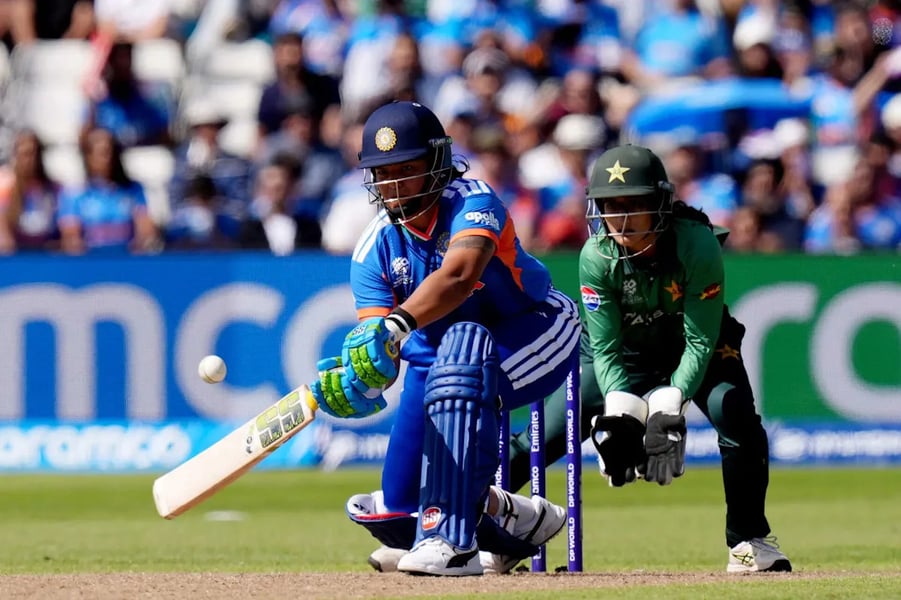

SANO, Japan — Japan has a cricket team. India has never played it.
Seventy-five years of diplomatic relations between the two countries, multiple bilateral summits, joint economic programmes and the long-standing presence of Japanese automakers in Indian industry, yet not one cricket match, at any international level, between the nations. That changes on September 22 at Sano International Cricket Ground in Tochigi Prefecture, where a T20 International branded the Suzuki Cup will be played for the first time.
The match arrives on short notice, officially announced Thursday by the Board of Control for Cricket in India and the Japan Cricket Association, and it carries weight well beyond the scoreline. It is the first product of “Sport 75,” a bilateral sports initiative formalized during a summit between Prime Minister Narendra Modi and Japanese Prime Minister Sanae Takaichi, two leaders who agreed the 75th anniversary of India-Japan diplomatic relations called for something more vivid than a communique.
Cricket was the choice. The BCCI Honorary Secretary Devajit Saikia said Thursday the board was delighted to be part of what he called a historic occasion in Japan, framing the fixture as an important step in taking Indian cricket to new territories and expanding the sport’s reach in East Asia. The BCCI and the Japan Cricket Association will work together to strengthen the game in Japan. Those two sentences, in a BCCI announcement, contain a programme.
Japan’s men’s cricket team does not compete in the ICC’s highest tier of T20I cricket. The team, captained by Kendel Fleming, features a roster built from the Japanese diaspora and expat communities, including Charles Hinze, Benjamin Ito, Wataru Miyauchi, Reo Sakurano, Alexander Shirai, Shoma Slater, Declan Suzuki, Ibrahim Takahashi, Makoto Taniyama, Lachlan Lake, Kohei Kubota and Tsuyoshi Takada. Ten members of the current squad competed at the previous Asian Games in Hangzhou in 2023. Against India, this is as hard a match as they will ever play.
That is not an accident. The Japan Cricket Association knows what facing the world’s dominant cricketing nation does for the sport’s visibility in a country where baseball and soccer define the national sporting conversation. Before the Asian Games open in Aichi-Nagoya from September 24, Japan’s team will have faced pressure unlike anything their regional schedule can replicate. Yahoo Sports reported the full Asian Games fixture list, with ten nations competing at Korogi Sports Park in Nisshin across a twelve-day programme running to October 3.
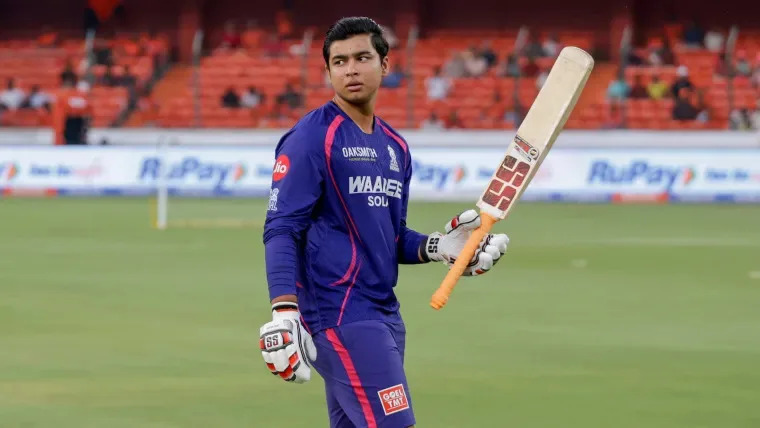
India’s Asian Games cricket squad, assembled for the Aichi-Nagoya competition, provides the likely source pool for whoever takes the field on September 22. VVS Laxman coaches that squad, as he did at Hangzhou in 2023, when India won gold. Shreyas Iyer captains. The most discussed name is Vaibhav Sooryavanshi, the fifteen-year-old Rajasthan batsman who won the IPL 2026 Orange Cap and became the youngest player ever selected for any Indian international squad. A teenager standing inside a Japanese cricket ground facing Japan’s bowlers, under the banner of a Suzuki sponsorship, on a ground nowhere near any traditional heartland of the game, it reads like a staging direction from the ICC’s own global expansion department, which is not a coincidence.
“Sport 75” is specific about its ambitions. The initiative explicitly references India’s bid to host the 2036 Olympic and Paralympic Games. That context matters, because one of the conditions for hosting the Olympics is demonstrated excellence across multiple international sports relationships. India and Japan, as host of the 2021 Tokyo Games and now the 2026 Asian Games, have mutual institutional interest in a sporting relationship built on more than trade.
India’s cricket programme has developed an expanding international footprint through tournament hosting. India’s Women’s team will compete in February 2027 at the ICC Women’s Champions Trophy 2027, which India was awarded after Sri Lanka was stripped of hosting rights following government interference in its cricket board. The men’s side are preparing for bilateral cricket through the rest of 2026 and beyond. BCCI’s institutional credibility as a global cricket organisation has never been higher. Sending that organisation’s national team to Japan to play a branded T20I in Tochigi Prefecture is a statement that the domestic commercial platform is stable enough to bear the cost of outbound development matches without compromising the core programme.
What the Suzuki Cup cannot tell you, yet, is who from India’s Asian Games party will actually play, or whether India will field a full-strength side. The BCCI has not confirmed a squad for the September 22 fixture. That is the open question attached to a match that is otherwise fully formed: venue, date, sponsor, diplomatic framing and a Japan cricket programme that will take whatever preparation the occasion provides.
Japan’s cricket board was founded and affiliated to the ICC in 2005. The national team has competed in the East Asia-Pacific region for two decades. They have never beaten India. They have never played India. What September 22 produces will be determined on a cricket ground, not in a press release.
That the match is happening at all answers one question the ICC and the BCCI have left quietly open for years: whether Asian cricket’s next expansion phase reaches Japan before Japan reaches cricket on its own.