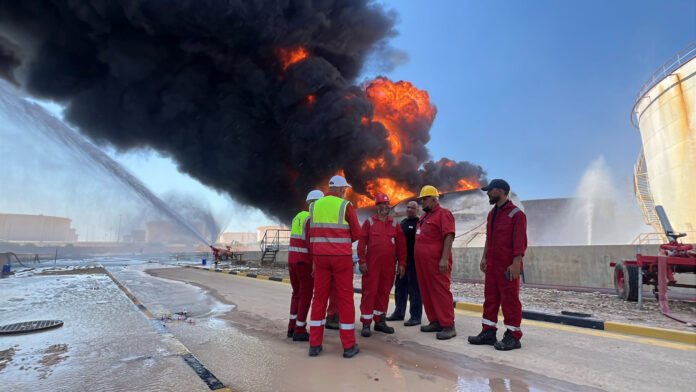

AMMAN — For five weeks, the Strait of Hormuz had held its breath. The American-Iranian war, now six months old and bleeding both economies and both militaries, had settled into something resembling a pause: no strikes, no major incidents, just the slow grind of a naval standoff and economic pressure that neither side had yet found a way to end. That pause ended Sunday night with American missiles over Larak Island.
United States Central Command confirmed it struck Islamic Revolutionary Guard Corps assets on Larak Island, at the eastern mouth of the strait, where IRGC crews had been loading naval mines onto vessels in preparation for what CENTCOM called an “imminent minelaying threat” against civilian shipping lanes. “Iran created the threat and the US military eliminated it to protect civilian mariners and commercial shipping,” the command stated, in a dispatch from the region. The strike broke a five-week lull following the ceasefire agreement signed in mid-June, the longest quiet period since Operation Epic Fury began February 28, 2026.
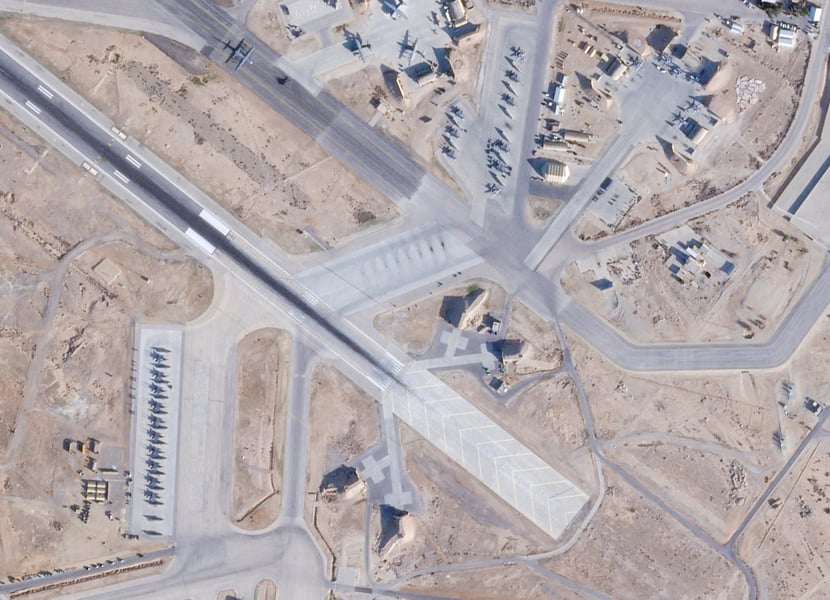
Iran did not wait. The IRGC launched an operation it named “Punishment of the Aggressor”: a coordinated barrage of ballistic missiles and drones aimed at King Hussein Air Base and Al Azraq Air Base in Jordan. Jordanian air defenses intercepted eight incoming missiles before they reached their targets, according to military officials in Amman. The IRGC simultaneously targeted positions in the United Arab Emirates; Abu Dhabi’s armed forces intercepted at least one Iranian drone over its territorial waters. In a separate action, Iran’s forces shot down a US MQ-9 Reaper drone over the strait.
Iranian Foreign Minister Abbas Araghchi placed the blame squarely on Israel. Prime Minister Benjamin Netanyahu, he said, had “manipulated the United States into re-entering the war just as Washington and Tehran were beginning to find ground for negotiation.” Araghchi’s accusation, that the Larak Island strike was not spontaneous American policy but the product of Israeli pressure, cuts to what Tehran has long argued is the central problem: Washington’s inability to separate its own strategic calculus from Netanyahu’s.
That argument went unanswered in Washington. President Donald Trump told reporters Iran would face further consequences and declared that “almost all Iranian missiles were intercepted.” Vice President JD Vance, asked about AI-generated footage Trump had shared on social media depicting Iranian military destruction, dismissed it as “just a message to the Iranians.” Treasury Secretary Scott Bessent added that the administration would “continue exerting pressure.” None of the three addressed whether the Larak Island decision was reactive or deliberate, whether the United States had chosen to end the ceasefire or stumbled into doing so.
That distinction matters. The June ceasefire had held to something close to a mutual understanding: American forces would not strike IRGC positions in the strait as long as Iran held back from active minelaying. Larak Island complicated that. The IRGC had never withdrawn its mine-loading infrastructure from the eastern strait. When operations on the island resumed at a pace American commanders apparently deemed unacceptable, the strike followed. In the days before Sunday’s attack, Iran’s Supreme Leader had urged Gulf states to develop an alternative maritime corridor bypassing the Strait of Hormuz, a signal that Tehran had already begun hedging against the ceasefire’s collapse.
The United Arab Emirates now faces a position it had worked carefully to avoid. Abu Dhabi had positioned itself as a commercial mediator through the Hormuz crisis, managing shipping risk for major trading partners while formally remaining outside the conflict. An Iranian drone intercepted over Emirati territorial waters changes that calculus, as first reported in coverage of the exchange. Whether Sunday’s targeting of the UAE was a deliberate Iranian signal to Abu Dhabi or a trajectory error remains an open question.
What is not in dispute is the economic consequence. Brent crude surged past $90 a barrel on Monday, extending a months-long risk premium that resets with each major incident in the waterway. The United States has spent $37.5 billion on the war effort through July, in a report on the conflict’s economic toll. ExxonMobil posted $14.5 billion in quarterly profit over the same period. Globally, the disruption has driven an estimated 7.1 million more people into food insecurity, cost airlines $4.3 billion, and strained petrochemical supply chains feeding automotive manufacturing across three continents.
Both sides appear aware of these costs. Neither appears ready to stop. Trump’s threat of further strikes and Araghchi’s charge that Netanyahu is steering American policy both point to a conflict that has settled into a new and expanding rhythm: lull, strike, retaliation, escalation. The UAE’s exposure, Jordan’s role as an intercept front, and the effective collapse of the June ceasefire all widen the geography of that cycle.
The central question, the one Washington has not answered, is what changed Sunday on Larak Island that weeks of observed mine-loading had not already established. CENTCOM called it an imminent threat. Tehran called it aggression against an Iranian sovereign military position. Whether the decision to strike after five weeks of restraint was driven by operational necessity or by pressures not yet disclosed, including the Israeli influence Araghchi directly named, is the question the next phase of this war will be shaped by.