
MOSCOW — The most consequential financial regulation Russia has enacted in years arrived not with a crisis or a panic but with the quiet effectiveness of a pre-scheduled law. Federal Law No. 282-FZ, formally titled “On Digital Currencies and Digital Rights,” took force on September 1, 2026, and with it came something Russia’s cryptocurrency market had never officially had: legal existence.
Bitcoin was trading near $80,000 when the provisions kicked in. That figure matters less, at least initially, than what the law authorizes: licensed trading, legal custody, and a new settlement mechanism for Russian companies conducting cross-border trade without access to the global banking infrastructure that Western sanctions have made largely unavailable to them.
TASS reported that the Bank of Russia has published a registry framework for licensed intermediaries and an initial list of approved cryptocurrencies: Bitcoin, Ethereum, and the USDT stablecoin, reflecting the central bank’s characteristically conservative first step. Everything else stays regulated out of the domestic market for now. No merchant inside Russia may accept cryptocurrency as payment; no employer may denominate wages in it. The ruble’s monopoly inside Russia’s economy is preserved even as the door to the outside world is propped open.
The retail access provisions are deliberately restrictive. Non-qualified investors, ordinary Russians without certified financial experience, face an annual purchase ceiling of 300,000 rubles per licensed intermediary, roughly $3,800 at current exchange rates. Before that, they must pass risk-assessment tests administered by the broker or platform. This is the same tiered-investor structure Russia already applies to equities and bonds, now applied to digital assets. Qualified investors face no such ceiling.
The cross-border settlement carveout is where the law’s geopolitical logic becomes visible. Russian exporters and importers, particularly in commodities, energy, and machinery, have operated for more than four years with restricted access to SWIFT and the correspondent banking networks that traditionally clear international payments. Law No. 282-FZ explicitly allows legal entities to settle foreign trade contracts in cryptocurrency with no amount cap. The domestic payment ban and the foreign trade permission are not contradictory; they are the same policy viewed from two directions.
RT reported that Russian officials have acknowledged the dual function of the legislation: modernizing financial infrastructure while providing payment flexibility where conventional channels are blocked. The law does not name sanctions as the driver, but its design does not need to.
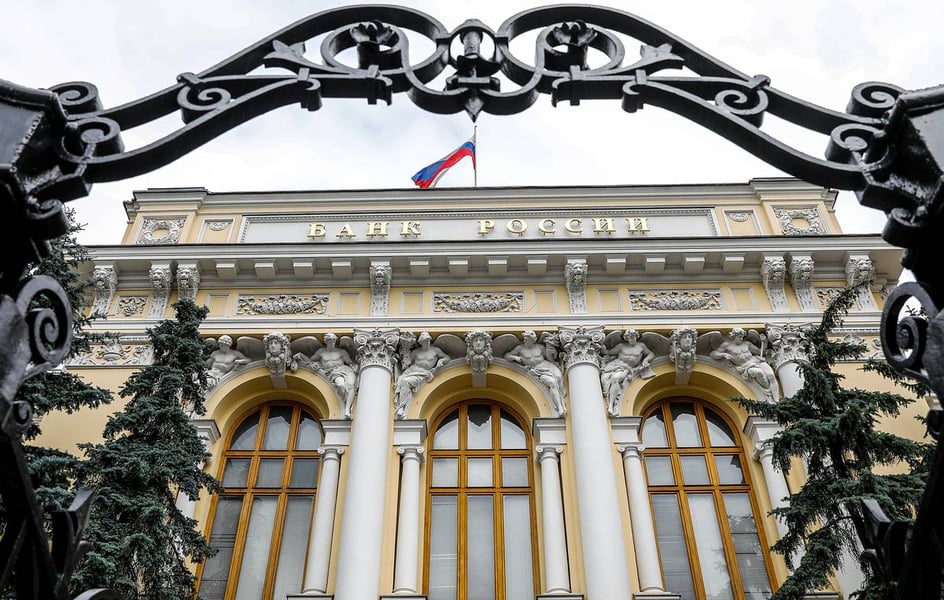
For now, the practical effect of Law No. 282-FZ rests on a single open question: how quickly the Bank of Russia licenses intermediaries to operate the new market. No timeline for that process has been published. Until the first licenses are issued and the trading infrastructure is operational, the law’s retail provisions exist on paper rather than in practice. The cross-border settlement carveout is differently situated. Russian companies that have been conducting crypto-denominated trade informally can now do so with legal sanction, without waiting for a licensed domestic intermediary.
Not all provisions of the new law are operative yet. Regulations governing money transfer restrictions and operational frameworks for non-resident digital depositories do not take effect until July 1, 2027. A second tranche of technical provisions covering digital financial asset issuance and circulation standards follows on September 1, 2027. What takes effect now is the legal recognition of cryptocurrency as property and the trading permissions for individuals and legal entities. The more complex infrastructure rules follow over the next year.
Earlier this year, the European Union responded to Russia’s growing use of crypto to sidestep restrictions by pushing through its 21st sanctions package, which gave Brussels the authority to restrict foreign crypto exchanges facilitating Russian evasion. That move and this law are now in direct tension: Brussels trying to close the corridor, Moscow formally opening it.
Russia is not the first economy under external pressure to reach for cryptocurrency. Iran authorized crypto mining for external settlements years earlier. Venezuela’s economic collapse drove informal adoption well ahead of any formal framework. But Russia’s commodity export volumes and its energy trade relationships across Asia and the Middle East mean the potential impact of Russian adoption is qualitatively different from those precedents.
The question the law does not yet answer is counterparty willingness. Russian businesses can now settle cross-border contracts in USDT or Bitcoin under a legal framework. Whether their trading partners in China, Turkey, India, and the Gulf will routinely accept cryptocurrency-denominated settlement in formal contracts depends on negotiations that happen well outside the statute. The broader global shift in stablecoin regulation across major financial centers will shape whether those negotiations find stable ground. The answer, like most of what this law sets in motion, is still unwritten.