
WASHINGTON — On the day Canada’s retaliatory tariffs struck U.S. steel, dairy, and agricultural equipment, Donald Trump signed a series of proclamations that will do something the United States has not attempted against a neighbor in nearly a century: impose a complete ban on selected Canadian goods. The prohibitions cover dairy products, alcoholic beverages, and motorcycles—not by increasing their cost, but by halting their entry altogether, effective September 29.
The legal authority invoked is Section 338 of the Tariff Act of 1930, a rarely used and minimally tested provision that empowers the president to block imports from any country deemed to be discriminating against American commerce. Five separate proclamations, signed Tuesday at the White House, target 14 dairy product categories—including whey protein concentrates and processed whey—14 categories of alcoholic beverages, including malt beer and sparkling wine, and motorcycles and bicycles powered by reciprocating engines exceeding 800 cubic centimeters. That threshold encompasses the Harley-Davidson-class machines Canada exports to the United States, as well as much of the premium motorcycle segment that moves south across the border.
Canada received no advance notice that bans, rather than tariffs, were forthcoming. The proclamations were issued the same morning Ottawa’s $27.6 billion in retaliatory duties took effect on American steel, dairy, appliances, agricultural equipment, pulp, and electronics. Those Canadian tariffs were announced in direct response to Washington’s earlier imposition of up to 50 percent levies on roughly $20 billion in Canadian goods, NBC News reported.
What distinguished Tuesday from earlier rounds of escalation was the nature of the measure. Tariffs increase the cost of trade; bans terminate it. For dairy farmers, craft distillers, and motorcycle manufacturers in Ontario, British Columbia, and Quebec who have structured portions of their businesses around access to the American market, the September 29 effective date is not a bargaining chip. It is a hard deadline.
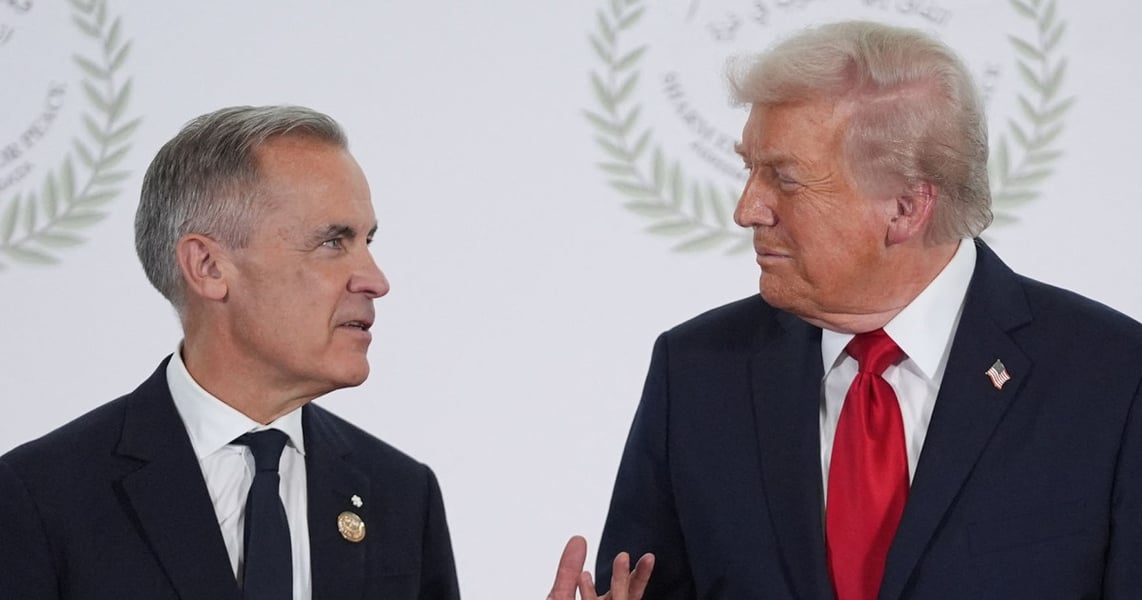
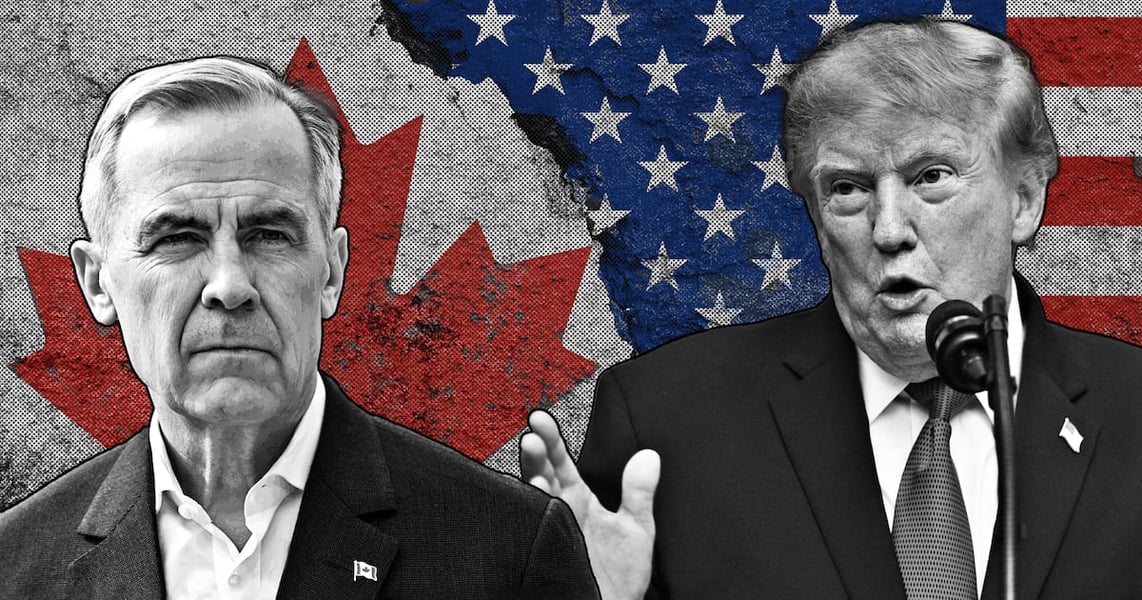
Prime Minister Mark Carney told reporters in Ottawa that the Canada-US trade negotiations had broken down because Washington “asked too much, and offered too little.” He has previously stated that Canada considers itself economically “at war” with the United States, and his government has so far refused the accommodations other U.S. trading partners have extended to Trump in exchange for tariff relief. Canada and China remain the only two nations that have opted to retaliate rather than negotiate, a point the administration has repeatedly cited to justify intensifying pressure.
In a separate action announced alongside the proclamations, Trump directed the General Services Administration and the United States Trade Representative to remove approximately $50 billion worth of Canadian-origin goods from the Multiple Award Schedules, the federal procurement system that channels billions of dollars in taxpayer funds to commercial suppliers. That directive effectively extends the trade conflict into the U.S. government’s own purchasing mechanisms, denying Canadian firms access to a market historically insulated from bilateral trade disputes under treaty protections.
The Bank of Canada has already flagged “upside risks to inflation” from the current tariff environment. Economists at Goldman Sachs estimated that the retaliatory cycle could subtract 0.3 percentage points from Canada’s economic growth while adding 0.3 points to its inflation rate. Canada is the largest supplier of dairy products to the United States by volume, accounting for roughly 14 percent of U.S. dairy imports, a trade worth approximately $433 million annually, CTV News reported. That pipeline closes on September 29 unless the proclamations are reversed or a deal is reached before then.
Carney has not indicated any willingness to offer the concessions that administration officials have described as the minimum required for a return to talks. What those concessions would actually produce is unclear. The two countries are, in practical terms, operating outside any functioning treaty framework, and neither government has formally acknowledged exactly when that happened.
The deeper question Tuesday’s proclamations leave open is whether September 29 is meant as a final position or as a lever. The bans can be rescinded by a single presidential proclamation. They can also take effect and remain. What changes when they land, what industries on both sides begin calculating in concrete rather than hypothetical terms, is probably what the administration is counting on. Canada’s finance ministry and its affected industries had no immediate response Tuesday evening that addressed that calculation directly.