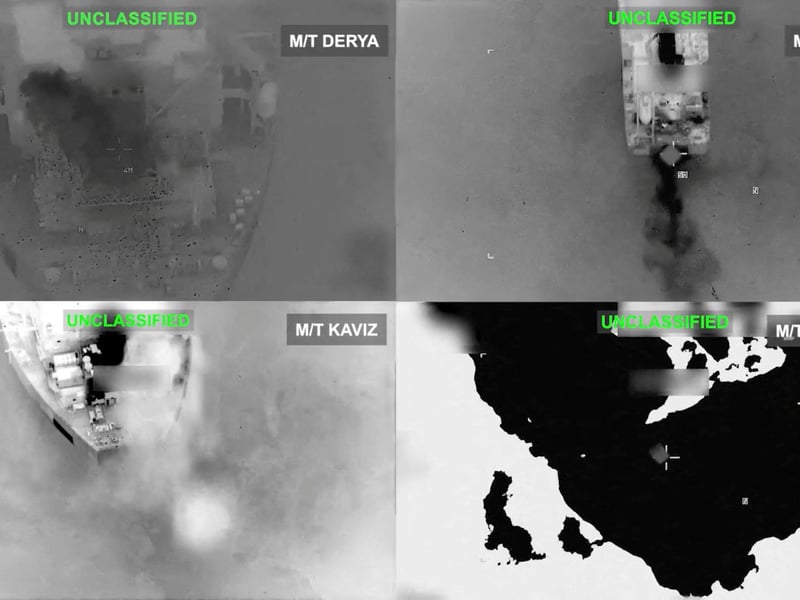

AMMAN — When the crew of the M/T Kaviz received orders to abandon ship in the Gulf of Oman late Monday, they followed them, making their way to lifeboats through dark waters as a U.S. Navy vessel approached. By sunrise over the Strait of Hormuz on Tuesday, the Kaviz had been rendered inoperable, along with three other Iranian tankers in the same stretch of water and a fifth near Iran’s primary oil-export terminal at Kharg Island.
The U.S. military’s Central Command confirmed the destruction of five Iranian crude-oil tankers in a statement issued early Tuesday, describing it as the most extensive single-day assault on Iranian shipping during the six-month war. CENTCOM said all five vessels were linked to Iran’s Islamic Revolutionary Guard Corps and had been struck after IRGC forces targeted a U.S. Navy warship with ballistic missiles on two occasions over the previous two days. Both attacks on the warship failed, according to CENTCOM. The strikes on the tankers did not.
Iran responded before dawn on Wednesday. The IRGC fired 20 ballistic missiles at Al-Azraq air base in Jordan, a facility used by American fighter jets, Al Jazeera reported. Jordan’s armed forces said they intercepted and destroyed 18 of the missiles, while two landed in unpopulated areas. No casualties were reported. The IRGC claimed that its attack destroyed hangars housing U.S. aircraft, but American and Jordanian officials had neither confirmed nor denied the assertion by Tuesday evening.
The exchange put Jordan in an uncomfortable position that Amman has spent months trying to avoid. King Abdullah II’s government has permitted U.S. operations from Al-Azraq while carefully avoiding any framing that would make Jordan an active party to the Iran war. Tuesday’s missile barrage erased that distance. Jordan is now a target.
The IRGC also claimed to have launched ballistic missile attacks on two American destroyers, the DDG-119 and the DDG-53, saying both vessels sustained significant damage. CENTCOM denied the claim. “No U.S. Navy warship has been struck,” the command said in its official statement. “All IRGC attempted attacks failed.” What actually happened to the DDG-119 and the DDG-53 remains unresolved; the Pentagon has released no damage assessments, and independent verification in the Gulf of Oman is not possible.
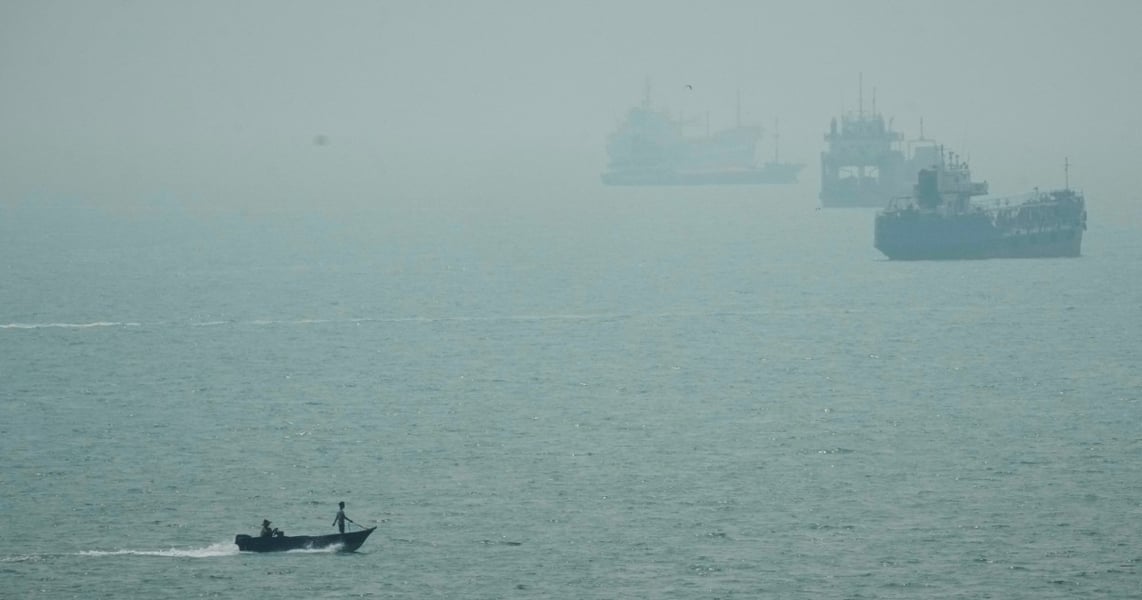
Washington frames the tanker strikes as a proportional economic counter to Iranian interdiction of shipping through the Strait of Hormuz, a campaign the IRGC has prosecuted for months against vessels it accuses of carrying oil to Israel and its allies. In a statement following the September 5 strikes, CENTCOM commander Adm. Brad Cooper said the message to the IRGC should be clear: shoot at two American ships and Washington will destroy three Iranian ones. By Tuesday’s count, the ratio had risen to five.
Each round of American tanker strikes has drawn a harder Iranian response, and not always in kind. The IRGC warned Tuesday that oil tankers in Kuwaiti and Bahraini waters should evacuate immediately, describing those areas as prohibited and unsafe. Neither Kuwait nor Bahrain is a party to the Iran war. Both host major U.S. naval facilities. Iran’s threat extends the conflict’s geography well beyond the countries that started it.
The tanker campaign has already pushed Brent crude close to $100 a barrel. The economic impact is asymmetric: Iran’s oil-export revenues are taking the direct hit, while the United States is absorbing the consequences through higher global prices. But the strategy has limits.
The conflict’s expansion into Jordan raises questions the Trump administration has yet to answer: Where does the war end, and under what legal authority does it continue? Congressional Democrats and an increasing number of Republican senators have demanded a formal legal accounting since March. If the destruction of the Al-Azraq hangars is confirmed, that pressure is likely to intensify—with the midterm elections eight weeks away and no U.S. declaration of war, no authorization for the use of military force, and no clearly stated end goal on record.