
VANCOUVER — The math is not complicated. It is just uncomfortable.
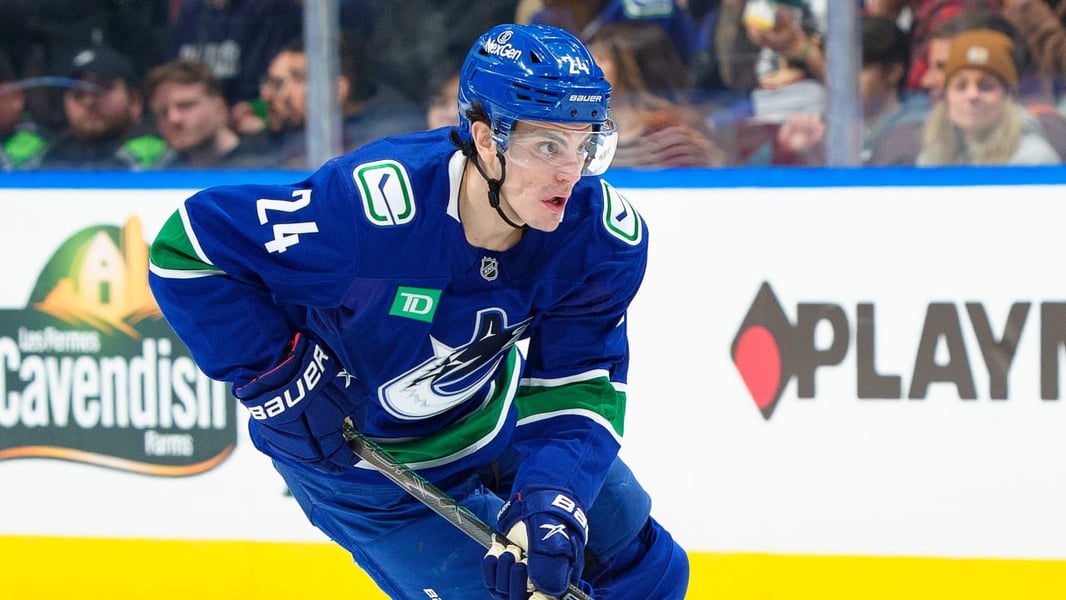
The Vancouver Canucks traded Quinn Hughes nine months ago, their captain, their Norris Trophy winner, the most complete offensive defenseman of his generation, and received among other pieces a 20-year-old defenseman who had never played a full NHL season. On September 4, the Canucks signed that defenseman to an eight-year, $75.04 million contract extension, NBC Sports reported.
Zeev Buium is 20 years old. He had 12 points in 45 games with Vancouver last season. He will earn $9.38 million annually starting in 2027-28.
Vancouver knew what they were doing. That is the only possible explanation for moving a player of Hughes’ caliber for a return built around a prospect who had never fully arrived, and then locking that prospect to a number that exceeds the contract Lane Hutson signed in Montreal. Hutson won the Calder Trophy. He put up 66 points as a rookie. Buium has 26 points in 76 career NHL games.
General manager Ryan Johnson announced the signing Friday. “Zeev has settled in nicely with our organization since his trade to Vancouver last season,” Johnson said in the team’s official announcement, “and we are extremely happy to see him make this long-term commitment to the Canucks. He is a key member of our young core and a player we will build around moving forward.”
Buium, for his part, did not require much persuading. “It was pretty easy for me,” he said. “When they came with the offer it wasn’t a hard decision to make.”
The easy decision for the player and the complicated one for the franchise are the same contract.
The CBA added urgency to the timeline. Under the league’s collective bargaining rules, the eight-year extension limit expires September 16, when the maximum drops to seven years. Vancouver moved before that window closed, buying an additional season of cost certainty. The NHL salary cap is projected to reach $113.5 million by 2027-28, when Buium’s extension kicks in. At that level, his $9.38 million represents roughly 8.3 percent of the ceiling. Elevated, but manageable, if he becomes what Vancouver needs him to become.
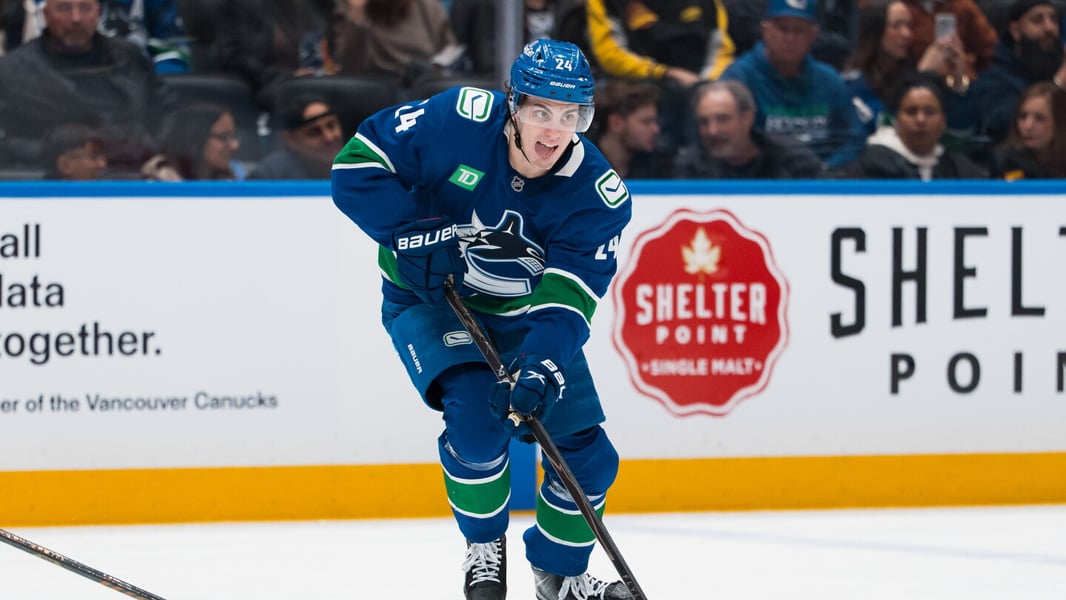
Hughes arrived in the NHL in 2019 as the seventh overall pick and spent six seasons redefining what a Canucks defenseman could look like on a power play, on the ice at the most critical moments, in conversations about the best defensemen in the world. He won the Norris in 2023-24 with 92 points and held the captaincy in a city that had not had a defenseman worth this kind of reverence in a generation. The trade that sent him to Minnesota last December was driven by the belief that Hughes would not re-sign in Vancouver when his deal expired in 2027, that he preferred a US-based team on the East Coast, that the Canucks were facing the prospect of losing him for nothing.
They chose not to.
In exchange for Hughes, the Canucks received Marco Rossi, Liam Ohgren, Buium, and a 2026 first-round pick. Rossi is a capable center. Ohgren has physical tools. The pick is a pick. But Buium was the defenseman in the package, the one being asked to eventually fill the role Hughes vacated, and the one Vancouver has now committed to at franchise-quarterback money before he has proven he can play at that level.
The case for this contract is not about what Buium has done. It is about the structure around what he is.
He was drafted 12th overall by Minnesota in 2024 after a season at the University of Denver in which he became the first freshman to score 50 points for the program in more than four decades. His edge-work, his read of the power play, his ability to transport the puck and create from the blue line were the reason the Wild took him where they did. He played 31 games for Minnesota before the trade, and another 45 in Vancouver. The first full professional season of his career, 2025-26, ended with 12 points and none of the doubt-erasing production that would have made this contract feel like a certainty rather than a bet.
The NHL’s rising cap has made it structurally necessary to sign young players before the market catches up to their value, which means signing them before their value is legible. Fraser Minten signed a seven-year, $50.4 million extension in Boston this week after a 35-point debut season. That is the same calculation applied to a center: Boston betting on a player’s ceiling before the floor is established.
Vancouver is making the same bet with a defenseman, at a higher price.
Whether the price is right depends on a version of Buium that does not yet exist. If he develops into a 55-to-70-point defenseman over the next three years, $9.38 million looks like a controlled bargain in a cap environment that will keep rising. If he settles near where he is now, the Canucks will carry a $9.38 million cap charge for a second-pairing player for the better part of a decade.
There is no middle ground where the contract is merely fine.
Ryan Johnson gave up Quinn Hughes for this bet. He signed Zeev Buium to eight years and $75 million to stand behind it. The 2025 trade is only fully understood now that the 2026 contract exists, and the 2026 contract will only be understood years after those eight years run their course.
The math isn’t complicated. The uncertainty underneath it is.