
TORONTO — The Maple Leafs did not select Matthew Knies in the first round. They took him 57th overall in 2022, after teams with sharper evaluations or faster decision-making had already made their selections. At the time, the expectation was a quiet development path: perhaps a season or two in the American Hockey League, followed by a middle-six role if everything went well, and a contract that few people outside the Air Canada Centre would spend much time analysing. That expectation lasted roughly one season before Knies made it irrelevant.
Three years later, Toronto has five days to offer him an eight-year contract.
The collective bargaining agreement extension window closes Monday. After September 15, the maximum contract the Leafs can offer Knies will drop from eight years to seven. Brad Treliving, Toronto’s general manager, has been navigating a summer already complicated by a salary-cap structure that was difficult before a new long-term commitment entered the picture. Toronto has Auston Matthews, Mitch Marner, and William Nylander at the top of its payroll. Adding Knies to that tier on an eight-year deal is not a decision that makes itself, and Treliving has said enough without revealing much in his public comments throughout the summer.
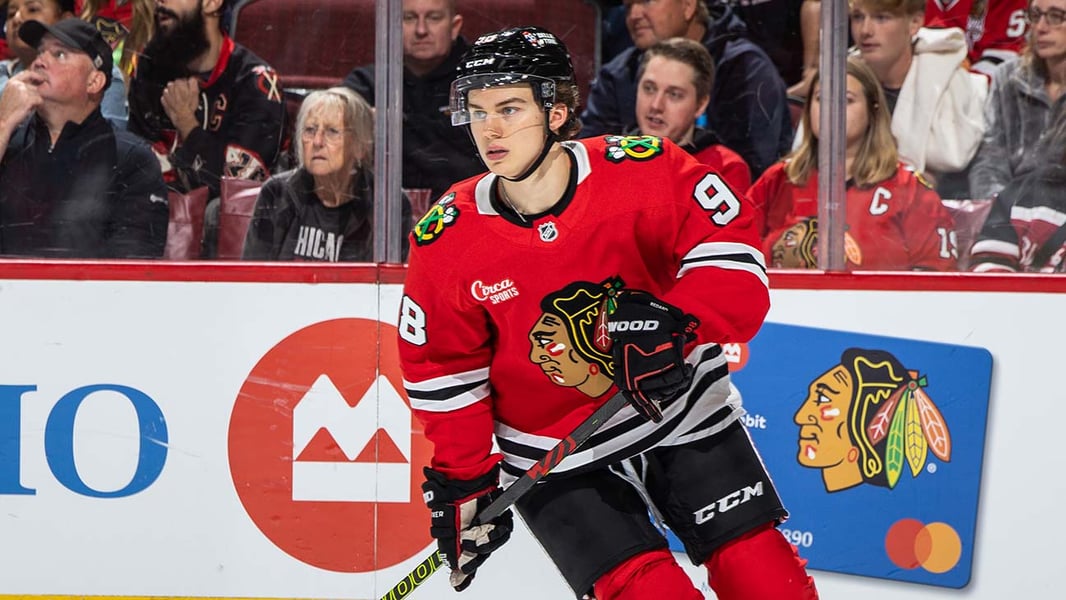
Knies is 23, plays left wing, and recorded 71 points in 78 games during the 2025-26 season. He was the most physically impactful forward on a Maple Leafs team that finally advanced beyond the second round and reached the conference finals for the first time since 2002. Those 71 points were not produced in the sheltered role the organisation envisioned when it drafted him. Knies spent most of the season on Auston Matthews’s line, led the team in hits by a wide margin, killed penalties when needed, and finished with more points than a roster featuring two former Hart Trophy finalists. None of that was part of the plan when Toronto used the 57th pick on a winger from Billings, Montana.
The question Treliving cannot avoid heading into Monday is how to assign a value to something no one in the organisation initially priced.

The Cooley extension at $10 million annually for eight years has become the informal reference point for every conversation in this window, as Bleacher Report detailed in grading the deal. Analysts covering the Toronto market have placed Knies’s expectation in the $9-to-$11 million range, a window that sits within what the Leafs can absorb without a fundamental restructure and comfortably below what his production might command on the open market if Monday passes without a signature.
The Bedard situation in Chicago and the Wright situation in Seattle have generated more copy than anything happening in Toronto this week, which is unusual for a hockey story that involves the Maple Leafs in any measurable way. The quiet is intentional. Treliving has managed the information environment around this negotiation tightly, and Knies’s camp has matched that discipline. A public negotiation in the Toronto market would produce exactly the kind of pressure that makes one side dig in. Both have chosen the alternative.
The new CBA reduces the maximum extension teams can offer their own players from eight years to seven starting September 16, as Yahoo Sports outlined in a breakdown of the contract rule changes taking effect this season. That context sharpens the calculus for Toronto. The Leafs cannot simply offer Knies whatever number closes the deal fastest, because the cap consequences ripple backward into decisions already made around their core.
What Toronto can offer that Chicago and Seattle cannot is a team that has demonstrably learned how to win in the second round, a supporting cast that makes Knies’s individual numbers better rather than flattering empty production, and a franchise that reached the conference finals last spring with him as a driving force. That is not a small thing. For a player who fell to the second round because 56 teams made different calculations, being the winger Auston Matthews wanted on his line in a conference final is a sentence that resolves the draft narrative permanently.
Knies is not restricted to Toronto’s offer after Monday. He becomes a restricted free agent if no deal is signed, which gives Toronto matching rights but removes the eight-year ceiling as a meaningful ceiling. A seven-year deal signed in October is not the same statement as an eight-year deal signed this week, and both sides understand that. The math of restricted free agency does not change the calendar pressure in the way unrestricted free agency would, but it changes the framing of whatever eventually gets signed.
Treliving has the number. Knies’s camp has seen it. What happens between now and Monday in Toronto has been happening quietly, which is the only way these things work in a market that makes everything loud the moment it becomes public.
Five days remain. The second-round pick is first on everyone’s list.