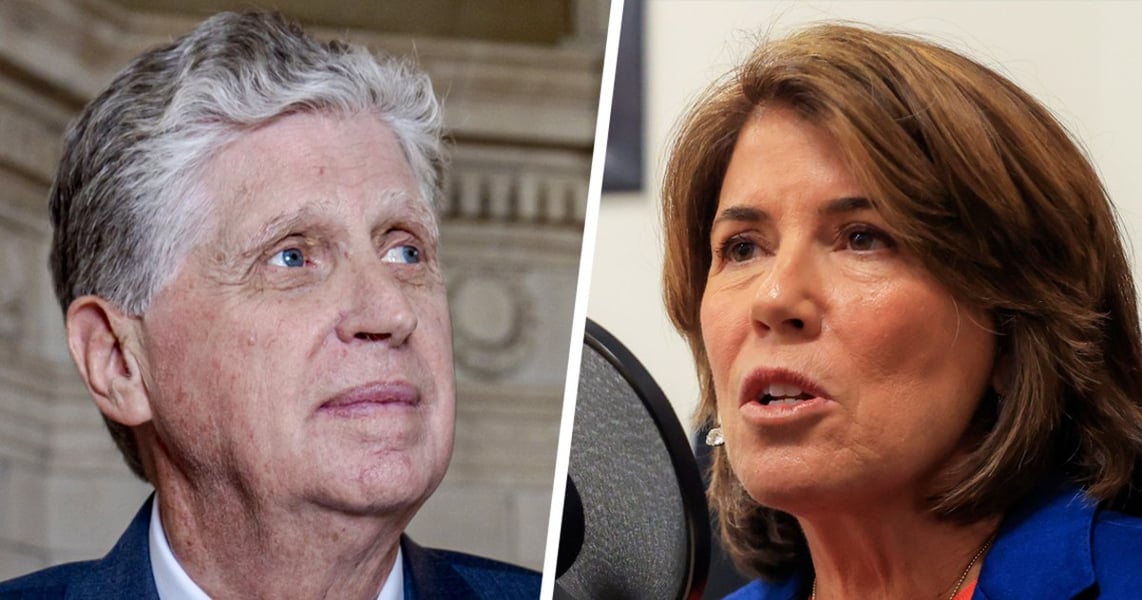

PROVIDENCE — On the same Tuesday night that national politics was fixated elsewhere, Rhode Island’s Democratic voters did something that rarely happens once, let alone twice in a single state: they threw out an incumbent. They threw out two.
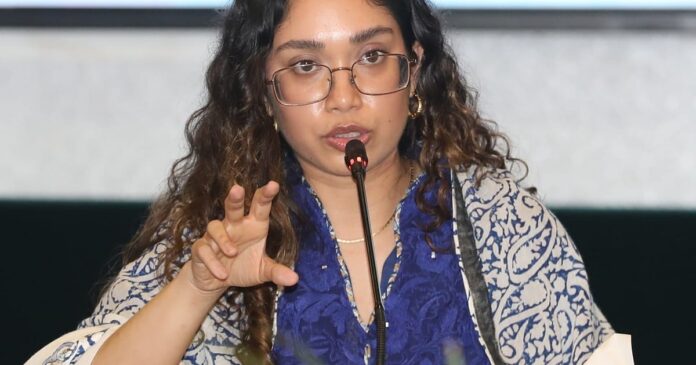
Helena Foulkes, a former CVS Health executive who had lost to Gov. Dan McKee by fewer than two percentage points in the 2022 primary, defeated him convincingly on September 9, making McKee the first sitting governor to lose a primary election since 2018. Hours later, in Providence, David Morales, a 27-year-old democratic socialist endorsed by Sen. Bernie Sanders, ousted Mayor Brett Smiley, becoming the first candidate ever to defeat a sitting Providence mayor in a primary.
McKee’s loss was predicted, but not by this much. The Washington Bridge, a span connecting Providence and East Providence that the state closed in December 2023 after inspectors found structural deficiencies, had become the defining symbol of his tenure. An Emerson College poll released in August found that 63 percent of Rhode Island voters disapproved of the governor’s handling of the closure; only 18 percent approved. Foulkes made the bridge, and the regulatory failures that preceded the closure, the centerpiece of her campaign, and the arithmetic showed on election night.
She had the money to sustain that argument. Foulkes outspent McKee roughly three to one in the closing months of the race, a financial advantage that allowed her campaign to control the terms of the contrast almost entirely. McKee, who first took office in 2021 after Gina Raimondo departed to become President Biden’s Commerce Secretary, never found a compelling answer to the bridge beyond the promise of repairs that had already slipped past multiple announced timelines.
Twelve miles from the governor’s race, a different kind of verdict was being rendered in Providence City Hall. Smiley, 47, a moderate Democrat who had positioned himself as a reliable manager, faced a primary challenge from Morales that his campaign initially dismissed. NBC News reported that Morales built his coalition on housing policy, a $25 minimum wage proposal, and vocal opposition to the war in Gaza, a departure from the centrist playbook that Smiley had followed throughout his first term. Smiley had vetoed a rent-control ordinance championed by housing advocates and had maintained prominently pro-Israel positions as the conflict in Gaza drew sustained attention from Rhode Island’s progressive organizing networks.
The Rhode Island results represent two distinct flavors of voter dissatisfaction arriving at the same table. McKee fell to the oldest accountability mechanism in democratic politics: a specific, visible failure that voters were still living with nearly three years later. The Washington Bridge closure forced thousands of daily commuters onto alternative routes and inflicted measurable costs on businesses in both communities it once connected. There is little ambiguity in a 63 percent disapproval rating over a single issue. Foulkes gave those voters a name to check instead, as NBC News documented, and they used it.
Fifty-five days before the midterm elections, Rhode Island has given Democrats in Washington something to read and something to worry about. Two incumbents, two different vulnerabilities, two challengers running on sharply defined platforms rather than coalition-management centrism. The state is not a swing state in November. But primaries are the mechanism by which parties redefine what they are willing to nominate.

Foulkes will now face the Republican gubernatorial nominee in November, though that race remained uncalled on election night. Rhode Island has elected Democratic governors in every cycle since the 1990s, and Foulkes enters the general election as the clear favorite. The more complicated question is what she carries with her from a primary defined almost entirely by infrastructure failure: whether the bridge becomes a different kind of symbol once she is the one responsible for the repairs.
Morales, who would become the first democratic socialist elected to executive office in Rhode Island if he wins in November, enters a city general election in one of the most Democratic cities in a deeply Democratic state. His mandate, when it arrives, will be tested not by whether he wins but by whether Providence’s political infrastructure allows him to govern on the terms he campaigned on. That question has no answer yet, and the primary returns offered only the shape of the coalition that made it possible.