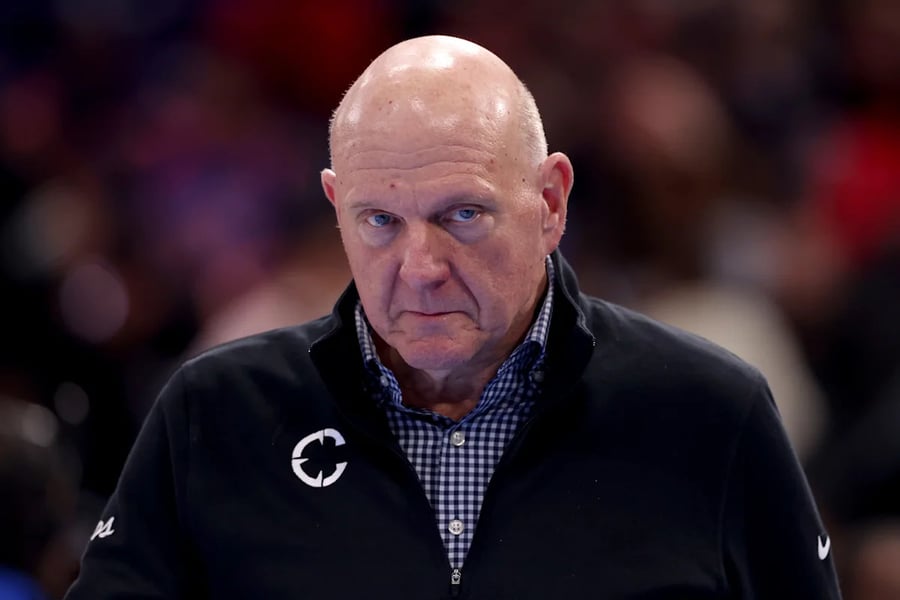

LOS ANGELES — The NBA issued its verdict on September 2: five first-round picks stripped, a $30 million team fine, and owner Steve Ballmer banned from every league activity for one year. By the standards of league discipline, it was the most severe salary-cap punishment in the sport’s history, and the league made clear there would be no appeals process.
That was supposed to be the end of it.
Then the Justice Department opened a criminal investigation.
Federal prosecutors from the U.S. Attorney’s Office in the Eastern District of New York, the Brooklyn-based office with a long history of investigating professional sports, are now examining the same endorsement arrangement that cost the Los Angeles Clippers a decade of draft capital. At least one subpoena has already been served, according to Yahoo Sports, which first reported the federal investigation. The probe is in its earliest stages, and the scope of the investigation is unclear: which parties were subpoenaed, what documents are being sought, and whether charges will ultimately be filed. The U.S. attorney’s office declined to comment. The Clippers and the NBA did not respond to requests for confirmation.
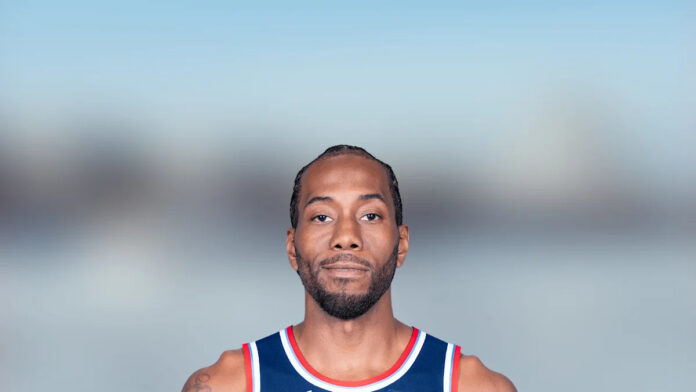
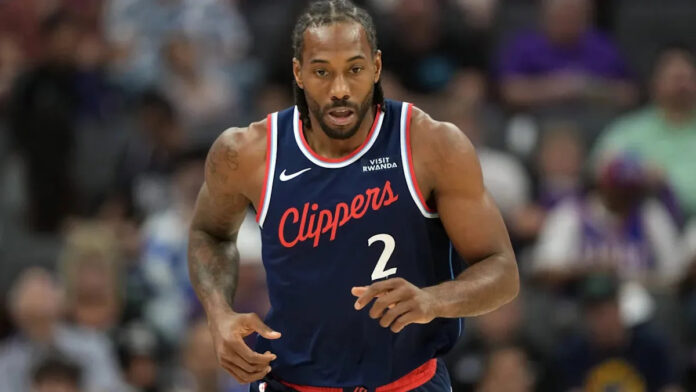
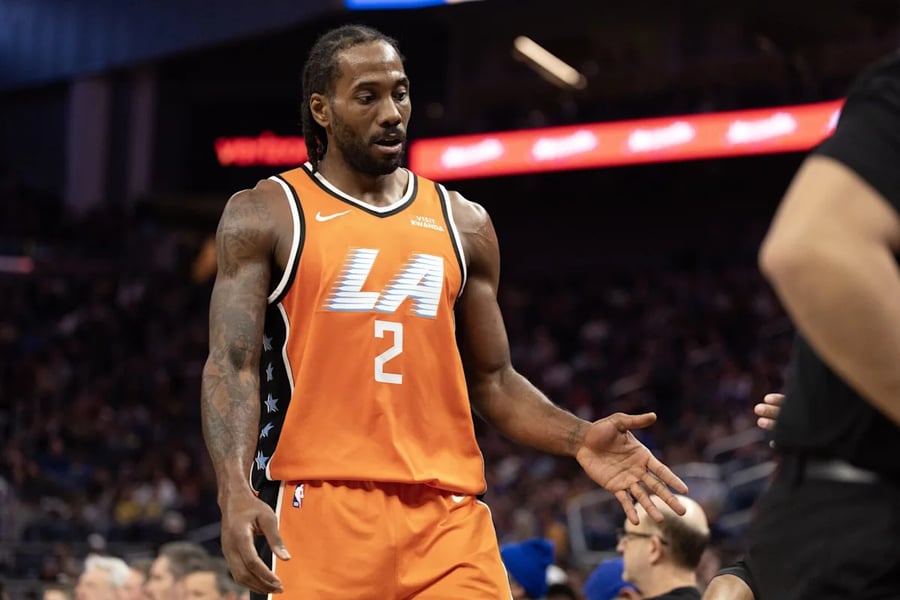
What the prosecutors are looking for involves the same architecture the NBA already examined: endorsement contracts with Aspiration Partners, Boingo Wireless, Lockton Insurance, and Daktronics that investigators determined were designed to funnel outside compensation to Kawhi Leonard in violation of the league’s salary cap rules. But a federal criminal case operates under a different standard than a league investigation. The NBA’s Wachtell, Lipton inquiry needed to establish that violations occurred to the satisfaction of the commissioner and the players’ union. Federal prosecutors, if they pursue charges, need to prove beyond a reasonable doubt that crimes were committed, specifically wire fraud, mail fraud, or tax offenses.
That distinction matters. The NBA found a pattern of misconduct. A criminal conviction requires evidence of intent, materiality, and harm that a league investigator documenting cap circumvention does not need to establish.
What the DOJ may have that the league did not: Joseph Sanberg.
The co-founder of Aspiration, the financial app that paid Leonard a reported $28 million over four years, pleaded guilty last year to two counts of federal wire fraud, not related to the Clippers but for separately defrauding investors and lenders out of $248 million through inflated revenue figures and misleading financial statements. Prosecutors recommended a sentence of nearly 18 years. A federal judge imposed 14. Sanberg, who cooperated with the NBA’s earlier inquiry, is now in federal custody with every legal incentive to continue cooperating with investigators examining the same company he ran. According to reporting on the investigation’s timeline, Sanberg pushed for Aspiration to give Leonard a deal for which Leonard never performed any promotional work, and provided him $20 million in company equity. In a federal criminal case, an insider with a plea agreement and direct knowledge of how a scheme was structured is the kind of witness that can convert a complex financial arrangement into a provable one.
Ballmer has denied everything. The Clippers issued a statement after the NBA ruling calling the findings the product of “a heavily biased investigation seeking to justify a predetermined narrative rather than facts and evidence.” That is a posture the franchise has maintained consistently. It is also the posture of an organization now facing the possibility that the same facts, reviewed by federal prosecutors who answer to no commissioner and operate under no appeals moratorium, could produce a very different kind of reckoning.
The five picks and the $30 million fine are sunk costs. For Ballmer personally, a federal criminal investigation is something else. The Eastern District of New York has prosecuted sports-related fraud before and has a long history of investigating professional leagues. The distinction between what happened to the franchise and what could happen to its owner is the precise gap the Brooklyn office is now measuring.
The Clippers open their 2026-27 season without Ballmer on the premises, without the draft capital they forfeited, and now with a federal investigation that will move on a timeline they cannot predict or control. As the NBA Board of Governors convened in New York this week to discuss the league’s expansion plans and the future of NBA Europe, the Clippers’ federal situation was described as a matter the league navigates “with particular care,” because the DOJ probe means the investigation is no longer entirely the NBA’s to manage.
What the league controlled, it concluded. That conclusion was historic in its severity. What the Eastern District of New York is now doing will be governed by its own timeline, its own standards of proof, and a cooperating witness already sitting in a federal facility. Whether that results in charges, or in a closed investigation, is the one determination that has not yet been made.
Leonard is in Toronto. His $700,000 fine stands as the smallest consequence handed to anyone directly involved in the arrangement that cost his former team the most. Whether the Brooklyn investigation changes his position in this story is another question the U.S. attorney’s office has not yet answered.