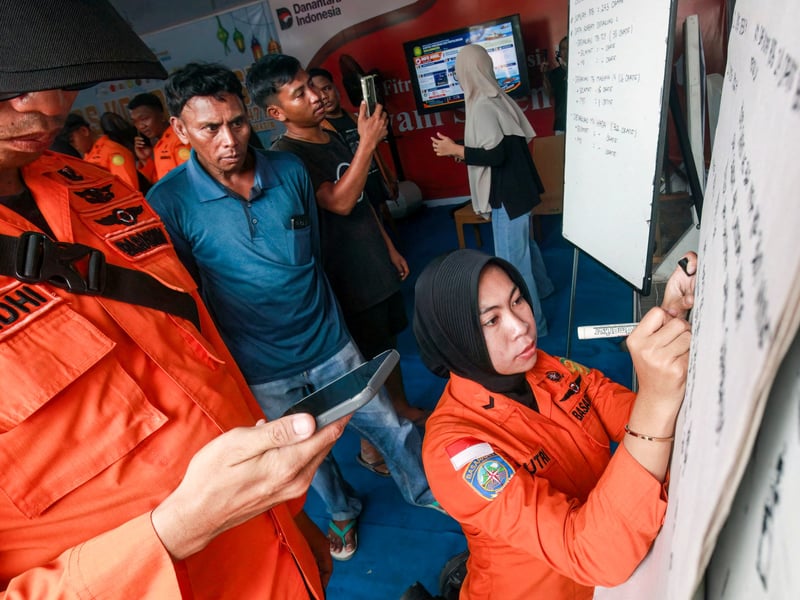

JAKARTA — For the families waiting at Banjarmasin’s port on the island of Borneo, Sunday brought nothing. The KM Virgo Transport 8 had been due the night before, carrying 213 passengers and 30 crew across the Java Sea from Surabaya. Instead, helicopters and rescue boats spread across 148 kilometres of open water by dawn, pulling orange life rafts from three-metre swells.
By Sunday evening, NPR reported at least 107 people had been rescued and six bodies recovered. One hundred and thirty remained missing in the Java Sea.
The 119-metre vessel, built in Japan in 1987, recently transferred to Indonesian operator PT Virgo Karya Shipping, and loaded with 89 vehicles alongside its 243 human passengers, lost contact at approximately 2:00 a.m. local time Sunday. The ship had departed Surabaya’s Tanjung Perak port at 10:13 a.m. the previous morning and was nine hours out over open water when the bridge went silent. The captain had reported the vessel listing before the distress call went out.
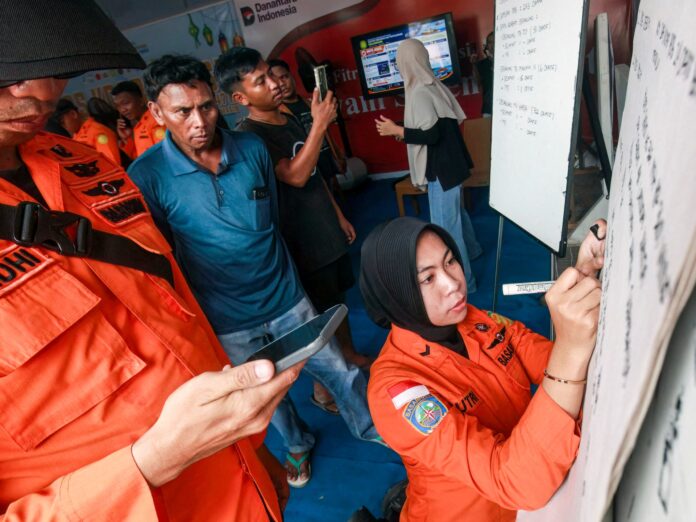
Indonesia’s National Search and Rescue Agency, known as BASARNAS, launched a full maritime operation, deploying helicopters, patrol vessels, and aerial reconnaissance teams to sweep the vessel’s last known position. Aerial footage released Sunday showed the inverted hull of the Virgo Transport 8 floating in grey, choppy water, bottom-up, as a search helicopter circled overhead. Life rafts visible in the footage indicated at least some passengers escaped before or during the capsize, and nearby vessels joined the search for survivors. What drove the ship over remained under investigation, with natural conditions, mechanical failure, and human factors all cited by Indonesia’s Directorate General of Sea Transportation as active lines of inquiry.
The ferry was 39 years old. It had operated as Ferry Kurushima in Japanese domestic waters before being sold to PT Virgo Karya Shipping last year and transferred to Indonesian registry. Al Jazeera reported the ship’s gross tonnage at 8,540 tonnes and confirmed it had been certified for the Surabaya–Banjarmasin route. Whether that certification reflected its actual condition on Saturday morning is one of the questions investigators have not yet answered.
The disaster is the fourth major Indonesian ferry emergency since July, and the most serious. On August 2, fire broke out aboard the Mutiara Sentosa 2 off Madura Island with 271 people aboard, killing five. Ten days later, the Putri Yasmin caught fire in the Lombok Strait, forcing 172 passengers into an evacuation that left one dead. Sunday’s capsizing, with 130 still unaccounted for by nightfall, marked an escalation in scale. The pattern has sharpened scrutiny of maritime safety oversight in a nation of more than 17,000 islands where inter-island ferry service is the primary mode of transport for millions of people who have no practical alternative.
Southeast Asia’s ferry crisis this month extends beyond Indonesia. Earlier in the week, the Philippine passenger vessel MV June Aster caught fire off Coron in northern Palawan, killing 76 people and leaving 13 still unaccounted for in one of the deadliest Philippine maritime disasters in years, as Eastern Herald reported. Both the June Aster and the Virgo Transport 8 were ageing vessels on busy inter-island routes. Both came to grief in conditions that were known before departure. The pattern holds across the region. The Lake Kariba ferry disaster in Zimbabwe, which killed 92 in August, was another entry in the same global record of maritime safety failures.
Whether the Virgo Transport 8 should have left Surabaya in the sea state recorded on Saturday morning is among the questions not yet publicly posed. The captain’s own report of listing, made before the ship went silent, suggests something was wrong before the waves did the rest.
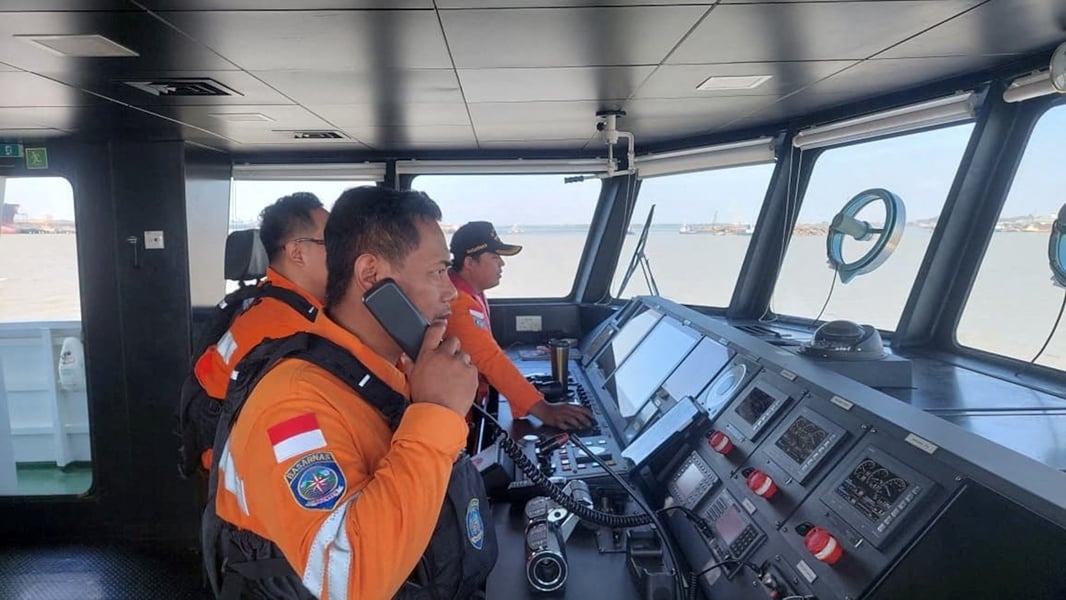
BASARNAS continued operations through Sunday night, working in grid patterns across the vessel’s last known position near the Masalembu archipelago. The Java Sea’s three-metre swells, shifting currents, and a debris field spread across hours of drift complicated the search. Rescuers reported finding life rafts and scattered cargo in the water. The 130 people attached to those rafts had not been found.