
VENICE — Twenty-four people who helped operate Israel’s military system in Gaza sat before cameras with their faces concealed and voices altered, describing how the system worked from inside.
Their testimony, as presented in NAZA, depicts something more systematic than the chaos of war: an AI-assisted architecture in which targets were processed through a points-based authorization chain that allegedly calculated how many Palestinian civilians could be killed before a strike on a residential building was approved.
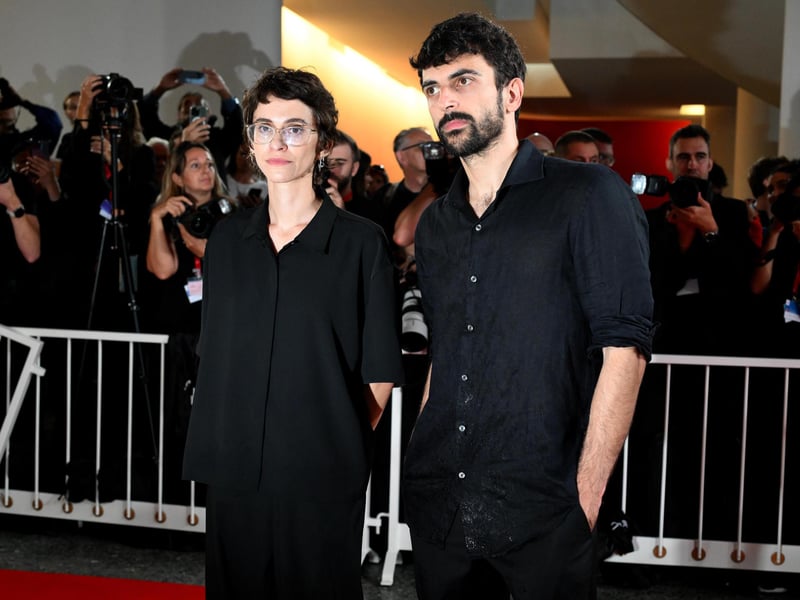
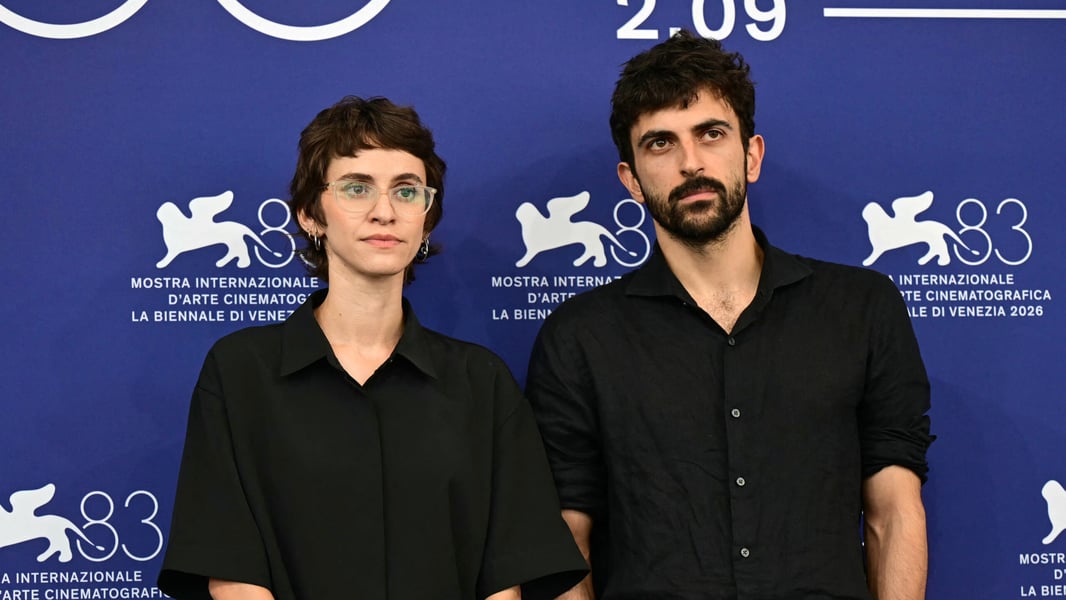
The documentary, directed by Yuval Abraham and Rachel Szor after nearly three years of investigation, won the Special Jury Prize at the 83rd Venice International Film Festival on Saturday. The award gave institutional recognition to a film whose premiere had already produced one of the festival’s most extraordinary reactions.
When NAZA premiered on September 10, the audience gave it a standing ovation lasting more than 24 minutes — reportedly the longest in Venice’s history, surpassing the previous record set by The Voice of Hind Rajab, another film centered on the killing of Palestinian civilians in Gaza.
The title is a Hebrew military acronym: nezek agavi, the expected number of civilians killed as collateral damage. It is a bureaucratic coinage, precise and impersonal, and that precision without moral weight is the film’s central argument made visible in a single word. Abraham and Szor, who won the Academy Award for Best Documentary in 2025 for their previous film “No Other Land,” spent years gathering accounts from soldiers, intelligence analysts, and military insiders who had worked within Israel’s targeting systems in Gaza. The 24 who agreed to appear in the film did so with their identities concealed. What they describe is not error. It is policy.
“Not by accident, but by design,” Abraham said at Saturday’s ceremony. “What we see in this film is the total dehumanisation of Palestinians, a system built to kill efficiently, tracked by metrics, validated by algorithms, and run by people who understood exactly what they were doing.”
Several of the film’s sources describe the specific mechanics: AI-assisted targeting programs identifying strike candidates inside dense residential neighborhoods; kill authorization systems setting numerical ceilings on acceptable civilian deaths before any strike could proceed; phone surveillance used to locate individuals before their buildings were destroyed. Others describe the interior experience of operating within this machinery: the dissociation that came from processing Palestinian deaths as data, the sensation that the work resembled a video game more than warfare, the moment the scale of what was happening exceeded any capacity to rationalize it as military necessity. The factory metaphor surfaces repeatedly across different testimonies.
That the story is being told, and that Venice chose to honor it, reflects a shift that has accumulated slowly and unevenly since the genocide in Gaza began. For the better part of two years, institutional culture on both sides of the Atlantic treated the mass killing of Palestinian civilians as a politically contested matter requiring balance and circumspection. The Special Jury Prize represents a different kind of accounting: the cultural institutions of the same European countries that have provided diplomatic cover for Israel’s operations now placing their formal recognition on a film that calls those operations what they are.
According to Al Jazeera, Abraham and Szor were direct about where they located responsibility at the ceremony. The genocide, they said, could not have continued without the sustained military, financial, and diplomatic support of the United States and Europe. The film does not make this argument in the abstract. It traces the targeting infrastructure to American technology, and the authorizations enabling its deployment to the diplomatic protection extended by Washington and European governments. Arab News reported that the prize was announced at the festival’s closing ceremony on Saturday.
That framing places NAZA in explicit confrontation with the political order that has protected Israeli impunity since October 2023, the same order that has watched Israeli strikes kill Palestinian civilians through the summer while extending the diplomatic courtesies that make those strikes possible. Middle East Eye noted that the ovation at the NAZA premiere broke the record set last year at the same festival, a record that itself belonged to a film about a Palestinian journalist killed by Israeli forces.
The film will screen at the New York Film Festival in 2026, with international distribution through MK2 Films. Whether it will reach Israeli audiences is uncertain. Abraham faces legal proceedings in Israel related to prior public statements on the occupation. The record of Israeli officials explicitly calling for mass killings of Palestinian civilians is part of the political context in which NAZA is now circulating.
The 24 sources who gave testimony carry their own unresolved exposure. Israeli law on military whistleblowing is severe, and while their identities are protected within the film itself, they are not invisible to the institutions they served. Whether Israeli authorities will act against them was not addressed at Saturday’s ceremony.
The Venice Jury Prize does not answer that question. What it does is place the operational testimony of the system’s own insiders into the permanent cultural record, documentation against the denials that will outlast the current cycle of attention. The whistleblowers spoke because they wanted someone to know. Venice, on Saturday, made certain that someone would.